Google Announces Major AI Evolution As Gemini Gains Autonomous Task Execution Capabilities

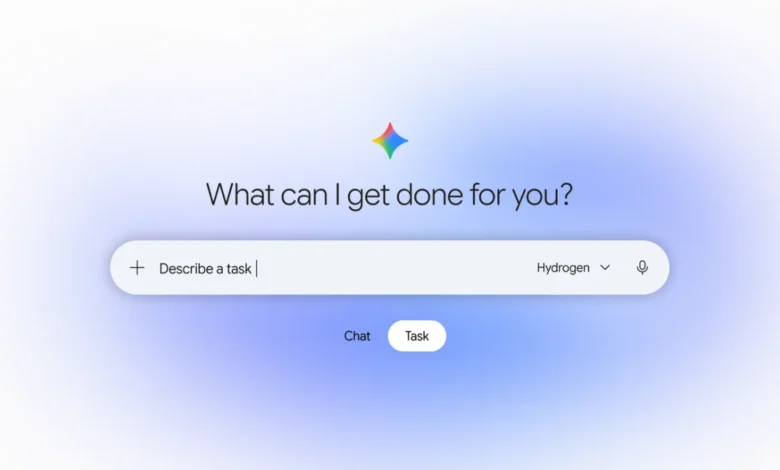
Google has officially launched a transformative update to its Gemini artificial intelligence ecosystem, introducing autonomous agent capabilities designed to execute complex, multi-step real-world tasks on behalf of users. Powered by the newly deployed Gemini 4 Hydrogen model, the updated assistant is now capable of performing real-world actions traditionally requiring human intervention, such as making telephone calls, booking service appointments, analyzing utility statements for household savings, and executing secure financial transactions.
The rollout begins immediately, reaching hundreds of millions of free-tier users across the United States, Japan, Korea, Canada, Australia, and India. Simultaneously, a suite of advanced features is debuting in the United States, marking a decisive shift in the artificial intelligence industry from passive conversational interfaces to active, task-oriented digital agents.
Evolution of the Assistant: From Chat to Action
For the past several years, mainstream generative AI tools have functioned primarily as conversational search engines, creative collaborators, and text-generation engines. While these systems proved adept at summarizing documents, writing code, and answering trivia, users remained responsible for executing the outcomes of those interactions—such as navigating booking websites, waiting on hold with customer service, or transferring data between disparate software applications.
The introduction of Gemini’s agentic framework bridges this gap. By deeply integrating with the broader Google ecosystem—including Gmail, Google Calendar, Google Maps, Google Wallet, and Google Password Manager—Gemini now leverages existing, secure user data to act autonomously.
According to Google’s engineering and product teams, the underlying architecture allows Gemini to operate across more than 60 popular third-party applications. Users can interact with the system via the native mobile interface by toggling from traditional chat mode to task mode, or through alternative channels such as Rich Communication Services (RCS) text messaging and direct email forwarding to a dedicated address. For instance, users can text a grocery list or snap a photograph of an empty pantry item, and the system will automatically build, purchase, and schedule delivery through integrated retail partners like Instacart.

Core Capabilities and Real-World Applications
The practical applications demonstrated during the rollout span domestic management, consumer shopping, and administrative scheduling.
In automotive maintenance, a user can instruct Gemini to resolve an overdue service appointment. Leveraging Personal Intelligence data confirming the vehicle model and geographic location, Gemini simultaneously calls local dealerships, navigates automated phone trees and hold music, negotiates an appropriate appointment slot matching openings in the user’s Google Calendar, and confirms the booking. Crucially, the AI is programmed to identify itself as an artificial intelligence to the human representative on the receiving end, while businesses retain the option to opt out of automated calls.
In household finance, integration with Google Password Manager and email archives enables Gemini to audit recurring expenses. In one documented case study provided by Google, the system analyzed past utility statements and identified a heat pump activating during peak pricing hours—an optimization insight that yielded immediate financial savings.
Shopping interactions have similarly been streamlined through the deployment of the Agent Payments Protocol (AP2) and Google’s Shopping Graph. Gemini can compare product specifications across the web, identify relevant discount codes, and execute purchases. Financial security is maintained through digital tokenization on supported cards from major networks, including Mastercard, Visa, and soon American Express. Users retain control via preset spending caps, and all transaction receipts are automatically routed to Google Wallet, which is expanding to iOS platforms in the United States.
Defense-in-Depth Security Architecture
As artificial intelligence systems gain the authority to execute financial transactions and interact with sensitive personal accounts, cybersecurity has emerged as a paramount concern for both developers and consumers. To mitigate risks associated with autonomous agency, Google has implemented a multi-layered, defense-in-depth security framework anchored by Google Cloud’s Agent Compute Engine.
Every task assigned to Gemini operates inside a hardware-isolated virtual machine dedicated exclusively to the individual user’s account. These sandboxed environments are entirely segregated from other users and undergo continuous stress-testing by internal security red teams.

Furthermore, the architecture relies on strict operational guardrails. Gemini is designed to pause and request explicit human confirmation before executing critical milestones, such as final financial transactions, unless the user has pre-approved routine actions via an "Always allow" setting. The system also incorporates advanced prompt-injection filters and Google Safe Browsing protocols to restrict unauthorized web navigation and protect against malicious actors attempting to exploit autonomous workflows. To foster continuous improvement, Google encourages security researchers to probe these systems through its existing AI Vulnerability Reward Program (AI VRP).
Industry Implications and the Evolving Web Ecosystem
The transition toward agentic AI represents a fundamental restructuring of how humans interact with digital services and the broader web. For decades, websites have operated under the assumption that human users are clicking buttons, reading disclaimers, and navigating user interfaces manually. The proliferation of automated agents challenges this paradigm.
While Google has tested its systems rigorously to minimize operational errors, the company acknowledges that edge cases remain. Instances may occur where an agent encounters unoptimized website architectures, requiring it to hand the screen back to the human user to finalize a click. To address this friction, Google is actively engaging with major website operators and security providers to establish open, verifiable standards for web-based AI agents. Historically, automated web scrapers and bots were blocked by default due to malicious activity; however, industry analysts note that the rise of legitimate, user-authorized personal assistants necessitates a more nuanced, cooperative approach between platform developers and site owners.
As Gemini 4 Hydrogen continues its global deployment, the broader technology sector is watching closely. The success of Google’s implementation could accelerate a wider industry race toward autonomous digital agents, fundamentally altering software design, e-commerce checkout flows, and personal productivity management in the consumer technology market.