IPhones to Gain Advanced Satellite Capabilities Following Amazon’s Globalstar Acquisition and Landmark Apple Agreement

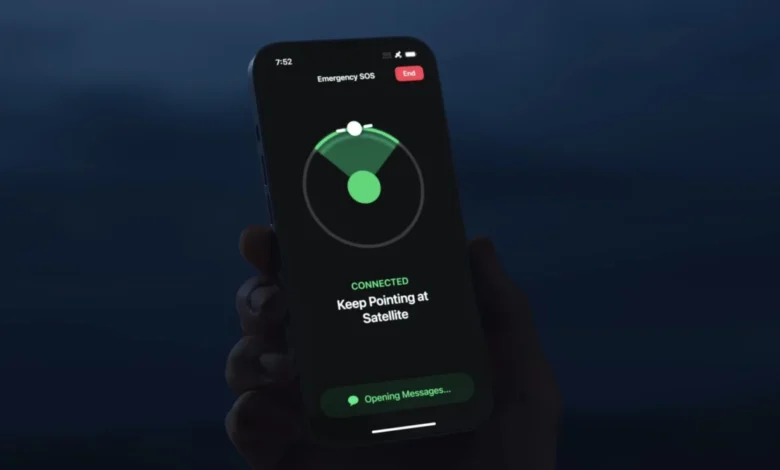
Amazon this week announced definitive plans to acquire Globalstar, the long-standing satellite communications company responsible for powering Apple’s critical satellite features across its latest iPhone models, including the iPhone 14 and newer, as well as the Apple Watch Ultra 3. This significant strategic move, which has sent ripples across the technology and aerospace sectors, was immediately followed by a separate but interconnected announcement: Amazon has secured a comprehensive agreement with Apple to become the primary provider of satellite connectivity for both current and future iPhone and Apple Watch functionalities. The dual announcements underscore a profound shift in the landscape of mobile satellite communication, promising a future where ubiquitous connectivity extends far beyond traditional cellular networks.
The Amazon-Globalstar Acquisition: A Strategic Consolidation
The proposed acquisition of Globalstar by Amazon represents a pivotal moment for both companies and the broader satellite industry. While specific financial terms of the deal were not immediately disclosed in the initial public announcement, industry analysts estimate the transaction to be valued in the multi-billion dollar range, reflecting Globalstar’s established infrastructure and its critical role in Apple’s ecosystem. The acquisition is currently subject to rigorous regulatory approvals from various national and international bodies, a process that is anticipated to be extensive given the strategic importance of satellite infrastructure. Experts project the transaction to officially close sometime in 2027. Upon finalization, Globalstar’s existing assets and operations will be integrated into Amazon’s burgeoning space enterprise, Project Kuiper, effectively transitioning Apple’s satellite features to be powered by Amazon’s Leo satellites. This integration is poised to significantly enhance the capabilities and reach of satellite-enabled services for Apple users worldwide.
Globalstar, founded in 1991, has a storied history in the satellite communications sector. Its constellation of low-Earth orbit (LEO) satellites has provided a range of services, including voice and data communication, asset tracking, and messaging for decades. However, the company has faced financial challenges and intense competition over the years. The landmark partnership with Apple, initially announced in September 2022 alongside the iPhone 14 launch, injected new life into Globalstar, providing a stable revenue stream and validating its technological capabilities. This partnership saw Globalstar dedicate 85% of its network capacity to supporting Apple’s Emergency SOS via Satellite feature. For Amazon, the acquisition of Globalstar is not merely about gaining a contract with Apple; it’s a strategic acceleration of its Project Kuiper ambitions, offering immediate access to licensed spectrum, ground infrastructure, and operational expertise that would otherwise take years to build from scratch.
A New Era for Apple’s Satellite Features
The agreement between Apple and Amazon ensures a seamless continuity and substantial expansion of satellite-powered features for Apple device users. Currently, Apple’s satellite capabilities are centered around critical safety and communication functions, primarily facilitated by Globalstar’s network. These features include:
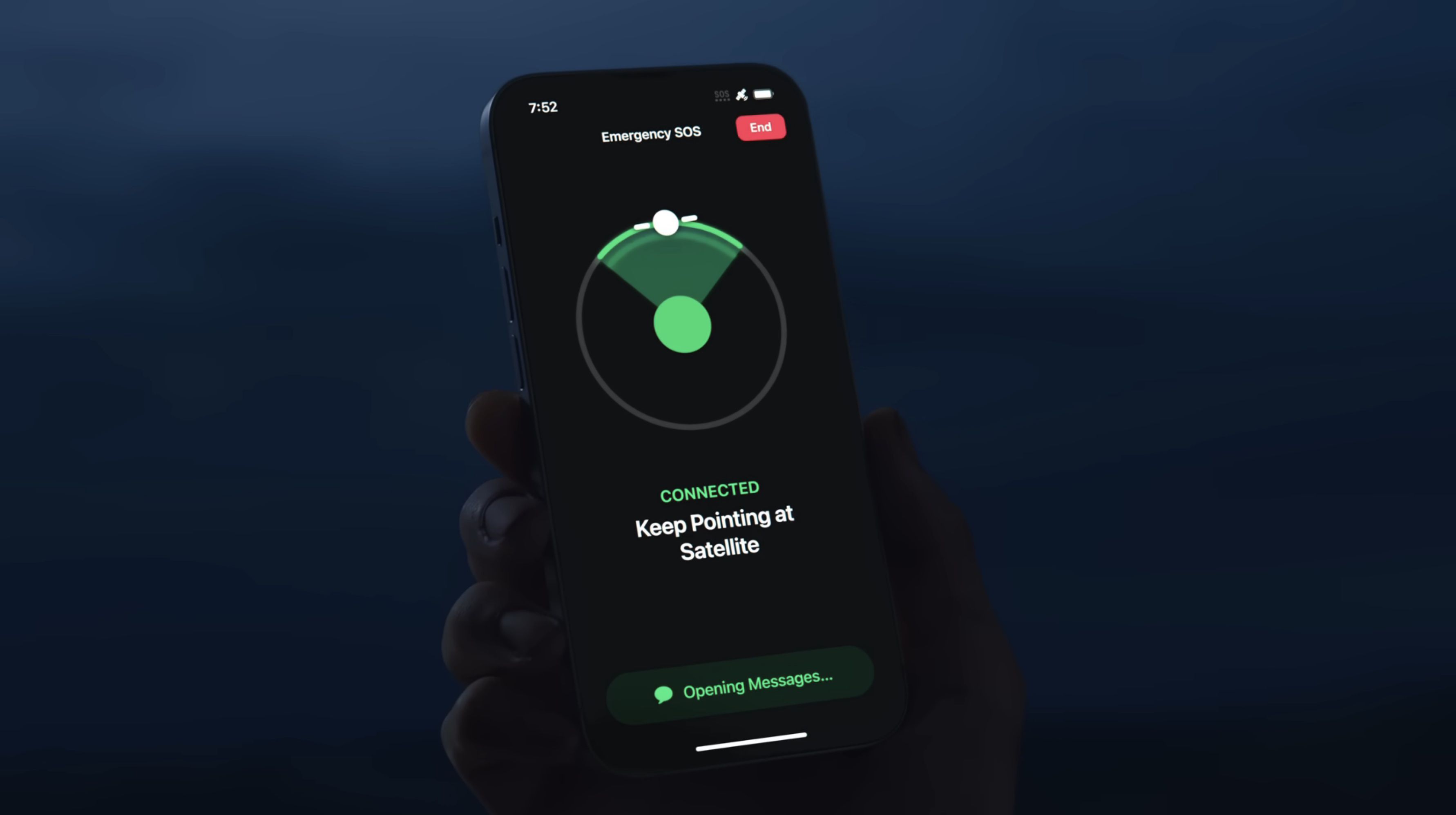
- Emergency SOS via Satellite: This groundbreaking feature allows users to send emergency messages to emergency services when outside of cellular and Wi-Fi coverage. The system guides users to point their iPhone towards a satellite, transmitting compressed messages containing vital information such as location, medical ID, and emergency contact details.
- Find My via Satellite: Complementing Emergency SOS, this feature enables users to share their location with friends, family, or emergency contacts through the Find My app, even when no traditional network is available. This is particularly useful for adventurers, remote workers, or in disaster-stricken areas.
Both of these features are currently offered free of charge in supported regions, provided the user is outside Wi-Fi or cellular connectivity. The geographical availability, however, varies by country, with initial rollouts concentrating on North America and select European nations, gradually expanding to other parts of the world. The transition to Amazon’s Leo satellites is expected to not only maintain but also significantly enhance the reliability and global reach of these existing services. Amazon’s Project Kuiper is designed for high-bandwidth, low-latency communication, which, even if not fully utilized for Apple’s initial narrow-band applications, provides a robust and redundant infrastructure.
The Genesis of Apple’s Satellite Connectivity
Apple’s foray into satellite communication was a carefully calculated strategic move to enhance user safety and device utility in an increasingly connected, yet still geographically constrained, world. The initial partnership with Globalstar was a result of extensive research and development, aiming to overcome the technical challenges of integrating satellite connectivity into consumer devices. The iPhone 14, launched in September 2022, was the first Apple device to feature this capability, offering a lifeline in remote areas where traditional cellular service is nonexistent. This innovation was lauded as a significant step forward in personal safety technology, moving beyond mere connectivity to provide critical emergency services.
The decision to partner with Globalstar was multifaceted. Globalstar possessed an operational LEO constellation and the necessary regulatory approvals, allowing for a relatively quicker deployment compared to building a network from scratch. Furthermore, Globalstar’s spectrum holdings were well-suited for the narrow-band data transmission required for emergency messaging. The collaboration involved Apple investing significantly in Globalstar’s infrastructure and technology, ensuring the network could meet the stringent demands of Apple’s user base. This initial investment and partnership laid the groundwork for what has now become an essential feature for millions of iPhone users.
Amazon’s Project Kuiper: A Strategic Power Play
Amazon’s acquisition of Globalstar and subsequent deal with Apple must be understood within the broader context of Project Kuiper, Amazon’s ambitious initiative to deploy a constellation of over 3,200 LEO satellites to provide high-speed, low-latency broadband internet globally. Project Kuiper is Amazon’s direct challenge to SpaceX’s Starlink and OneWeb, aiming to bridge the digital divide and extend Amazon’s vast cloud services (AWS) to even the most remote corners of the Earth.
Announced in 2019, Project Kuiper has been steadily progressing, with initial prototype satellites launched and extensive testing underway. The project envisions a vast network capable of delivering gigabit-speed internet, targeting residential, enterprise, and government customers. By acquiring Globalstar, Amazon gains immediate access to a proven, albeit different, satellite network and, crucially, a direct relationship with Apple, a global technology leader. This allows Amazon to diversify Kuiper’s offerings beyond just broadband internet, entering the rapidly growing market for direct-to-device satellite connectivity. It positions Amazon not just as an internet service provider from space, but also as a critical infrastructure provider for leading smartphone manufacturers. Dave Limp, Senior Vice President of Devices & Services at Amazon, stated in an internal memo, "This acquisition significantly strengthens Project Kuiper’s capabilities and accelerates our timeline to offer diverse satellite services. Our partnership with Apple is a testament to the versatility and robustness of our upcoming Leo constellation."
Unveiling Future iPhone Satellite Enhancements (iOS 27 and Beyond)
Even prior to Amazon’s groundbreaking announcement, industry rumors and developer insights had already pointed towards Apple’s continuous innovation in satellite connectivity. Whispers of at least five more iPhone satellite features or enhancements were circulating, indicating Apple’s long-term vision for this technology. With the backing of Amazon’s more advanced and expansive Project Kuiper constellation, the potential for these rumored features, and many more, becomes even more tangible.
Some of the enhancements widely anticipated to arrive, potentially as part of iOS 27 (expected to debut in beta in June this year, with a wide release in September), include:
- Two-Way Text Messaging: Moving beyond emergency messages, users may soon be able to send and receive standard text messages via satellite, allowing for more routine communication in areas without cellular coverage. This would significantly enhance the utility of the feature for non-emergency situations.
- Voice Messaging via Satellite: Leveraging increased bandwidth, the ability to send short voice clips could provide a more natural and immediate form of communication.
- Low-Bandwidth Data Sharing: This could involve sending small amounts of data, such as location pins, basic weather updates, or even highly compressed images, opening up new possibilities for remote interaction.
- Enhanced Location Tracking: More precise and frequent location updates via satellite could improve tracking capabilities for outdoor activities, logistics, and emergency response.
- Satellite Connectivity for Smart Home Devices (Limited): While speculative, a future where certain low-power smart home devices in remote locations could relay minimal data via satellite to a central hub is not out of the question, especially for monitoring purposes.
Amazon’s announcement explicitly mentioned "future features" in its agreement with Apple, signaling a collaborative roadmap for expanding Apple’s suite of satellite functions well beyond the current and rumored capabilities. The shift to Amazon’s Leo satellites, designed for higher data rates and lower latency, creates a robust foundation for more sophisticated services that were previously technically challenging or cost-prohibitive with older satellite infrastructures.
Technical Leap: The Power of Amazon Leo Satellites
The transition from Globalstar’s existing constellation to Amazon’s Project Kuiper (Leo satellites) represents a significant technical upgrade for Apple’s satellite features. Globalstar’s second-generation constellation, while effective for narrow-band emergency messaging, has inherent limitations in terms of bandwidth and global coverage density. Its satellites operate in a relatively low orbit, but their design was not optimized for the high-throughput, low-latency demands of modern broadband.
Project Kuiper, in contrast, is being built from the ground up to deliver high-performance internet. With a planned constellation of over 3,200 satellites, it will offer far greater coverage density, meaning more satellites will be visible from any given point on Earth at any time. This translates to more consistent connectivity, higher available bandwidth, and potentially lower power consumption for the end-user device as it can connect to a closer, stronger satellite signal. For Apple users, this means not just the potential for text messages, but eventually richer data exchanges, potentially even low-resolution video calls or faster data downloads for critical information in off-grid scenarios. The increased capacity could also enable Apple to expand its satellite features to a wider range of devices and offer services in more challenging geographical areas.
Industry Reactions and Strategic Implications
The news has garnered significant attention from industry analysts and competitors. Analysts generally view the acquisition as a smart strategic move for Amazon, solidifying its position in the rapidly evolving space economy and providing a tangible use case for its Kuiper network even before full broadband deployment. For Apple, the deal secures a long-term, technologically advanced partner capable of scaling with its ambitions.
"This is a brilliant maneuver by Amazon," commented Dr. Eleanor Vance, a lead analyst at SpaceTech Insights. "It immediately gives Kuiper a validated, high-profile customer in Apple, and it absorbs a key player in the direct-to-device satellite market. It also eliminates a potential competitor or, at least, a fragmented service provider that could have complicated future market dynamics."
While Apple has remained characteristically discreet on the specifics, a representative, speaking on background, emphasized the company’s unwavering commitment to user safety and providing innovative connectivity solutions. "Our partnership with Amazon will ensure that iPhone and Apple Watch users continue to have access to industry-leading satellite features, with exciting new capabilities on the horizon," the representative stated.
From Amazon’s perspective, this deal showcases its intent to be a comprehensive player in the space sector. "Integrating Globalstar into Project Kuiper strengthens our mission to connect the unconnected," stated an Amazon spokesperson. "This agreement with Apple further validates our technological prowess and our ability to deliver reliable, cutting-edge satellite services to global partners."
Competitors in the satellite industry, particularly those also eyeing the direct-to-device market like SpaceX (with its T-Mobile partnership) and AST SpaceMobile, are undoubtedly observing these developments closely. Amazon’s entry, backed by its immense financial resources and technological expertise, escalates the competition and will likely spur further innovation across the sector.
Impact on the Global Satellite Landscape
The Amazon-Globalstar acquisition, coupled with the Apple agreement, is poised to reshape the global satellite communications landscape. It signals a trend towards consolidation and integration within the space industry, as large tech giants seek to control key pieces of the infrastructure stack. This move solidifies Amazon’s position as a formidable player in LEO satellite constellations, directly competing with established and emerging players.
For consumers, this means a faster pace of innovation in mobile connectivity. The increased competition among satellite providers will likely drive down costs, improve service quality, and accelerate the development of new features for smartphones and other connected devices. The lines between terrestrial and satellite networks will continue to blur, creating a more resilient and pervasive global communication infrastructure. This could be particularly impactful in developing nations or disaster-prone regions where traditional infrastructure is scarce or vulnerable.
User Experience and Broader Societal Impact
The immediate beneficiaries of this transition and expansion will be Apple users. The prospect of more reliable, faster, and feature-rich satellite connectivity translates directly into enhanced safety and utility for their devices. Imagine being able to send a quick text to a loved one from a remote hiking trail, or receiving vital weather alerts when far from civilization. These capabilities not only offer peace of mind but also unlock new possibilities for exploration, remote work, and emergency preparedness.
Beyond individual users, the broader societal impact could be significant. Improved satellite communication can aid in disaster response, facilitate scientific research in remote areas, and even support critical infrastructure monitoring. As more devices gain satellite capabilities, the concept of being "out of touch" will become increasingly rare, fostering a more interconnected and potentially safer global community. The data collected from these satellite-enabled devices, processed through Amazon’s robust AWS infrastructure, could also yield valuable insights for urban planning, environmental monitoring, and emergency management.
Regulatory Oversight and Future Outlook
The road to full integration and expanded services will involve navigating complex regulatory environments. Approvals from telecommunications authorities in various countries, as well as space regulatory bodies, will be crucial. Issues of spectrum allocation, national security, and fair competition will be thoroughly scrutinized. However, given the strategic importance of satellite communication and the involved parties, a smooth, albeit lengthy, approval process is anticipated.
Looking ahead to 2027 and beyond, the full potential of this partnership will begin to materialize. As Amazon’s Kuiper constellation reaches operational maturity and Apple integrates more advanced features into iOS, the iPhone and Apple Watch could evolve into truly global communication devices, transcending the limitations of terrestrial networks. This acquisition and agreement mark a definitive step towards a future where ubiquitous, reliable connectivity is not a luxury, but a standard expectation for personal technology. The space race for global connectivity has just entered a thrilling new phase, with Amazon and Apple at the forefront of this transformative journey.