Blackmagic Design Unveils DaVinci Resolve 21 with AI-Powered Photo Grading and Advanced Neural Tools Ahead of NAB 2026.

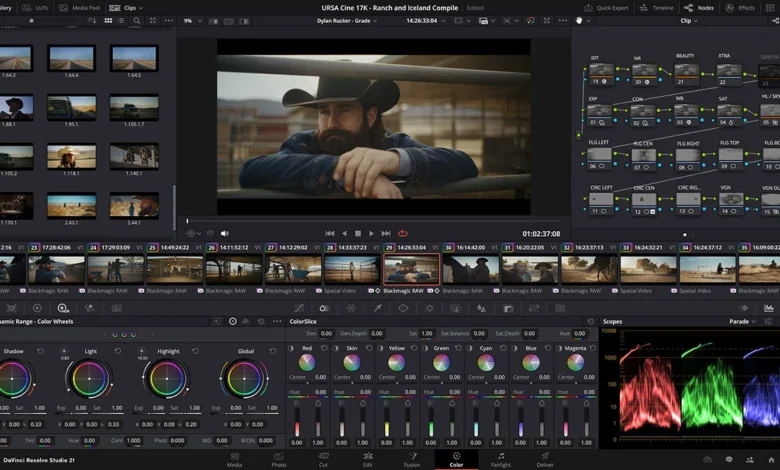
In a move that signals a significant expansion of its professional post-production ecosystem, Blackmagic Design has officially announced DaVinci Resolve 21, a milestone update that bridges the gap between motion picture editing and high-end still photography. Released in the lead-up to the National Association of Broadcasters (NAB) 2026 show in Las Vegas, the software introduces a dedicated "Photo page," marking the first time the industry-standard color grading suite has fully integrated a workflow specifically designed for photographers. This version also leverages an expanded DaVinci Neural Engine, featuring a suite of artificial intelligence tools designed to automate tedious tasks and provide creative controls previously reserved for high-budget visual effects houses.
The announcement comes at a pivotal moment for the media industry, as the lines between cinematography and photography continue to blur. By integrating professional-grade photo management and tethering directly into a non-linear editor (NLE), Blackmagic Design is positioning DaVinci Resolve as a universal hub for all visual media. This update continues the company’s tradition of disrupting the software market by offering enterprise-level tools without the recurring costs associated with subscription-based models.
The Evolution of the Photo Page: Bridging the Gap
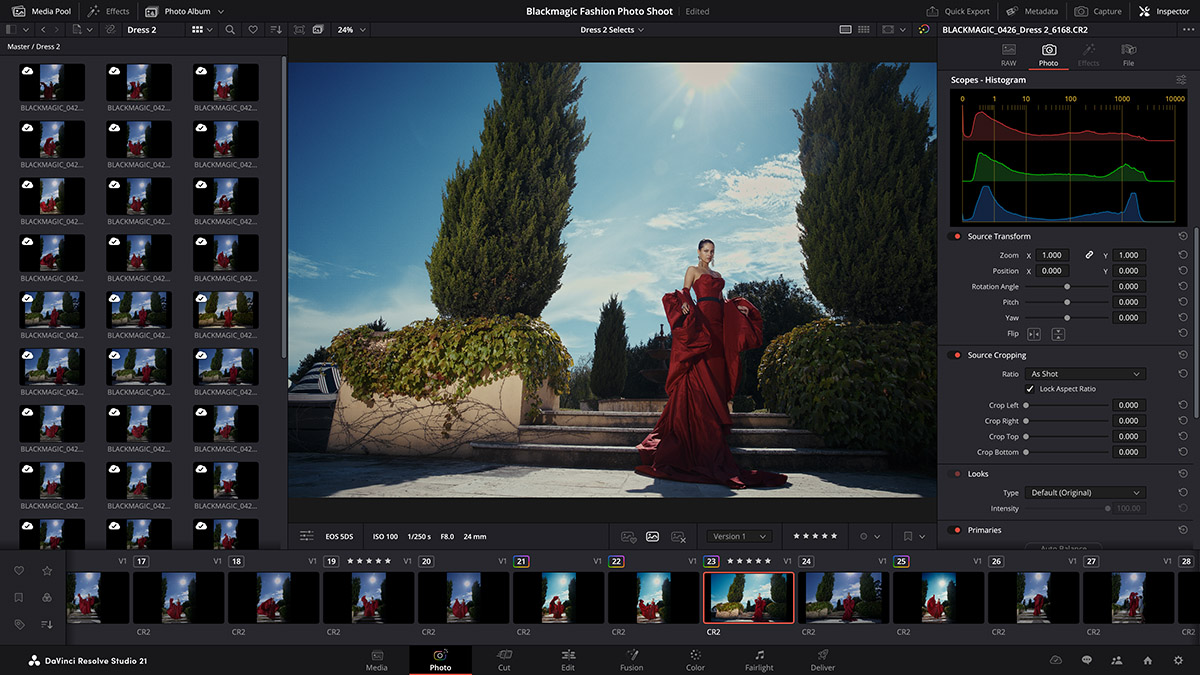
The headline feature of DaVinci Resolve 21 is the introduction of the Photo page, a dedicated workspace that allows users to import, organize, and edit still images with the same precision applied to moving images. For years, colorists have used the Color page to grade stills, but the process was often cumbersome, requiring workarounds to handle high-resolution RAW files and various aspect ratios. The new Photo page simplifies this by offering tools to reframe and crop images at their original source resolution, ensuring that no detail is lost during the creative process.
Beyond simple organization, the Photo page allows for a seamless transition into the Resolve Color page. This means photographers can now use node-based grading—a non-destructive workflow that offers far more control than the layer-based systems found in traditional photo editing software. Users can apply complex serial and parallel nodes, utilize the AI Magic Mask for selective adjustments, and view their work in a new LightBox mode. The LightBox view provides a bird’s-eye perspective of an entire album, allowing for consistent color matching across hundreds of images simultaneously.
To further support professional studio workflows, DaVinci Resolve 21 introduces direct camera tethering for Sony and Canon systems. This feature enables photographers and digital imaging technicians (DITs) to capture images directly into the software. While tethered, users can remotely adjust critical camera settings, including ISO, exposure, and white balance. A live view monitor within the interface allows for real-time composition checks, and capture presets can be saved to ensure consistency across multiple sessions. This integration suggests that Blackmagic Design is aiming to compete directly with established photo industry standards like Adobe Lightroom and Capture One.
Advanced AI and the DaVinci Neural Engine
Artificial intelligence remains at the core of DaVinci Resolve 21’s technological leap. The DaVinci Neural Engine has been updated to support several new tools that address common production challenges. Among the most notable is AI CineFocus. This tool allows editors to define or redefine the focal point of a shot after it has been filmed. By analyzing the depth map of a scene, the AI can simulate changes in aperture and focal range, effectively altering the depth of field. This allows for the addition of rack focus effects in post-production through keyframed parameters, providing a safety net for focus pullers and a creative tool for directors.
Complementing this is AI UltraSharpen, a tool designed to enhance upscaled footage or correct minor focus errors. Unlike traditional sharpening filters that often introduce digital noise and "haloing," UltraSharpen uses machine learning to reconstruct detail based on the context of the image. Similarly, the AI Motion Deblur tool targets artifacts caused by shutter speed mismatches or rapid movement. By removing streaks and softness, it allows for cleaner slow-motion playback and high-quality freeze frames from standard speed footage.
For portraiture and character work, Blackmagic has introduced the AI Face Age Transformer and AI Face Reshaper. The Age Transformer allows users to analyze a subject’s face and adjust an age offset slider to add or subtract features like wrinkles and skin elasticity. This tool is expected to be a major asset for narrative filmmakers who need to age characters across different timelines without relying solely on prosthetic makeup. The Face Reshaper offers more subtle adjustments, allowing for the modification of facial feature positions on moving subjects while maintaining realistic skin textures. Additionally, the AI Blemish Removal tool automates the process of retouching skin, targeting acne, pores, and discoloration with a single click, significantly reducing the time required for high-end beauty work.
Streamlining Post-Production with Intelligent Automation
Efficiency in the edit suite is a primary focus of this update. DaVinci Resolve 21 introduces AI Slate ID, a feature that automatically detects clapperboard details within a clip. The AI extracts scene, take, and shot information, automatically populating the metadata fields in the media pool. This reduces the manual data entry typically required of assistant editors, particularly on large-scale productions with hundreds of clips.
The new AI IntelliSearch takes media management a step further. By indexing the visual and auditory content of a project, it allows users to search for specific people, objects, or even keywords within the dialogue. The system can identify individual faces across an entire library of footage, making it easier to find all takes featuring a specific actor. This searchability extends to the dialogue, as the AI transcribes audio in the background, allowing editors to find specific lines of text instantly.
Furthermore, the IntelliScript feature now supports industry-standard Final Draft and plain-text screenplay formats. Upon importing a script, DaVinci Resolve 21 compares the written text to the transcribed audio of the filmed takes. It can then automatically generate a "radio cut" or a rough assembly of a scene based on the script, providing a significant head start in the assembly phase of editing.
Immersive Media and Fusion Enhancements
As the demand for virtual reality and immersive content grows, Blackmagic Design has expanded Resolve’s capabilities in the spatial media sector. Version 21 offers comprehensive support for immersive formats compatible with platforms like Meta Quest and YouTube VR. A new spherical Panomap rotation tool allows for intuitive adjustments of pitch, tilt, pan, yaw, and roll within a 360-degree environment.
In the Fusion page—Resolve’s integrated visual effects and motion graphics environment—users now have access to the Krokodove toolset, which adds over 70 new graphics and plugins. These tools are designed to speed up the creation of complex procedural animations and 3D compositions. Additionally, the program now supports ILPD (Inter-Lens Position Data) retargeting, which improves the handling and compositing of stereoscopic media, a critical requirement for high-end VR production.
Audio Innovation: The Fairlight Animator
The Fairlight audio page has also received a significant update with the introduction of the Fairlight Animator modifier. This tool creates a bridge between the audio engine and Fusion’s animation parameters. By analyzing the frequency and amplitude of an audio track, the Animator can automatically drive visual animations. For example, it can sync a character’s lip movements or eye blinks to a voiceover track or pulse background graphics in time with a musical beat. This automation reduces the need for manual keyframing in motion graphics and character animation, allowing for more dynamic and responsive visual content.
Historical Context and Market Implications
The release of DaVinci Resolve 21 marks nearly two decades of evolution for the software. Originally a hardware-based color grading system costing hundreds of thousands of dollars, DaVinci Resolve was acquired by Blackmagic Design in 2009. Since then, the company has transformed it into a comprehensive "all-in-one" solution for editing, color, VFX, and audio.
Blackmagic’s strategy of providing a robust free version alongside a reasonably priced one-time purchase for the "Studio" version ($295) has disrupted the industry. While competitors like Adobe and Avid have moved toward monthly subscription models, Blackmagic has maintained its "buy it once, own it forever" philosophy. Industry analysts suggest that the addition of the Photo page is a direct challenge to the Adobe Creative Cloud ecosystem, aiming to draw photographers into the Blackmagic workflow and potentially reduce their reliance on Photoshop and Lightroom.
The timing of the announcement, just before NAB 2026, is strategic. NAB is the world’s largest show for the media and entertainment industry, and Blackmagic Design traditionally uses the event to showcase how its software integrates with its wide range of cameras, switchers, and panels. By releasing the public beta now, Blackmagic allows the user community to test the new features and provide feedback, ensuring a stable release for the professional market later in the year.
Professional Responses and Industry Outlook
Initial reactions from the professional community have been largely positive, particularly regarding the AI-driven focus and de-blurring tools. "The ability to fix focus in post is a game-changer for documentary filmmakers who often work in unpredictable environments," noted one independent cinematographer. Meanwhile, the photography community has expressed cautious optimism. While the node-based grading system is powerful, the success of the Photo page will depend on how well it handles the specific library management needs of professional photographers.
However, some industry veterans have raised concerns about the increasing reliance on AI. While these tools offer incredible convenience, there is an ongoing debate regarding the "authenticity" of images that have been aged or refocused via neural networks. Despite these philosophical debates, the practical utility of these features for saving time and salvaging otherwise unusable footage is undeniable.
Pricing, Availability, and Technical Considerations
DaVinci Resolve 21 is currently available as a public beta for download from the Blackmagic Design website. The standard version remains free, while the Studio version, which includes the full suite of AI tools and multi-user collaboration features, is available for users with an existing license. Blackmagic has confirmed that all existing Studio license holders can upgrade to version 21 at no additional cost—a policy that continues to earn the company high praise for customer loyalty.
Users are cautioned that the beta version may contain bugs and is not yet recommended for use on mission-critical projects. From a hardware perspective, the new AI features are computationally intensive. Professionals are advised to utilize systems with high-performance GPUs and ample VRAM to take full advantage of the DaVinci Neural Engine’s capabilities. As the industry gathers at NAB 2026, DaVinci Resolve 21 stands as a testament to the rapid pace of innovation in post-production, signaling a future where the boundaries between different forms of visual media are effectively erased.