Door G Expands Virtual Production Studio with Brompton Tessera LED Processing Technology to Drive Immersive Brand Engagement

Door G, a premier creative studio specializing in cutting-edge digital storytelling, has announced a significant expansion of its virtual production capabilities through a strategic partnership with Brompton Technology. By integrating Brompton’s industry-leading 4K Tessera SX40 LED video processors, the studio has fortified its position as a hub for global enterprise and consumer brands seeking to leverage the next era of immersive engagement. This technological upgrade represents a pivotal shift for the studio, moving from foundational virtual production workflows to a high-fidelity, professional-grade environment capable of meeting the rigorous demands of modern cinematography and advertising.
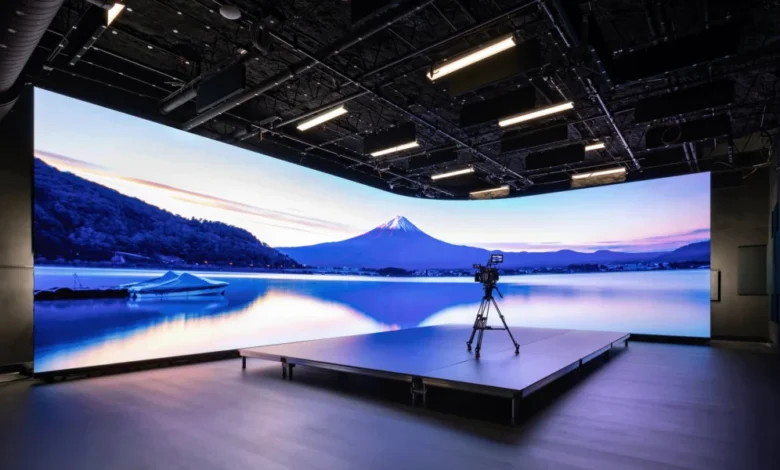
The expansion centers on the installation of three Tessera SX40 processors alongside five Tessera XD 10G data distribution units. This hardware infrastructure is tasked with driving a massive "J-shaped" LED wall measuring 17 meters in width and 4 meters in height. The display surface is a sophisticated hybrid construction featuring INFiLED’s flat DB 1.95mm pixel pitch panels, complemented by a central curve utilizing flexible Xmk2 1.95mm panels. This seamless integration of flat and curved surfaces allows for a more naturalistic wrap-around environment, providing directors and cinematographers with a versatile canvas that mimics the depth and perspective of real-world locations.
The Evolution of Virtual Production at Door G
The journey toward this expansion began last year when Door G first unveiled its state-of-the-art studio. The facility was originally designed to provide an accessible entry point for brands to explore virtual production—a methodology that replaces traditional green screens with live-rendered digital environments displayed on LED walls. However, as the complexity of client projects increased, the studio recognized the need for more robust processing power to eliminate common technical hurdles such as visual artifacts, color inaccuracies, and synchronization issues between the camera and the LED display.
Virtual production relies on the principle of "in-camera visual effects" (ICVFX). Unlike traditional post-production, where backgrounds are added months after filming, ICVFX allows the cast and crew to see the final environment in real-time. This requires an immense amount of data to be processed with zero latency. The choice of Brompton Technology was driven by the company’s reputation for reliability in high-stakes environments, such as major motion picture sets and high-end broadcast studios.
Joe Ross, senior video technologist at Door G, noted that the transition was motivated by a need to overcome specific shooting challenges, particularly when utilizing cameras that do not feature global shutters. In the world of digital imaging, synchronization between the LED refresh rate and the camera’s shutter speed is critical. Without precise processing, footage can suffer from "scan lines" or flickering. After evaluating the performance of Brompton-powered volumes in larger international studios, Door G determined that the Tessera system was the essential component needed to scale their operations.

Technical Innovations: ShutterSync and Frame Remapping
The integration of Brompton’s Tessera software suite introduces several advanced features that streamline the production workflow. One of the most significant tools now available to Door G is ShutterSync. In traditional LED setups, the camera’s shutter speed must be meticulously adjusted to match the LED wall’s refresh rate to avoid visual interference. ShutterSync automates this process, allowing the LED wall to adjust its output to match the camera’s settings. This provides directors of photography with greater creative freedom, enabling them to change shutter angles for motion blur effects without risking the integrity of the image.
Furthermore, the studio is moving toward the integration of Frame Remapping. This technology is a breakthrough for multi-camera shoots. It allows multiple cameras to view the same LED wall simultaneously, yet each camera "sees" a different background or a different version of the content. This is achieved by interleaving frames at high refresh rates. For example, Camera A could be capturing a finished digital sunset, while Camera B captures the same scene but with a "clean" background or with tracking markers visible. This capability effectively doubles or triples the productivity of a shoot day, as multiple angles and takes can be recorded in a single pass.
To ensure the highest possible visual fidelity, the LED panels have been calibrated using Brompton’s Hydra advanced measurement system. This system enables High Dynamic Range (HDR) capabilities, ensuring that the light emitted by the LED wall has the same nuance and color depth as natural light. Software features like Dark Magic and Extended Bit Depth further refine the image, particularly in low-light scenes where LED panels typically struggle to maintain smooth gradients. By eliminating "banding" in dark areas, Door G can now produce content that is indistinguishable from physical locations.
Sustainability and the EMA Green Seal
Beyond the technical specifications, Door G’s expansion is deeply rooted in a commitment to environmental responsibility. The studio holds the distinction of being the first creative virtual production studio on the East Coast of the United States to earn the "EMA Green Seal for Studios" from the Environmental Media Association. This certification is a rigorous benchmark that recognizes facilities meeting high standards for sustainability in the entertainment industry.
Virtual production is inherently more sustainable than traditional location-based filming. By bringing the "location" to the studio, Door G significantly reduces the carbon footprint associated with transporting large crews, equipment, and talent across the globe. Additionally, the use of digital sets eliminates the waste generated by the construction and subsequent demolition of physical sets. For global brands with strict Corporate Social Responsibility (CSR) mandates, Door G offers a way to produce high-end marketing content while adhering to environmental goals.
The efficiency of the Brompton-powered workflow contributes to this sustainability. By reducing the time needed for troubleshooting and re-takes, the studio minimizes energy consumption over the course of a production. The reliability of the hardware also ensures a longer lifespan for the equipment, reducing electronic waste in the long term.

Strategic Implications for the Advertising Industry
The expansion of Door G comes at a time when the advertising and enterprise sectors are undergoing a digital transformation. Brands are no longer satisfied with static commercials; they require immersive storytelling that can be adapted for various platforms, from television to social media and virtual reality. The integration of Unreal Engine—the world’s most open and advanced real-time 3D creation tool—with the Brompton-powered LED wall allows Door G to offer "digital twins" of locations.
A brand can now film a campaign in a digital recreation of a flagship store in Paris, and then instantly swap the environment for a futuristic cityscape, all without leaving the studio in the United States. This level of flexibility is a game-changer for project timelines and budgets. Webster Moyle, Technical Sales Manager at Brompton, emphasized that Door G’s commitment to quality and efficiency positions them at the forefront of this evolution. He noted that the advanced capabilities of the Tessera processors are a perfect fit for a studio looking to push the boundaries of what is possible in the virtual production space.
Chronology of Development and Future Outlook
The timeline of Door G’s evolution reflects the rapid maturation of the virtual production industry:
- Phase 1 (Initial Launch): Establishment of the studio with a focus on introducing brands to the concept of LED volumes and real-time rendering.
- Phase 2 (Research & Development): Extensive testing of various processing solutions. Joe Ross and the technical team identified limitations in standard setups, particularly regarding color reproduction and camera synchronization.
- Phase 3 (Training and Integration): Technical staff received specialized training at Brompton’s Burbank facility. This period focused on mastering the Tessera software and the Hydra calibration system.
- Phase 4 (Hardware Upgrade): Installation of the SX40 processors and XD distribution units, and the reconfiguration of the INFiLED "J-shaped" wall.
- Phase 5 (Current Operations): Full-scale production utilizing ShutterSync and HDR, with ongoing exploration into Hidden Markers and Custom Markers for advanced tracking and AR overlays.
Looking ahead, Door G plans to further exploit the potential of "Hidden Markers." This technology allows tracking markers to be embedded in the LED content in a way that is invisible to the main camera but visible to specialized tracking sensors. This simplifies the process of integrating augmented reality (AR) elements into the live broadcast or recording, allowing for even more complex layers of digital interaction.
The success of Door G’s upgrade has already resonated with its client base. Since the installation, the studio has reported a notable increase in interest from high-end clients who prioritize image quality and workflow efficiency. The ability to provide a "Cadillac" level of service—as described by the studio’s technical team—ensures that Door G remains a competitive force in the North American production landscape.
In conclusion, the expansion of Door G’s virtual production studio through the adoption of Brompton Technology represents more than just a hardware upgrade. It is a strategic alignment of technical excellence, creative ambition, and environmental stewardship. As the industry continues to move away from traditional methods in favor of more agile, digital-first workflows, facilities like Door G are setting the standard for how brands will communicate with their audiences in the years to come. The marriage of high-resolution LED panels, sophisticated processing, and sustainable practices ensures that the future of storytelling is not only more immersive but also more responsible.