Playstation Emulator Provenance Now Available For Apple Tv Users In Beta And Its Next Major Update Will Support A Classic Sony Handheld

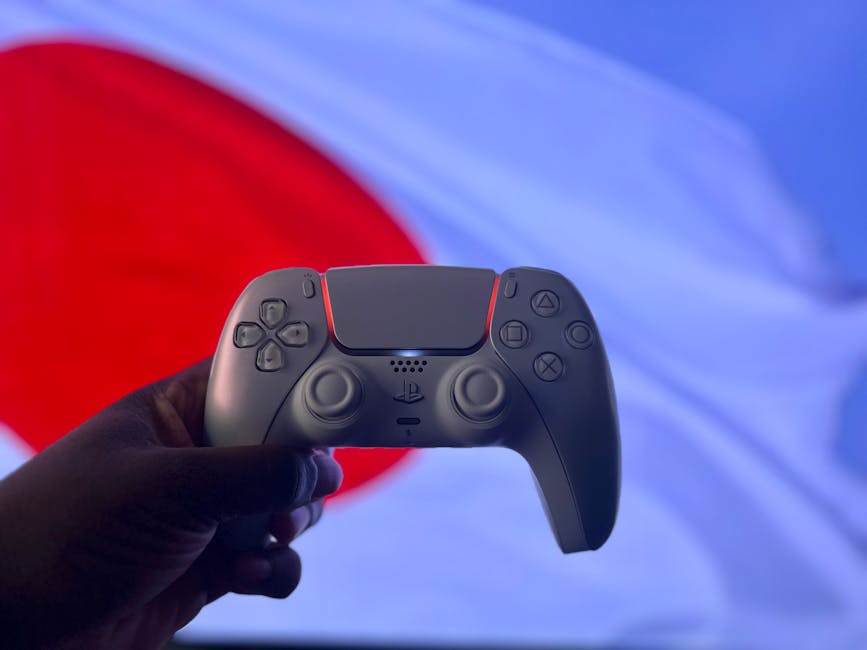
PlayStation Emulator Provenance Now in Beta for Apple TV, PSP Support Imminent
Provenance, the highly anticipated PlayStation emulator, has officially launched its beta version for Apple TV users, opening the door to a vast library of classic PS1 titles on the big screen. This development marks a significant milestone for retro gaming enthusiasts who own compatible Apple TV hardware. The beta release focuses on delivering a stable and functional emulation experience for the original PlayStation, allowing users to revisit beloved games with modern conveniences like customizable controls and save states. While still in its early stages, the beta is already demonstrating the potential of Provenance to bring a comprehensive PS1 emulation solution to a new and accessible platform. Development is actively ongoing, with the next major update slated to include support for a legendary Sony handheld console, further expanding the retro gaming horizons for Provenance users. This dual commitment to the PS1 and the upcoming handheld support positions Provenance as a powerful and versatile emulator for the Apple TV ecosystem.
The current beta of Provenance on Apple TV leverages the processing power of the tvOS platform to accurately and efficiently emulate the original PlayStation hardware. Users can expect to load their legally obtained PlayStation game ROMs and experience them with a level of fidelity that honors the original hardware. The interface is designed to be intuitive, allowing for easy navigation of game libraries and emulator settings. Key features available in the beta include the ability to map virtual on-screen controls to physical game controllers, providing a tactile and responsive gaming experience. Furthermore, the implementation of save states allows players to suspend their game progress at any point and resume later, a convenience that was not available on the original hardware. This feature is particularly beneficial for modern gaming sessions where interruptions are common. Provenance also supports various video output options, aiming to provide the best visual presentation for different display types. The development team behind Provenance has emphasized a commitment to accuracy and performance, striving to replicate the nuances of the original PlayStation’s architecture. Early adopters in the beta program will play a crucial role in identifying bugs, suggesting improvements, and shaping the future direction of the emulator. Feedback mechanisms are in place to facilitate this collaboration, ensuring that Provenance evolves into a polished and feature-rich application.
The upcoming major update to Provenance is generating significant excitement due to its planned support for a classic Sony handheld console. While specific details about which handheld are being kept under wraps for maximum impact, the implication of supporting a Sony handheld immediately points towards the PlayStation Portable (PSP). The PSP, launched in 2004, offered a significant leap in handheld gaming with its powerful hardware, multimedia capabilities, and an impressive library of games. Emulating the PSP presents a more complex technical challenge than the PS1 due to its different architecture, including a custom CPU, advanced graphics capabilities, and unique UMD disc format. Successfully implementing PSP emulation would represent a substantial technical achievement for the Provenance development team. It would mean that Apple TV users could potentially relive iconic PSP titles like Grand Theft Auto: Vice City Stories, Metal Gear Solid: Peace Walker, and God of War: Chains of Olympus directly on their television screens. This would not only broaden the appeal of Provenance but also significantly increase the value proposition for Apple TV as a retro gaming hub. The technical hurdles to overcome for PSP emulation are considerable, including accurate CPU core emulation, GPU pipeline recreation, and handling of the PSP’s unique operating system and memory management. The successful integration of PSP support would solidify Provenance as one of the most comprehensive multi-system emulators available on the tvOS platform.
The impact of Provenance on the Apple TV retro gaming landscape cannot be overstated. Historically, Apple TV has been an underutilized platform for deep emulation due to limitations in developer access and app store policies. However, with the increasing power of Apple TV hardware and the growing popularity of retro gaming, applications like Provenance are carving out a significant niche. The ability to play PS1 games on a large, high-definition display, coupled with the convenience of a dedicated media device, offers a compelling alternative to playing on older consoles or PC emulators. For many users, their Apple TV is already integrated into their home entertainment setup, making it a natural and convenient place to engage with classic games. The inclusion of a Sony handheld in the next update will further enhance this convenience, consolidating multiple classic gaming experiences within a single, user-friendly interface. This is particularly appealing to users who may not have the physical space or the desire to maintain a collection of older consoles. Provenance’s approach of bringing these experiences to a modern, accessible platform addresses these desires effectively. The beta program’s focus on user feedback is a strategic move to ensure that the emulator is tailored to the needs and preferences of the retro gaming community. This collaborative approach fosters loyalty and encourages ongoing development and refinement.
The technical considerations for PS1 emulation are well-understood, but still require careful optimization for diverse hardware configurations. Provenance’s developers have focused on creating a flexible codebase that can adapt to the varying performance capabilities of different Apple TV models. This includes ensuring that the emulator runs smoothly on older generations of Apple TV while also taking advantage of the enhanced processing power of newer devices. The beta phase is crucial for stress-testing these optimizations across a range of hardware, identifying any bottlenecks or performance issues. The introduction of PSP emulation, however, will introduce a new set of technical complexities. The PSP’s MIPS R4000-based CPU, custom graphics engine, and memory architecture are significantly more demanding to emulate accurately than the PS1’s MIPS R3000A. Achieving playable frame rates and accurate graphical rendering will require sophisticated CPU and GPU emulation techniques. Furthermore, the PSP’s unique audio processing capabilities will also need to be meticulously recreated to preserve the authentic soundscapes of its games. The development team will likely need to implement advanced techniques such as Just-In-Time (JIT) compilation for the CPU to achieve acceptable performance. Memory management, including the emulation of the PSP’s RAM and VRAM, is another critical area that will demand precise implementation.
The implications of Provenance’s success extend beyond individual gaming experiences. It can foster a renewed interest in the legacy of PlayStation and its associated hardware. By making these classic games readily accessible, Provenance can introduce a new generation of gamers to titles they might otherwise never have encountered. This is particularly important for preserving gaming history and ensuring that these iconic experiences remain playable for years to come. The beta program for Provenance on Apple TV is a call to action for enthusiasts to contribute to this effort. By reporting bugs and providing constructive criticism, users can directly influence the development of an emulator that has the potential to become a cornerstone of retro gaming on Apple devices. The anticipation surrounding the upcoming PSP support further underscores the ambitious vision of the Provenance development team. Their commitment to tackling the technical challenges of emulating a more complex console speaks volumes about their dedication to providing a comprehensive retro gaming solution. The successful launch of the PS1 emulator beta and the promise of PSP support position Provenance as a dominant force in the emerging tvOS emulation scene.
The user experience is a paramount concern for Provenance. While technical accuracy is vital, the emulator must also be accessible and enjoyable for a broad audience. The developers have prioritized a clean and intuitive user interface, minimizing the learning curve for new users. This includes straightforward ROM loading, easy access to emulator settings, and a visually appealing game library management system. For the upcoming PSP support, the developers will need to consider how to handle the PSP’s unique UI elements and menu systems within the emulator’s interface. This might involve creating custom overlays or adapting existing PS1 UI elements to accommodate the PSP’s functionality. The control mapping system will also need to be robust enough to handle the PSP’s dual analog sticks, shoulder buttons, and directional pad, offering flexibility for different controller types and player preferences. The ability to configure display settings, such as aspect ratio, filtering, and even shader effects, will further enhance the visual fidelity of both PS1 and PSP games, allowing users to tailor the experience to their liking. The long-term vision for Provenance likely includes continued support for both the PS1 and PSP, with potential for expansion to other classic consoles as the platform matures. The success of the beta and the anticipation for the next major update suggest a bright future for Provenance and a significant boost to retro gaming on Apple TV. The journey from beta to full release, with the added complexity of PSP emulation, will be a testament to the dedication and technical prowess of the Provenance development team. The retro gaming community eagerly awaits further updates and the full realization of Provenance’s potential.


