Zuckerberg Dunks On Apple Vision Pro Again And I Dont Think He Gets This Headset
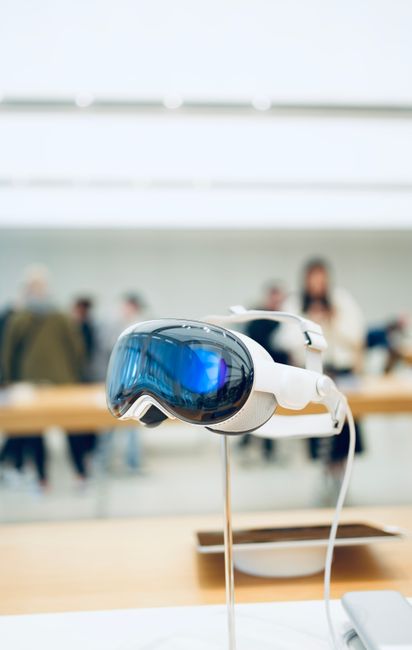
Zuckerberg Dunking on Apple Vision Pro: A Deep Dive into Meta’s Strategic Undermining
The ongoing rivalry between Meta and Apple in the burgeoning spatial computing and virtual reality market has reached a new, perhaps predictable, crescendo with Mark Zuckerberg’s latest criticisms of the Apple Vision Pro. While ostensibly focused on technical and experiential shortcomings, Zuckerberg’s repeated public pronouncements serve a deeper strategic purpose: to position Meta’s Quest platform as the more accessible, practical, and ultimately more compelling future for this nascent technology, while simultaneously painting Apple as an outlier, an innovator for innovation’s sake, and a product primarily for the elite. This isn’t just a battle of specs; it’s a carefully orchestrated campaign to shape consumer perception and influence the direction of an entire industry.
Zuckerberg’s primary salvo, as articulated in recent interviews and social media posts, centers on the perceived impracticality and exorbitant cost of the Vision Pro. He highlights its hefty price tag, positioning it as a luxury gadget rather than a tool for widespread adoption. By emphasizing the $3,499 starting price, Zuckerberg is implicitly contrasting it with the significantly more affordable Meta Quest 3, which launched at $499. This stark price differential is a cornerstone of Meta’s strategy: to democratize spatial computing and make it accessible to a far broader consumer base. The implication is clear: while Apple is catering to a niche of wealthy early adopters, Meta is building for the masses, fostering a larger ecosystem and a more diverse range of applications and experiences in the process. This "us vs. them" narrative is a powerful marketing tool, resonating with consumers who might be intrigued by VR/AR but are deterred by prohibitive costs.
Beyond cost, Zuckerberg has also taken aim at the Vision Pro’s form factor and user experience. He’s pointed to the external battery pack, arguing it’s an unnecessary inconvenience that detracts from the immersive experience. This detail, while seemingly minor, is magnified by Meta to underscore the perceived clunkiness of Apple’s design. The Quest 3, with its integrated battery, offers a more streamlined and untethered experience, a critical factor for extended use and casual adoption. Furthermore, Zuckerberg has questioned the Vision Pro’s suitability for extended periods of use, suggesting it’s more of a "screen you can put on your face" than a true spatial computing device. This critique aims to undermine Apple’s narrative of a revolutionary computing platform by framing it as a glorified, albeit expensive, display. Meta’s own messaging for the Quest platform has consistently emphasized its versatility for gaming, social interaction, fitness, and productivity, aiming to showcase a broader spectrum of use cases that extend beyond passive content consumption.
The "I don’t think he gets this headset" sentiment, often echoed by Meta’s leadership, suggests a fundamental misunderstanding of the Vision Pro’s intended purpose or a deliberate mischaracterization. Zuckerberg’s framing implies that Apple has prioritized a certain aesthetic or technological purity over genuine user needs and practical application. He positions Meta as the company that "gets it" – that understands what consumers actually want from immersive technologies: affordability, comfort, and a wide array of engaging experiences. This is a strategic maneuver to reframe the narrative, moving the conversation away from Apple’s technical achievements and towards Meta’s perceived user-centric approach. By repeatedly emphasizing Meta’s focus on "building the metaverse" and the social aspects of VR, Zuckerberg aims to position his company as the long-term visionary, while portraying Apple as a company focused on a more isolated, individualistic, and perhaps fleeting technological trend.
The choice of platform for these critiques is also significant. Zuckerberg has largely utilized Meta’s own channels – Instagram Live, Threads, and his personal Facebook page – to disseminate his views. This allows Meta to control the narrative and directly engage its vast user base. It bypasses traditional media gatekeepers and creates a direct line of communication, fostering a sense of authenticity and unfiltered opinion, even if the underlying message is meticulously crafted. This also allows for rapid iteration of talking points and quick responses to Apple’s marketing efforts or user feedback on the Vision Pro.
Furthermore, Zuckerberg’s criticisms serve as a preemptive strike against potential market capture by Apple. The tech industry is acutely aware of Apple’s ability to define and dominate new product categories. By proactively highlighting the Vision Pro’s perceived weaknesses and positioning Meta as the superior alternative, Zuckerberg aims to inoculate consumers against Apple’s gravitational pull. He’s attempting to plant seeds of doubt and encourage a more critical evaluation of the Vision Pro’s value proposition, steering potential customers towards Meta’s offerings instead. This is a high-stakes game of influence, where early perceptions can have long-lasting repercussions on market share and developer adoption.
The focus on "social presence" and the "metaverse" is a recurring theme in Zuckerberg’s discourse, and it directly contrasts with the perceived solitary nature of the Vision Pro experience. While Apple emphasizes individual immersion and high-fidelity visual experiences, Meta champions shared virtual spaces and collaborative digital environments. This divergence in vision is a critical differentiator. Zuckerberg aims to convince the market that the future of computing lies in interconnected, social experiences, and that Meta, with its established ecosystem of VR social platforms like Horizon Worlds, is best positioned to deliver this future. The Vision Pro, in this framing, is an advanced, albeit isolating, personal device.
The long-term implications of this strategy are considerable. If Meta can successfully position its Quest platform as the more practical, affordable, and socially engaging option, it could dictate the trajectory of the spatial computing market. Developers, seeing a larger and more diverse user base on Quest, might prioritize building applications for Meta’s ecosystem, creating a virtuous cycle that further solidifies its dominance. Apple, on the other hand, risks being perceived as a premium niche player, a purveyor of expensive, albeit technologically impressive, gadgets. The "dunking" is not just about criticism; it’s about shaping the very definition of what spatial computing should be and who it should be for.
Ultimately, Zuckerberg’s repeated critiques of the Apple Vision Pro are a calculated and multifaceted strategic offensive. They are designed to undermine Apple’s product, bolster Meta’s own offerings, and shape the future of immersive technology. By focusing on cost, practicality, and social engagement, Zuckerberg is attempting to steer the conversation away from Apple’s technological prowess and towards his own vision of a more accessible and interconnected spatial computing future. The effectiveness of this strategy will hinge on Meta’s ability to deliver on its own promises and to continue to capture the imagination and wallets of a broad consumer base, while Apple navigates the challenge of justifying its premium positioning in an increasingly competitive landscape. The "Metaverse" is a battleground, and Zuckerberg is wielding his words as powerful weapons in his arsenal.


