Apple Vision Pro Leak Reveals Company Could Be Planning At Least Three More Models It Could Take Four Generations Before The Device Reaches Its Ideal Form

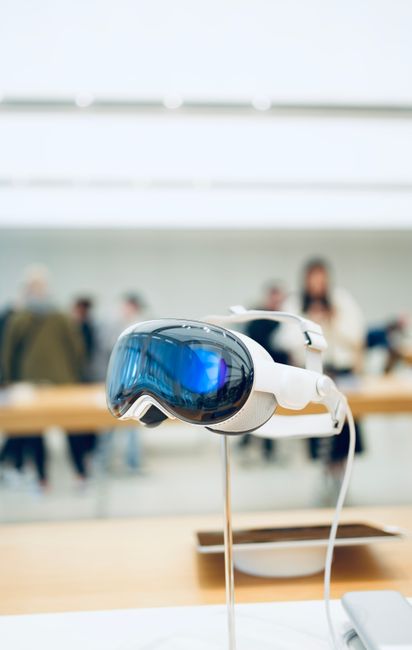
Apple Vision Pro Leak Reveals Company Could Be Planning At Least Three More Models; It Could Take Four Generations Before The Device Reaches Its Ideal Form
Recent leaks and industry analysis suggest Apple isn’t just launching a single iteration of its groundbreaking spatial computing device, the Vision Pro, but rather charting a multi-generational roadmap. Evidence points towards at least three additional Vision Pro models being in various stages of development, indicating a long-term commitment to the platform. This ambitious strategy aligns with Apple’s historical product development cycles, where initial generations often serve as foundational stepping stones for refined and expanded future offerings. The current Vision Pro, while impressive, is widely acknowledged to be a first-generation product with inherent limitations and areas ripe for improvement. Sources within the supply chain and developer communities hint at a staggered release schedule, with significant enhancements anticipated across hardware, software, and user experience with each successive model. This suggests a deliberate pace, allowing Apple to iterate and perfect the complex technology involved in delivering a seamless and intuitive spatial computing experience. The notion of a four-generation trajectory to reach an "ideal form" is not unfounded when considering the technological hurdles and the immersive nature of the intended experience.
The leaked information indicates a tiered approach to future Vision Pro models, potentially targeting different market segments and price points. While the initial Vision Pro is positioned as a premium, pro-oriented device, subsequent iterations could cater to a broader audience. This might involve variations in display technology, processing power, camera capabilities, and even form factor. For instance, a "lighter" or more consumer-focused model could be a key development in the roadmap, addressing concerns about the current device’s weight and bulk. Conversely, a "Pro Max" or "Ultra" version might emerge, boasting even more advanced features for professional users requiring peak performance and specialized functionalities. The leaked schematics and component orders suggest a consistent underlying architecture but with significant room for scaling and specialization. This multi-model strategy is crucial for capturing market share and establishing a dominant presence in the nascent spatial computing landscape, a tactic Apple has employed successfully with its iPhone and Apple Watch lineups.
Understanding the potential timeline, the four-generation hypothesis for reaching an "ideal form" is rooted in the inherent complexities of spatial computing. The first generation, the Vision Pro, is a sophisticated but necessarily experimental device. It introduces core technologies like eye-tracking, hand-tracking, high-resolution displays, and advanced spatial audio. However, these technologies are likely to undergo significant refinement. Generational improvements are expected in areas such as battery life, field of view, display pixel density and refresh rates, processing efficiency for sustained demanding tasks, and the overall comfort and ergonomics of the headset. The "ideal form" likely encompasses a device that is indistinguishable from everyday eyewear in terms of weight and comfort, offers a truly seamless and expansive field of view, and possesses processing power and battery life that allows for all-day, uninterrupted immersion. This level of technological advancement often requires multiple iterations to overcome engineering challenges and achieve economies of scale.
The development of a robust ecosystem is intrinsically linked to the future success of the Vision Pro, and the multi-model strategy is designed to foster this growth. Apple’s history demonstrates a strong emphasis on creating developer tools and encouraging third-party innovation. With multiple Vision Pro models planned, developers will have a wider range of hardware targets to optimize for, leading to a richer and more diverse application landscape. This is critical for realizing the full potential of spatial computing, which extends far beyond media consumption to encompass productivity, collaboration, education, and entertainment. The leaked internal documents suggest dedicated engineering teams working on specific aspects of the Vision Pro’s evolution, including advanced sensor technology, miniaturization of components, and AI integration for more intelligent spatial understanding. The commitment to multiple models signals Apple’s intent to treat spatial computing not as a niche product but as a fundamental computing paradigm shift, akin to the transition from desktops to laptops, and then to smartphones.
Furthermore, the progression through these generations will likely see significant advancements in user interface and interaction paradigms. While current Vision Pro interactions are impressive, they are still in their nascent stages. Future models are expected to benefit from more intuitive and natural gestures, enhanced voice control, and potentially even brain-computer interface elements in the very long term. The "ideal form" would be one where the technology fades into the background, allowing users to interact with digital information and virtual environments as effortlessly as they do with the physical world. This requires not only hardware innovation but also substantial software development, including sophisticated AI algorithms for scene understanding, object recognition, and predictive user behavior. The multiple model strategy allows for parallel development of hardware capabilities and the software intelligence needed to leverage them effectively, avoiding a bottleneck where advanced hardware is underutilized due to software limitations.
The economic implications of this multi-generational approach are also noteworthy. The initial high price point of the Vision Pro is a barrier to mass adoption. However, as manufacturing processes mature and economies of scale are achieved, it is highly probable that subsequent models will become more accessible. The leaked product roadmaps suggest that Apple is already considering cost optimizations for future iterations. This could involve using different display technologies, less exotic materials, or more efficient chip designs in lower-tier models. This phased approach to market penetration, starting with enthusiasts and professionals and gradually expanding to a wider consumer base, is a proven strategy for new and transformative technologies. It allows Apple to recoup its significant R&D investment and refine the product based on real-world usage before a broader launch. The success of this strategy hinges on Apple’s ability to continually deliver compelling value propositions with each new generation.
The journey to the ideal form of spatial computing, as envisioned by Apple, is a marathon, not a sprint. The current Vision Pro is a bold declaration of intent, a testament to the company’s long-term vision. The leaked information about multiple future models, and the projected four-generation timeline, underscores the complexity and the profound ambition behind this endeavor. It suggests a deliberate and iterative process of innovation, where each generation builds upon the lessons learned from the previous one, gradually chipping away at the challenges of creating truly immersive, comfortable, and powerful spatial computing devices. This phased development is not a sign of hesitation but rather a strategic commitment to perfecting a technology that has the potential to redefine how we interact with computers and the digital world. The next few years will be crucial in observing the evolution of the Vision Pro as Apple continues to push the boundaries of what is possible in spatial computing.


