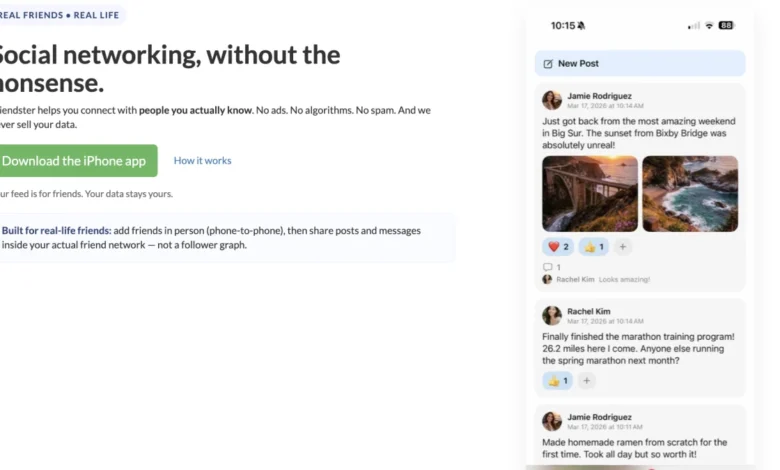
The relaunch of Friendster, spearheaded by new owner Mike Carson, positions the platform as a stark antidote to the pervasive, algorithm-driven, and ad-laden social media landscape that defines the current digital age. Carson promotes the relaunched service as entirely free of advertisements and complex algorithms designed to maximize engagement through content suggestions. However, the absence of traditional social media features extends far beyond just ads and algorithms. The new Friendster, currently available as an iOS application, presents users with an entirely blank canvas upon account setup. There are no public posts, no feeds to scroll, and crucially, no automated suggestions for individuals to follow, fundamentally altering the expected user experience of a social network.
The core tenet of the resurrected Friendster is its strict adherence to facilitating connections exclusively between individuals who know each other in real life. This principle is enforced through a unique and deliberately physical mechanism: to connect with another user on the platform, both individuals must have the Friendster app open and physically tap their phones together. This "tap-to-connect" feature is the sole method for establishing a connection, eliminating the possibility of connecting with strangers, distant acquaintances, or purely online personas, thus aiming to foster a network built purely on tangible, offline relationships.
The Genesis and Evolution of Friendster: A Pre-Facebook Era Pioneer
To fully appreciate the significance of Friendster’s return, it is essential to revisit its original trajectory and its foundational role in the nascent days of online social networking. Launched in March 2002 by founder Jonathan Abrams, Friendster is widely credited as one of the first major online social networking platforms, predating the rise of giants like MySpace and Facebook. Its debut marked a pivotal moment, offering internet users a novel way to connect with friends, discover new people through their existing networks, and share personal information in a digital space. The platform’s initial concept revolved around "circles of friends," allowing users to see connections up to three degrees of separation away, fostering a sense of interconnectedness.
Friendster quickly gained traction, attracting millions of users, particularly in its early years. Its popularity demonstrated the latent demand for online social interaction and laid much of the groundwork for the social media revolution that would soon follow. However, despite its pioneering status, Friendster faced formidable challenges that ultimately led to its decline in Western markets. The platform struggled with scalability issues, frequent server outages, and a user interface that became increasingly cumbersome as its user base grew. Crucially, it was outmaneuvered by competitors that emerged shortly after its launch. MySpace, which launched in 2003, offered greater customization options and integrated music and entertainment, quickly appealing to a younger demographic. Facebook, launched in 2004, initially targeted college students with a cleaner interface and a more exclusive feel, eventually expanding to dominate the global market.
By the mid-2000s, Friendster found itself unable to maintain its foothold among American users, as MySpace and then Facebook rapidly eclipsed its user numbers and market share. While its presence waned in North America, Friendster managed to find a significant and loyal user base in Asia, particularly in countries like the Philippines, Malaysia, Indonesia, and Singapore, where it continued to thrive for several years. This regional success led to its acquisition in 2009 by MOL Global, a Malaysian internet company. Under MOL Global’s ownership, Friendster attempted a pivot in 2011, transforming from a social networking site into a social gaming platform, an effort to capitalize on the burgeoning online gaming market. However, this strategic shift proved insufficient to revive its fortunes in the long term, and the platform eventually ceased operations entirely in 2015, marking the end of its original chapter.
The Unlikely Resurrection: Mike Carson’s Acquisition and Vision
The journey to Friendster’s current revival is an unconventional tale rooted in the digital detritus of the internet. Mike Carson, the entrepreneur behind the new Friendster, recounted his discovery in a blog post, detailing how he noticed in 2023 that the Friendster.com domain, once a beacon of early social networking, was resolving to a website filled with an array of pop-up advertisements. This observation piqued his curiosity, leading him to investigate the domain’s ownership.
Carson soon discovered that the domain had been acquired at an expired domain auction a year prior for a modest sum of $7,456. Recognizing the historical significance and brand recognition still associated with Friendster, Carson initiated contact with the new owner. After negotiations, he struck a deal, purchasing Friendster.com for $20,000 paid in Bitcoin, along with transferring ownership of another domain Carson owned that generated an annual income of $9,000. This acquisition, totaling an effective value of $29,000, reflects a strategic gamble on the enduring power of a nostalgic brand name and a contrarian vision for social interaction.
Carson’s motivation for reviving Friendster stems from a deep-seated belief that contemporary social media has strayed too far from its original purpose of connecting people meaningfully. He envisions the new Friendster as a direct response to what he perceives as the pervasive issues of digital addiction, misinformation, curated online personas, and the erosion of genuine human connection fostered by current platforms. His philosophy centers on restoring authenticity and intentionality to online interactions by strictly mirroring real-world relationships.
The New Friendster’s Differentiating Features and Future Roadmap
The current iteration of Friendster is designed to be intentionally minimalistic, focusing solely on the "tap-to-connect" mechanism. This deliberate lack of traditional features such as news feeds, public profiles with extensive content, or even direct messaging, forces users to engage primarily in the physical world to build their network. This approach is a radical departure from the content-heavy, engagement-maximizing strategies employed by dominant social media platforms. The "nothingness" of the app, as observed by early users, is a feature, not a bug—it compels users to seek out real-world interactions rather than passively consuming digital content.
Carson has outlined several potential future features that align with his vision of fostering authentic, real-world connections. One such planned feature is "Friends of Friends," which would allow users to connect online if they are already connected to a mutual friend whom one of the users has physically met through the app. This feature introduces a controlled element of online discovery while still anchoring connections to at least one real-world interaction, maintaining the platform’s core ethos.
Another innovative concept is the "Fading Connection" feature. This mechanism would gently nudge users when they haven’t been in the same physical proximity with one of their Friendster connections for an extended period, perhaps more than a year. Carson describes this not as a punishment but as "a gentle nudge that real friendships are kept alive in person, not online." This feature underscores the platform’s commitment to reinforcing the importance of physical presence in maintaining relationships, a stark contrast to platforms that prioritize constant online engagement irrespective of real-world interaction.
Broader Implications and Market Analysis: Can Friendster Find its Niche?
The relaunch of Friendster arrives at a time when there is growing public discourse around the negative impacts of mainstream social media. Concerns about mental health, privacy erosion, data exploitation, the spread of misinformation, and the superficiality of online interactions are increasingly prevalent. A significant segment of users expresses "social media fatigue" and a desire for more authentic, less performative online spaces. This sentiment creates a potential opening for platforms offering a different model.
Challenges to Adoption:
Despite the compelling philosophical underpinnings, the new Friendster faces substantial challenges in achieving widespread adoption and critical mass.
- User Acquisition: The primary hurdle is the initial user acquisition. The "blank slate" experience means that new users download an empty app. They must actively seek out other users in the physical world to populate their network. This requires a significant behavioral shift from users accustomed to instant gratification and content feeds.
- Scalability of the Connection Model: The "tap-to-connect" mechanism, while unique, inherently limits the speed and ease of network building. It’s ideal for small, intimate gatherings but becomes cumbersome for large-scale adoption or for users who live geographically isolated from their primary social circles.
- Competition: Friendster is re-entering a vastly more crowded and sophisticated social media landscape than it left. Established giants like Facebook (Meta), Instagram, TikTok, X (formerly Twitter), and LinkedIn command billions of users and immense resources. Even niche platforms like BeReal, which emphasizes authenticity, have struggled to maintain momentum against the engagement engines of larger players.
- Monetization Strategy: With no ads and a focus on privacy, Carson will need to articulate a sustainable business model. While premium features or a subscription model could be explored, these would add another layer of friction to user adoption.
Opportunities and Potential Impact:
Conversely, Friendster’s unique approach presents several intriguing opportunities:
- Addressing Social Media Fatigue: For users disillusioned with the current social media paradigm, Friendster offers a radical alternative focused on quality over quantity, and depth over breadth of connections. This could appeal to a niche but growing demographic seeking a "digital detox" or more mindful online presence.
- Nostalgia Factor: The Friendster brand name itself carries a significant nostalgia factor for early internet adopters. This could generate initial curiosity and drive downloads, providing a valuable, albeit temporary, marketing advantage.
- Privacy and Data Security: In an era of increasing privacy concerns, a platform explicitly designed to minimize data collection and avoid algorithms could resonate strongly with users wary of surveillance capitalism.
- Redefining "Social": If successful, Friendster could influence a broader re-evaluation of what "social" truly means in the digital age, shifting focus back to tangible, in-person interactions as the foundation of online networks. This aligns with a broader trend toward "anti-social social networks" that prioritize curated, authentic connections over algorithmic virality.
Industry analysts suggest that while the concept is compelling, the hurdle of user adoption for a platform demanding physical interaction remains substantial. The success of such a venture hinges on its ability to cultivate a critical mass of early adopters willing to embrace its unique interaction paradigm and, crucially, to evangelize its philosophy to their real-life networks. Privacy advocates might view Friendster’s model as a refreshing counterpoint to data-hungry platforms, celebrating its commitment to user autonomy and limited data footprint. However, the modern user’s ingrained habits of passive consumption and instant digital gratification pose a formidable barrier.
In conclusion, Mike Carson’s audacious revival of Friendster represents more than just a nostalgic tech reboot; it is an experiment in redefining the very nature of online social interaction. By stripping away the layers of algorithms, advertisements, and content feeds that define contemporary social media, Friendster aims to force users back into the physical world, leveraging digital tools only to reinforce real-life connections. While the challenge of user acquisition and sustained engagement for an app that starts "empty" and demands physical interaction is immense, the new Friendster offers a thought-provoking counter-narrative to the prevailing digital trends, gambling that there is a significant appetite for a more authentic, intentional, and physically grounded form of social networking in an increasingly digital world. Its ultimate success will serve as a fascinating barometer of societal attitudes towards online connectivity and the enduring value of human presence.