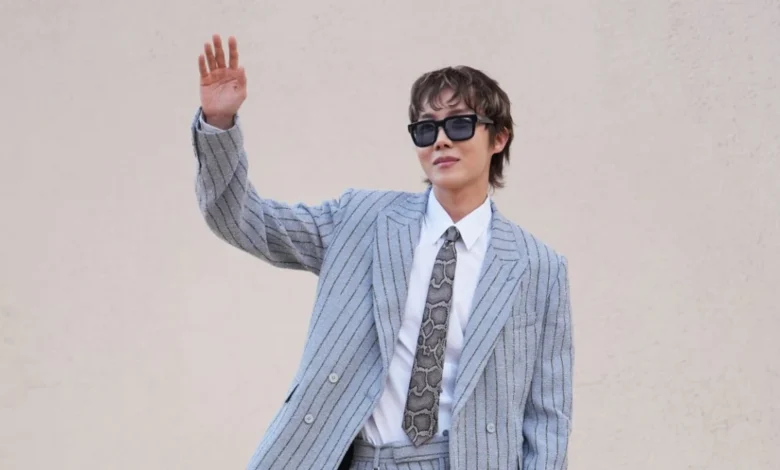
The highly anticipated Samsung Unpacked event in London on July 22, 2026, unfolded without the physical presence of its newest Galaxy campaign star, j-hope of BTS. Despite being the prominent face of the marketing push for Samsung’s latest foldable devices, the acclaimed rapper and dancer made his appearance solely through a new advertisement that debuted during the presentation, introducing the redesigned Galaxy Z Fold 8 Wide. However, for the eagle-eyed members of the BTS ARMY, j-hope had already provided an unofficial, albeit widely circulated, preview of the device days before its official unveiling, turning his public appearances into inadvertent product launches.
The absence of j-hope from the London stage, where Samsung showcased its cutting-edge foldable smartphone lineup, including the Galaxy Z Fold 8 Wide, the more traditionally proportioned Galaxy Z Fold 8 Ultra, and the sleek Galaxy Z Flip 8, was not entirely unexpected by those following his recent rigorous schedule. Just days prior, on Sunday, j-hope had co-headlined the inaugural FIFA World Cup Final Halftime Show at MetLife Stadium in New York-New Jersey. This monumental 11-minute spectacle saw BTS perform their global hit "Dynamite" alongside an star-studded roster of international music icons such as Madonna, Shakira, Justin Bieber, and Burna Boy. Following this high-profile performance, j-hope traveled extensively, arriving back in Seoul, South Korea, on Tuesday, just a day before the London Unpacked event. The tight turnaround and intercontinental travel made his attendance at the UK launch logistically challenging, underscoring the demanding schedule of a global superstar.
The Accidental Unveiling: A Masterclass in Fan Engagement
Before Samsung officially pulled back the curtain on its new devices, j-hope had already become an unwitting, or perhaps strategically chosen, harbinger of the Galaxy Z Fold 8 Wide. Fans, known for their meticulous attention to detail and passionate engagement, observed him with an unusually wide, lavender-colored foldable phone during various public appearances. The first notable sighting occurred last week during soundcheck footage from a BTS World Tour stop in Paris. This initial glimpse sparked a flurry of speculation across social media platforms, with ARMY members dissecting every pixel of the images and videos, comparing the device to previous Galaxy Fold models, and noting its distinctive new dimensions and vibrant hue.
The speculation intensified upon j-hope’s arrival at Incheon International Airport in Seoul on Tuesday. Photos and videos from the airport, widely shared online, clearly showed him holding the same unusually wide, lavender foldable phone. This second high-visibility sighting, just hours before the global Unpacked event, effectively confirmed the rumors. Fans quickly deduced that the device in his hand was none other than the then-unreleased Galaxy Z Fold 8, inadvertently giving the global audience an early, organic look at Samsung’s latest design and colorway. This phenomenon highlights the unprecedented power of celebrity influence and fan culture in the age of instantaneous digital dissemination, where a casual public appearance can turn into a global product reveal.

Samsung’s subsequent Unpacked presentation in London formally introduced the Galaxy Z Fold 8 Wide, confirming the observations of the vigilant ARMY. The company highlighted the device’s key design innovation: a shorter, wider form factor engineered to enhance user experience, making the foldable phone more ergonomic to hold and operate in its folded state. This design choice addresses common feedback regarding the narrowness of previous Fold models, aiming to make the external screen more practical for single-handed use. The new lavender color, as spotted on j-hope, was also confirmed as one of the signature options for the device, aligning the brand’s aesthetic with contemporary trends and consumer preferences.
Samsung Unpacked: A Global Stage for Innovation
Samsung Unpacked events are cornerstone moments in the consumer electronics calendar, serving as Samsung’s primary platform for launching its flagship devices, particularly within the Galaxy smartphone and wearable ecosystem. These events are meticulously choreographed showcases designed to generate global excitement, attract media attention, and set the narrative for Samsung’s technological advancements. Historically, Unpacked events have been instrumental in introducing groundbreaking innovations, from the original Galaxy S series to the pioneering Galaxy Note line, and more recently, the transformative Galaxy Z foldable series.
The London 2026 event was no exception, focusing heavily on the evolution of Samsung’s foldable technology. The introduction of the Galaxy Z Fold 8 Wide, with its enhanced aspect ratio, represents Samsung’s continuous effort to refine the foldable experience, making it more accessible and practical for everyday users. The accompanying Galaxy Z Fold 8 Ultra caters to users seeking the pinnacle of performance and features within the foldable segment, while the Galaxy Z Flip 8 continues to offer a more compact, fashion-forward foldable option. These launches underscore Samsung’s dominant position in the nascent but rapidly growing foldable market, where it consistently pushes the boundaries of smartphone design and functionality.
The Strategic Alliance: BTS and Samsung’s Enduring Partnership
The partnership between BTS and Samsung is a prime example of a highly successful collaboration between a global tech giant and a cultural phenomenon. BTS, with its unparalleled global reach and an incredibly devoted fanbase, the ARMY, offers Samsung access to a vast, engaged, and demographically diverse audience. This strategic alliance has seen BTS members feature prominently in various Samsung campaigns, from promoting previous Galaxy smartphones to endorsing wearables and other smart devices.

j-hope’s role as the face of the latest Galaxy campaign is a testament to his individual appeal and influence within the group. His vibrant persona, global recognition, and strong connection with fans make him an ideal ambassador for a brand that aims to embody innovation and connectivity. While his physical absence from Unpacked might have disappointed some fans, his digital appearance in the advertisement and, more crucially, his "accidental" product reveal, arguably generated even more authentic buzz. This kind of organic, fan-driven engagement often resonates more deeply than traditional, heavily produced marketing campaigns, leveraging the innate curiosity and loyalty of the fanbase.
The effectiveness of this partnership is rooted in several factors. Firstly, authenticity: BTS members are genuine users of Samsung devices, making their endorsements feel less like a mere commercial obligation and more like a genuine preference. Secondly, global appeal: BTS transcends geographical and cultural boundaries, allowing Samsung to reach diverse markets simultaneously. Lastly, the power of fandom: The ARMY acts as a powerful amplifier for any content featuring BTS, ensuring maximum visibility and discussion around the products they endorse.
Implications of the "Accidental" Leak in Modern Marketing
The incident with j-hope and the Galaxy Z Fold 8 Wide raises intriguing questions about modern marketing strategies, particularly in the age of hyper-connectivity and pervasive social media. Was j-hope’s public display of the unreleased device a genuine oversight, or a meticulously planned "leak" designed to create viral buzz? While officially presented as an accidental spoiler, the sheer effectiveness of the stunt in generating widespread discussion and anticipation among a key demographic cannot be overstated.
In an era where consumers are increasingly skeptical of traditional advertising, "leaks" can be incredibly potent tools. They bypass the curated gloss of official announcements and instead foster a sense of discovery and insider knowledge among consumers. For a fanbase as engaged as the ARMY, spotting a new device with their idol transforms a product reveal into an interactive treasure hunt. This approach capitalizes on the parasocial relationships fans have with their idols, making them feel more connected to both the celebrity and the product.
This type of "guerilla marketing" or "pre-buzz" strategy allows brands to test the waters, gauge initial reactions, and build momentum long before an official launch. It leverages the digital infrastructure of fan communities – Twitter, TikTok, Instagram, fan forums – to spread information rapidly and organically, often at a fraction of the cost of traditional advertising. For Samsung, a company that thrives on innovation and staying ahead of the curve, employing such a nuanced approach to product reveals aligns perfectly with its brand identity. It also demonstrates an understanding of how information truly flows in the digital age, where celebrity influence and fan-driven content can be more impactful than corporate press releases.

The Foldable Market and Samsung’s Vision
The introduction of the Galaxy Z Fold 8 Wide and its siblings reaffirms Samsung’s commitment to leading the foldable smartphone market. Since the launch of its first foldable device, Samsung has been at the forefront of this nascent category, continually refining the technology, improving durability, and enhancing user experience. Despite initial skepticism and challenges, the foldable market has shown consistent growth, driven by consumers’ desire for innovative form factors that offer both compact portability and expansive screen real estate.
Market analysts predict continued expansion in the foldable segment, with increasing competition from other manufacturers. However, Samsung’s early entry and sustained investment have given it a significant competitive advantage, allowing it to build a robust ecosystem and a loyal customer base. The Z Fold 8 Wide’s design philosophy, prioritizing user ergonomics and practical usability in its folded state, signals Samsung’s responsiveness to consumer feedback and its dedication to making foldable phones more mainstream. This iterative approach to design, coupled with powerful internal specifications, aims to solidify Samsung’s position as the benchmark for foldable technology.
In conclusion, while j-hope’s physical presence was missed at Samsung Unpacked in London, his indirect role in the Galaxy Z Fold 8 Wide’s reveal proved to be a masterstroke of modern marketing. His highly publicized travel schedule, which prevented his attendance, inadvertently created the perfect storm for a viral pre-launch reveal. The "accidental" sightings, amplified by the passionate BTS ARMY, generated an unparalleled level of organic buzz, setting the stage for Samsung’s official announcement. This incident not only underscores the immense power of celebrity endorsements in the digital age but also highlights the evolving landscape of product launches, where fan engagement and strategic leaks can be as impactful, if not more so, than traditional, formal unveilings. Samsung, leveraging its partnership with BTS, continues to demonstrate an astute understanding of how to captivate global audiences and drive excitement for its cutting-edge technology.