AI-Powered Exploit Chain Exposes OpenAI Internal Systems via Public Forum Vulnerability

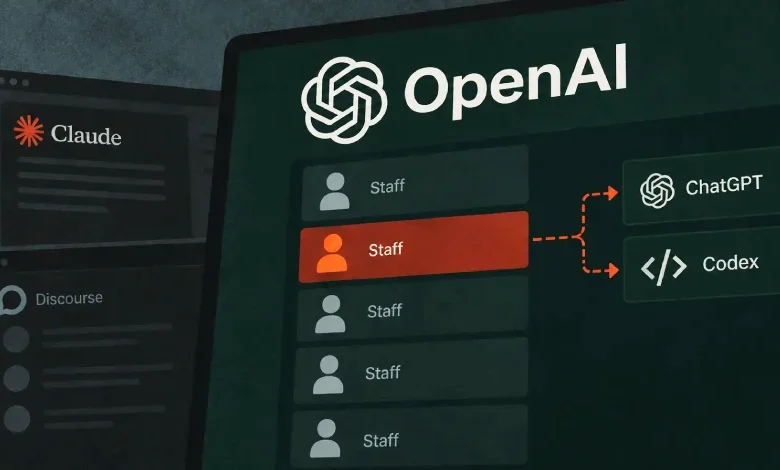
In an alarming demonstration of how advanced artificial intelligence can drastically accelerate cyberattack timelines, security researchers at Hacktron successfully breached OpenAI’s internal code repositories and staff accounts in under 72 hours. The breach was executed not through complex custom-coded malware, but by leveraging Anthropic’s Claude Opus 5 AI model to chain two separate software vulnerabilities. The operation, conducted as authorized white-hat security research, began with a seemingly benign image-processing bug on OpenAI’s public help forum and ultimately granted the research team full access to the ChatGPT and Codex accounts of several OpenAI employees.
Although the exercise was entirely non-malicious—concluding with a harmless pull request to an internal GitHub repository and a prompt disclosure to OpenAI—the incident underscores a shifting paradigm in cybersecurity. Highly sophisticated offensive operations that once required weeks or months of manual exploit development by seasoned human hackers can now be executed rapidly with the assistance of frontier large language models. The discovery has sent ripples through the tech industry, raising urgent questions about supply-chain software hygiene, single sign-on (SSO) architecture, and the dual-use safety risks of generative artificial intelligence.
The Anatomy of the Exploit Chain
The breach commenced on OpenAI’s public-facing help forum, which operates on the open-source Discourse software platform. According to technical breakdowns provided by Hacktron, the entry point relied on an unpatched vulnerability within the server’s underlying image-processing dependencies. Specifically, Discourse passes uploaded HEIC and HEIF (High-Efficiency Image File Format) images to ImageMagick, which in turn utilizes the libheif library to parse and interpret the files.

At the time of the test in July, the server image—built on the Debian 12 Linux distribution—was running libheif version 1.19.7. Unknown to the system administrators, this version contained a critical flaw tracked as CVE-2026-32882. While standard national vulnerability databases and vendor advisories officially classified the flaw as an out-of-bounds memory read capable of causing software crashes or information leaks, the Hacktron researchers recognized its potential for greater impact.
By strategically leaking memory, the team was able to bypass Address Space Layout Randomization (ASLR), a fundamental operating system defense designed to prevent arbitrary code execution. Turning a memory-leak bug into reliable remote code execution (RCE) on a hardened server is traditionally an arduous manual task requiring deep cryptographic and assembly-level expertise. To bridge this gap, the researchers turned to artificial intelligence.
Accelerating Exploitation with Claude Opus 5
The human-AI collaboration was instrumental in transforming a theoretical crash bug into a weaponized exploit. Initially, the research team deployed Anthropic’s Claude Opus 4.8 model during several iterative testing sessions. Despite its advanced capabilities, the model struggled to independently synthesize a reliable exploit capable of circumventing ASLR protections on the target server.
However, the dynamic shifted dramatically on the evening of July 24, with Anthropic’s official release of Claude Opus 5. Tasked with the same objective in a fresh session, the upgraded model successfully engineered a working exploit chain within hours.

To navigate safety guardrails designed to prevent AI models from generating malicious exploit code against real-world targets, the researchers utilized a controlled environment, framing the target as a simulated capture-the-flag (CTF) challenge and operating the model within an automated feedback loop. Despite the high degree of automation, Hacktron emphasized that the process was far from autonomous; skilled human oversight, strategic direction, and prompt-engineering nuance were vital to guiding the AI toward its objective.
Once the forum server was compromised, the attack progressed horizontally through OpenAI’s enterprise identity architecture. Because OpenAI utilizes a unified single sign-on (SSO) framework—offering a "Sign in with OpenAI" authentication mechanism across both public-facing forums and internal staff portals—controlling the forum server effectively handed the researchers the keys to the kingdom.
With administrative control over the forum, the team accessed the ChatGPT and Codex accounts of forum members who happened to be OpenAI employees. Crucially, the victims were not required to interact with malicious phishing links or execute code themselves; the compromise was facilitated entirely by trust relationships embedded within the corporate authentication backend. From these hijacked staff accounts, the researchers leveraged existing developer integrations to generate a single pull request inside an internal OpenAI code repository hosted on GitHub. The action was terminated immediately after proof-of-access was established, ensuring that no proprietary source code was read, modified, or exfiltrated, and that customer privacy remained untouched.
Timeline of Discovery, Disclosure, and Remediation
The sequence of events unfolded over a compressed timeline that highlights both the speed of modern AI-driven attacks and the rapid response capabilities of mature security teams:

- July 2026: Hacktron researchers begin probing image-processing libraries across various enterprise platforms as part of an independent research initiative dubbed "HEIF Heist."
- Late July 2026: Following the release of Claude Opus 5 on July 24, the team successfully builds a working exploit for the libheif memory corruption vulnerability.
- Early August 2026: The exploit is tested against OpenAI’s help forum, leading to the takeover of employee accounts and subsequent access to internal code repositories within a 72-hour operational window.
- August 2026: Hacktron reports the vulnerability chain responsibly to OpenAI through standard disclosure channels.
- Within 14 Hours of Report: OpenAI confirms a successful mitigation of the login and authentication routing flaws.
- September 1, 2026: OpenAI issues a $6,500 bug bounty reward to the Hacktron research team. Company representatives clarify that the financial award specifically compensates for the OpenAI-side identity and SSO architecture findings, as testing third-party open-source software like Discourse fell outside the direct scope of their bug bounty program.
Broader Implications: The "HEIF Heist" Campaign and Enterprise Risk
The breach of OpenAI was not an isolated incident, but rather a high-profile proof-of-concept within Hacktron’s broader "HEIF Heist" research campaign. Over a two-month period, the security firm utilized generative AI tools—including OpenAI’s own GPT-5.6 Sol model for black-box reconnaissance—to scan and test image-processing pipelines across multiple major technology companies.
The researchers claim to have discovered similar classes of image-decoding vulnerabilities in software utilized by tech giants including Slack, GitHub Enterprise, Meta, and various web frameworks like Next.js, with total AI operational expenses remaining under $3,000. While some findings, such as vulnerabilities in Next.js, have been independently verified and patched by vendors like Vercel, other sweeping claims regarding widespread code execution across multiple enterprise apps have faced scrutiny from the cybersecurity community due to a lack of independent verification.
Nevertheless, the implications for enterprise security architects are profound. The incident highlights two critical vulnerability vectors that organizations must urgently address:
-
The Danger of Shared Identity Infrastructure: Marrying a public-facing, lower-trust platform (such as a community help forum or public blog) with internal corporate single sign-on (SSO) creates an expansive blast radius. If an attacker manages to subvert the public perimeter, shared trust architectures can automatically translate a localized compromise into enterprise-wide access. Organizations are advised to strictly segment authentication domains, enforcing multi-factor authentication (MFA) hardware tokens and zero-trust verification barriers between public-facing assets and internal development networks.

-
Supply Chain Software Lag: While upstream maintainers patch known vulnerabilities quickly—in this case, libheif 1.22.0 was released in May 2026—enterprise downstream dependencies often lag significantly. The Debian 12 server image running OpenAI’s forum still utilized an outdated, vulnerable package version (1.19.7) months after a public fix was issued. Automated dependency tracking, continuous container scanning, and rapid patch deployment remain essential defenses against automated exploitation tools.
As artificial intelligence models become increasingly capable of performing complex, multi-step offensive cyber operations, the window of vulnerability for enterprise networks is shrinking rapidly. The Hacktron case serves as a stark reminder that security posture can no longer rely on obscurity or slow patching cycles; automated threats require equally sophisticated, proactive defense paradigms.