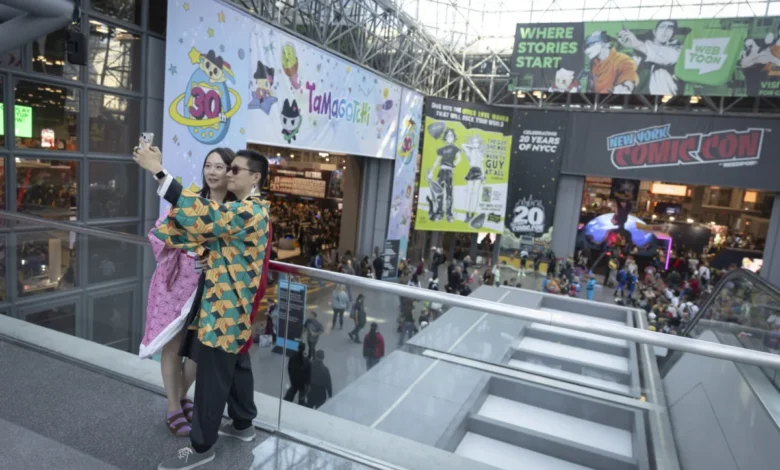
The Javits Center in New York City has long served as the hallowed ground for pop culture enthusiasts, but during the 2026 iteration of New York Comic Con (NYCC), the venue functioned as something far more specialized: a massive, decentralized production studio. As digital platforms continue to dictate how audiences discover and consume entertainment, the organizers of one of the world’s largest fan conventions have pivoted their operational strategy to prioritize the needs of content creators, effectively transforming the convention floor into a high-octane filming environment.
This shift marks a departure from the traditional convention model, which historically prioritized the physical interaction between fans, exhibitors, and talent. While that communal spirit remains the bedrock of the event, the integration of dedicated infrastructure for social media influencers and digital storytellers highlights a fundamental change in how media brands and live event producers perceive the creator economy.
A Strategic Pivot Toward Digital Integration
The evolution of NYCC into a content-first environment began in earnest during the 2021 post-pandemic recovery phase. At that time, convention organizers realized that the absence of in-person gatherings had fundamentally altered the consumer experience. Short-form video—specifically via TikTok, YouTube Shorts, and Instagram Reels—had become the primary mechanism through which fans engaged with their favorite franchises.

Fallon Prinzivalli, marketing director for NYCC, noted that the initial decision to lean into creator partnerships was a data-driven response to this cultural shift. In 2021, the convention invited a select group of creators to helm their official TikTok account. The campaign proved remarkably successful, garnering over 8 million views in a four-day span. This proved that creators did not just attend the convention; they acted as force multipliers for the event’s brand identity.
By 2026, the strategy had matured from a tentative experiment into a cornerstone of the convention’s logistics. This year’s event featured custom-designed architectural elements, such as the modified banners in the Crystal Palace, which were engineered specifically to provide optimal lighting and framing for smartphone cameras. By embedding content creation into the physical design of the venue, NYCC reduced the friction for creators, allowing them to produce professional-grade assets without requiring traditional, bulky production equipment.
The Rise of the Creator Infrastructure
The physical manifestation of this shift is best observed in the dedicated "Creator Lounge." This space serves as a functional hub that addresses the logistical hurdles of high-frequency content production. For a creator, the primary barriers to entry at a massive event like NYCC are consistent internet connectivity, reliable power, and a quiet environment for editing or interviewing.
The lounge provides high-speed, dedicated Wi-Fi, charging stations, and a quiet vantage point overlooking the bustling floor of the Javits Center. This is not merely a courtesy; it is a professional service for a demographic that now drives significant portions of entertainment discourse.

The application process for these badges has become increasingly rigorous. NYCC now manages a vetting system that looks beyond simple follower counts—typically requiring at least 200,000 followers across major platforms—to analyze the quality of the content, the depth of audience engagement, and the creator’s specific impact on pop culture niches. The demand for these credentials has outpaced availability; organizers closed the application window in August 2026 after receiving thousands of requests, underscoring the scarcity and value of these access points.
Chronology of the Digital Transformation
To understand the current landscape, one must look at the timeline of this transformation:
- 2021: The post-lockdown return to live events. NYCC launches a formal TikTok creator takeover, resulting in over 8 million views.
- 2022–2024: The formalization of the "Creator Badge" program. Influencers are separated from traditional press, with specialized guidelines for content-led coverage.
- 2025: The introduction of dedicated "Creator Infrastructure" including specific filming zones and collaborative spaces.
- 2026: Full-scale design integration. The venue itself is architecturally optimized for content capture, with signage and lighting specifically curated for mobile video.
Implications for the Entertainment Industry
The blurring of lines between fan, reporter, and influencer has created a complex ecosystem. Creators like Kallen Zborovsky-Fenster (@king_kallen) and Dominique Little (@nojill) represent a new breed of media entity. They do not merely report on news; they curate the emotional experience of the convention for millions of followers.
This carries significant implications for film studios and publishers. When a creator interviews a cast member or covers a teaser trailer release, the reach is often more targeted and influential than traditional advertising. Brandon Bullock, who operates as the "Anime News Guy," exemplifies this trend. His workflow involves immediate, on-the-ground reporting—shooting, editing, and publishing content while the news is still breaking—providing a level of real-time coverage that traditional media outlets often struggle to match in speed.

This has effectively turned creators into a necessary marketing arm for the entertainment industry. Studios now prioritize "creator access" as highly as they prioritize press junkets. The ability of a creator to translate a convention announcement into a viral moment is now a measurable metric for ROI in the film and television sector.
Economic and Professional Impact
The professionalization of this role has fostered a community of creators who use the convention as a networking event to secure future opportunities in the entertainment industry. Many of these creators are not just hobbyists; they are students of production, law, and media who use their reach to build personal brands that function as independent media companies.
For the organizers, the benefit is circular. Digital communities drive attendance, and the content produced at the event feeds back into those communities, sustaining interest throughout the year. The "shareable moment" is no longer an accidental byproduct of a convention; it is the product being manufactured.
Future Outlook and Challenges
While the benefits are clear, the professionalization of fan spaces introduces new challenges. As the environment becomes increasingly optimized for cameras, there is a risk of homogenizing the experience. Attendees who are not creators may find the space crowded by individuals seeking the "perfect shot." Furthermore, the pressure to document every moment can detract from the organic, spontaneous joy that defined the conventions of the early 2000s.

However, the trajectory is clear. Conventions are no longer just places to congregate; they are production stages for a digital-first world. As we look toward the future of events, the success of a convention will be measured not just by ticket sales or square footage, but by the volume, quality, and virality of the content that emerges from its halls.
By embracing this shift, New York Comic Con has ensured its relevance in a landscape where the audience is no longer just watching the show—they are the ones filming it. This collaborative model between event producers and the creator economy is likely to become the standard for major global events, ensuring that the physical experience of fandom is perpetually amplified by the reach of the digital screen.
Related posts: