The Digital Vanguard: How Remy Buisine Became the Unofficial Chronicler of France’s Pension Protests

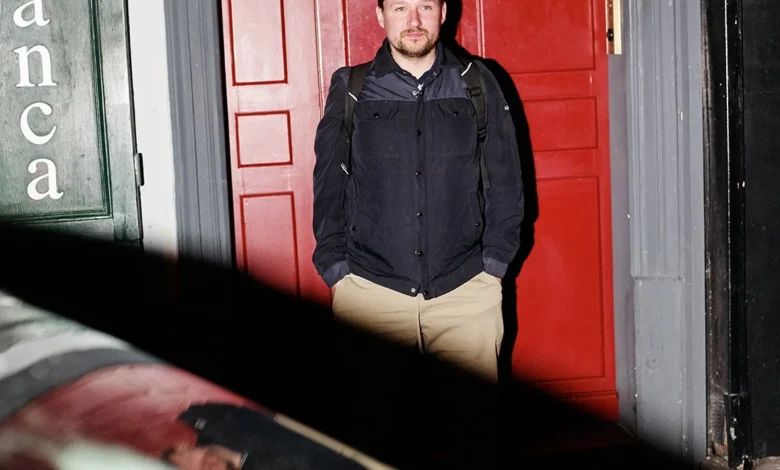
The streets of Paris have long served as a stage for political expression, but the recent wave of unrest triggered by President Emmanuel Macron’s pension reforms has transformed the nature of on-the-ground reporting. At the center of this digital transformation is Rémy Buisine, a 32-year-old video journalist for the French outlet Brut. Through hours-long, unedited livestreams, Buisine has provided a window into the volatile, tear-gas-choked frontlines of the French resistance, redefining the role of the modern reporter in an age where social media platforms like TikTok have become the primary news source for a generation.
The Catalyst: Pension Reform and Democratic Tensions
The protests, which paralyzed major French cities throughout the spring of 2023, were rooted in a fundamental disagreement over labor policy. In January, the Macron administration proposed a series of pension reforms, the most contentious being the increase of the minimum retirement age from 62 to 64. The government argued that the change was essential to ensure the solvency of the French pension system, citing an aging population and a widening deficit.
However, the opposition perceived the move as an assault on the social contract. Tensions reached a breaking point on March 16, when the government invoked Article 49.3 of the French Constitution, allowing the legislation to be pushed through the National Assembly without a full parliamentary vote. This action bypassed the democratic process, triggering a wave of "wildcat" protests that bypassed traditional union organizational structures. Suddenly, the streets were filled with a younger demographic—many of whom had never participated in a protest before—united by a shared perception that the government was operating with a disregard for public sentiment.
The Rise of the Livestream Journalist
Buisine’s methodology represents a shift away from curated, post-produced news packages toward immersive, real-time documentation. His approach is simple but grueling: he walks alongside demonstrators for hours, camera in hand, documenting the interaction between the state and the public without editorial interruption.
During the peak of the spring protests, Buisine’s livestreams became a vital information hub. On platforms like TikTok, which has seen a massive surge in news consumption among users under 30, his broadcasts reached hundreds of thousands of viewers. At the height of his coverage, a single stream could attract 70,000 concurrent viewers, and his channel saw a million-follower spike within a single month, bringing his total following on the platform to 4.2 million.
This success is not merely a result of being in the right place at the right time; it is a byproduct of his endurance and accessibility. Buisine is known for interviewing protesters at length, giving them a platform to articulate their frustrations. For many, he is a trusted witness in an environment where traditional media is often viewed with suspicion or hostility.
A Chronology of Conflict
The intensity of these protests was marked by a distinct escalation in tactics. Early marches were characterized by union-led rallies, but as the weeks progressed, the atmosphere became increasingly combative.
On April 6, the scale of the mobilization was vast, with estimates of attendance varying wildly between the 57,000 reported by police and the 400,000 claimed by union organizers. As the march progressed toward major hubs like Montparnasse and the Place d’Italie, the presence of black-clad, masked activists—often associated with the "black bloc" tactic—grew.
The timeline of the April 6 demonstration serves as a microcosm of the entire movement:
- 3:29 p.m.: A loud, unidentified detonation echoed near the boulevard, prompting immediate, aggressive posturing from the police.
- 3:37 p.m.: The Gendarmerie, a military-trained police force, issued warning shots, signaling a shift from monitoring to containment.
- 4:00 p.m. – 8:00 p.m.: The protest devolved into a series of running skirmishes. Tear gas was deployed extensively to disperse crowds, while protesters erected makeshift barricades using street furniture and trash bins.
- 10:54 p.m.: After seven and a half hours of continuous filming and approximately 28,000 steps, Buisine concluded his broadcast, having garnered 1.8 million views on TikTok alone.
The Physical and Emotional Toll
Journalism on the frontlines of civil unrest comes with significant hazards. Buisine, who carries gas masks and decontamination spray as standard equipment, has been repeatedly exposed to tear gas and the chaotic violence of riot control. Despite the existence of protections for the press, journalists covering these events frequently find themselves in the crossfire.
Buisine’s history in the field includes the 2018 Gilets Jaunes (Yellow Vest) movement, which he cites as the most traumatic period of his career. He has witnessed severe injuries, including protesters losing eyes and hands, and has developed a resilience that allows him to remain functional even when the situation deteriorates. However, the toll is undeniable. He admits to the physical exhaustion that follows long hours on the street, describing the difficulty of transitioning from the adrenaline-fueled chaos of a riot to the quiet of a late-night meal—often in a kebab shop, as was the case following the April 6 protests.
Institutional Challenges and Media Evolution
Buisine’s path to this role was unconventional. Growing up in a rural village, he did not follow the traditional path of a French journalist, which usually involves graduating from elite journalism schools (the grandes écoles). Instead, he began his career managing social media for soccer players and radio stations.
His entry into the field was facilitated by Periscope in 2015, during the protests against the El Khomri labor laws. This background made him a natural fit for Brut, an outlet that was initially dismissed by the French political establishment because of its digital-only format. For years, politicians were hesitant to engage with Brut, fearing the unpredictability of social media. This skepticism evaporated in 2020, when Buisine conducted a landmark two-and-a-half-hour interview with President Macron, cementing his status as a legitimate journalistic force.
Implications for the Future of News
The impact of Buisine’s work extends beyond the immediate news cycle. He represents a new breed of reporter who functions as a "human antenna," bridging the gap between the chaotic, raw reality of civil disobedience and a global audience seeking unfiltered truth.
The reliance on these types of reports signals a broader trend in journalism: a loss of faith in traditional gatekeepers and a desire for accountability that can only be captured in real-time. When a journalist is present in the crowd, the risk of state overreach or violence being ignored is minimized. Conversely, the "extremely online" nature of this reporting raises questions about the long-term sustainability of the model. Buisine’s life, by his own admission, is his work. He is constantly on call, often sacrificing personal health and downtime to maintain his commitment to his audience.
As the French government continues to navigate the political fallout of the pension reforms, and as the public continues to demand greater transparency, the role of independent, digital-first journalists will only grow in importance. Whether it is a building collapse in Marseille or a protest in Paris, Buisine’s model of immersive, long-form livestreaming has established a new benchmark for how the news is documented, consumed, and verified in the 21st century. His work serves as a reminder that, in an era of misinformation, the most powerful tool a journalist has is their presence on the ground, witnessing history as it unfolds, one frame at a time.