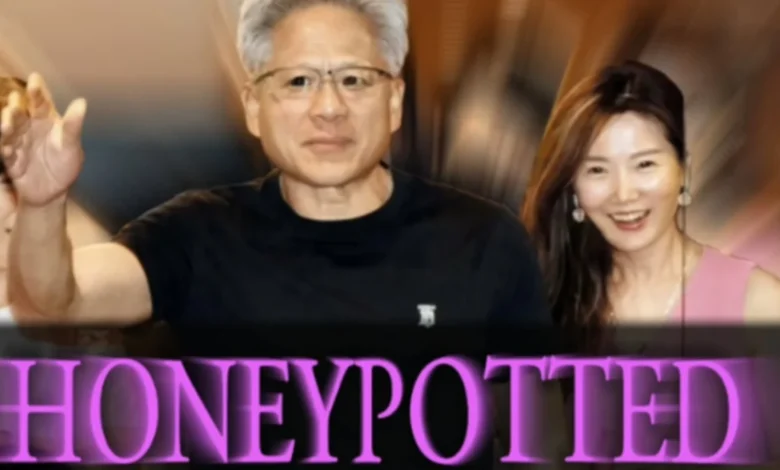
The global technology sector and geopolitical landscape were profoundly shaken in late 2026 by a high-profile scandal involving Jensen Huang, the longtime chief executive officer of semiconductor giant Nvidia. What began as an investigative journalism exclusive concerning alleged foreign intelligence operations quickly cascaded into a multifaceted corporate crisis, exposing vulnerabilities at the intersection of Silicon Valley corporate governance and international espionage. The controversy ultimately culminated in Huang’s public admission of marital infidelity, the unearthing of secondary internal misconduct, a steep decline in corporate market valuation, and Huang’s historic resignation from the helm of one of the world’s most valuable technology companies.
The developments surrounding the scandal captivated international media, triggered heightened regulatory scrutiny over advanced artificial intelligence supply chains, and spawned an unprecedented wave of digital commentary across global social media platforms.
Chronology of Events and Investigative Revelations
The sequence of events leading to Jensen Huang’s departure unfolded rapidly over a two
-week period in late October and early November 2026. The initial catalyst emerged on October 29, 2026, when an investigative report published by The New York Times revealed that United States intelligence agencies had identified an executive associated with the Singapore-based data center firm Megaspeed as an alleged Chinese intelligence asset. The individual, identified in subsequent reports as Alice Huang, had reportedly cultivated a close personal relationship with the Nvidia CEO.
According to the intelligence findings cited in the report, U.S. officials believed that Alice Huang was leveraging her access to pass sensitive technological and policy-related information directly to Beijing. The core of the geopolitical concern centered on whether advanced artificial intelligence technology—specifically high-performance Nvidia hardware subject to stringent U.S. export controls—was being systematically funneled to Chinese entities. Investigators had been examining Megaspeed over suspicions that the firm was assisting Chinese corporations, including Alibaba, in circumventing American trade restrictions by procuring billions of dollars in specialized AI computing equipment.
While political ramifications simmered quietly following initial intelligence briefings delivered to the White House as early as 2025, the situation exploded into public view in November 2026. On November 8, 2026, Nvidia took the unprecedented step of publishing an internal corporate communication titled "A Message to Our Company." In the memo, Jensen Huang openly admitted to being unfaithful to his wife, Lori Huang, apologizing to his family, shareholders, and employees for damaging their trust. Simultaneously, Nvidia’s Board of Directors announced the formation of a special committee of independent directors, aided by outside legal counsel, to launch a formal independent investigation into potential compromises of company secrets and national security.
Later that same day, subsequent reporting by major media outlets confirmed the identity of the woman at the center of the espionage allegations as Alice Huang, further elevating concerns regarding foreign intelligence targeting American technology leadership. Despite the gravity of the allegations, Huang initially stated his intention to remain in his post while cooperating fully with the internal review.
Corporate Fallout and Subsequent Disclosures
The market reaction was immediate and severe. On November 9, 2026, Nvidia shares suffered a sharp decline as investors digested the twin shocks of potential geopolitical espionage and executive misconduct. The situation compounded rapidly just days later. On November 11, investigative reporting driven by anonymous employee accounts revealed that Huang had engaged in a secondary, concurrent affair with Kimberly Powell, Nvidia’s vice president of health care.

Unlike the foreign intelligence allegations involving Alice Huang, the relationship with Powell did not involve espionage. However, corporate governance experts immediately pointed out that inter-company romantic relationships involving senior executives and direct reports or high-ranking subordinates constituted a direct violation of Nvidia’s internal code of conduct regarding workplace conflicts of interest and executive ethics.
Faced with mounting internal pressure, compounding compliance violations, and the untenable distraction of ongoing federal and independent probes, Jensen Huang formally tendered his resignation as CEO of Nvidia on November 12, 2026—just four days after his initial public apology. Nvidia’s board accepted the resignation, initiating a leadership transition plan without a designated immediate successor, leaving the board to weigh both external candidates and internal promotions to fill the vacancy.
Broader Implications for Tech Governance and National Security
The downfall of Jensen Huang marks a watershed moment for Silicon Valley and the semiconductor industry at large. For decades, Huang had been revered as a visionary architect of the modern artificial intelligence boom, steering Nvidia from a niche graphics card manufacturer into the indispensable backbone of global AI infrastructure. His sudden removal underscores the heightened vulnerabilities that technology executives face as corporate leadership intersects with great-power competition between the United States and China.
The incident has accelerated scrutiny over how semiconductor firms vet their foreign partners, distributors, and supply chain intermediaries. Megaspeed’s alleged role in bypassing U.S. export controls highlights the persistent challenges federal regulators face in preventing advanced AI hardware from reaching restricted jurisdictions. Furthermore, the scandal has prompted institutional investors and corporate boards to reevaluate executive accountability, internal compliance enforcement, and the strict enforcement of policies regarding workplace relationships among top-tier leadership.
Cultural Impact and Digital Discourse
As corporate and geopolitical developments unfolded, the scandal transcended financial news to become a dominant cultural phenomenon across the internet. Throughout November 2026, social media platforms including X, Instagram, and Reddit were flooded with memes, satirical video edits, and commentary reflecting on the bizarre convergence of geopolitics, corporate espionage, and executive hubris.
Users generated widespread satirical content playing on tropes of traditional espionage, with many framing the incident through the lens of a classic "honeypot" operation. Prominent online creators, independent commentators, and meme curators dissected every new revelation—particularly the secondary disclosure involving Kimberly Powell—resulting in millions of views and widespread viral engagement. The tone of the digital discourse ranged from disbelief at the high-stakes nature of the security breach to dark humor regarding the vulnerability of corporate titans to personal indiscretions.
Conclusion
The Jensen Huang controversy represents a rare convergence of personal scandal, corporate governance failure, and international espionage. By the conclusion of November 2026, the events had permanently altered the leadership structure of one of the world’s most influential technology enterprises. As Nvidia navigates its post-Huang era under the oversight of independent investigators and regulatory bodies, the episode will long serve as a cautionary case study on the fragile boundaries separating technological innovation, national security, and personal integrity in the modern era.