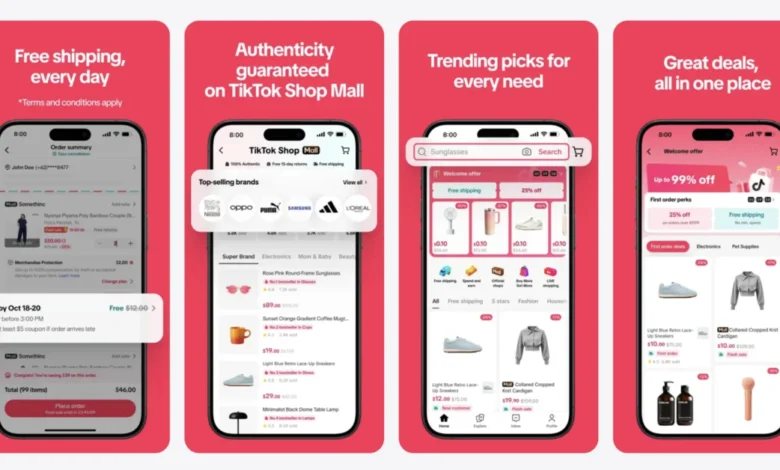
TikTok has officially entered a new phase of its e-commerce evolution with the quiet rollout of a dedicated, standalone application for its shopping division. As of November 5, 2026, users in Singapore, Malaysia, Thailand, and the Philippines can download the TikTok Shop app on both iOS and Android platforms. This strategic move signals a departure from the company’s previous reliance on integrating commerce features directly into the primary social media feed, suggesting that ByteDance is aiming to capture a more intentional shopping audience that mirrors the utility of platforms like Amazon or Temu.
The application, which has already garnered over 50,000 downloads on the Google Play Store, provides a centralized hub for personalized product recommendations, integrated livestreams, short-form video shopping, order management, and 24/7 customer support. By isolating the shopping experience, TikTok is attempting to streamline the path to purchase for consumers who may find the transition from entertainment to commerce disruptive within the main TikTok interface.
A Strategic Pivot Toward Dedicated E-commerce
For years, TikTok has successfully monetized its massive user base through "shoppertainment," where product discovery occurs organically through influencer content, makeup tutorials, and viral product demonstrations. However, by launching a separate app, the company is signaling that it wants to own the "shopping mission"—the specific intent of a user who opens an app specifically to browse or complete a transaction.
Market analysts suggest this move is a direct response to the increasing pressure from global e-commerce giants. While the primary TikTok app remains the engine for viral marketing, the standalone Shop app acts as the digital storefront. This structure allows the company to provide a cleaner user interface (UI) devoid of the social media clutter, potentially increasing conversion rates by removing distractions and focusing entirely on catalog navigation, price comparison, and seamless checkout processes.

Timeline of Development
The expansion of TikTok Shop has been a multi-year project characterized by rapid iteration and regional testing.
- Early 2024: TikTok intensified its push into the e-commerce sector, aggressively onboarding merchants and incentivizing creators to utilize its integrated shopping tools.
- Mid-2025: Reports surfaced regarding the platform’s intent to differentiate its commercial services from its social media core, following the successful introduction of TikTok GO’s hotel-booking features.
- November 2026: The official launch of the standalone TikTok Shop application in Southeast Asia marks the first time the company has decoupled its shopping functionality into a distinct software environment.
This chronology highlights a clear pattern: TikTok is no longer satisfied with being an advertising funnel for third-party retailers. Instead, it is building a comprehensive ecosystem where it controls the entire customer journey, from initial discovery through to post-purchase support.
Regional Data and Market Penetration
The selection of Singapore, Malaysia, Thailand, and the Philippines as the initial launch markets is telling. These regions represent some of the most digitally savvy and e-commerce-ready populations in the world. Southeast Asia has been a primary testing ground for social commerce models, where consumer trust in influencer-led shopping is significantly higher than in Western markets.
According to preliminary data from the Apple App Store in Singapore, the app has already achieved a notable ranking in the shopping category, entering the top 100 within its first few days of availability. The software is currently managed by TikTok Pte. Ltd., a distinct entity from the TikTok USDS Joint Venture that oversees the company’s operations in the United States. This separation is critical, as it ensures that the commercial and data-heavy e-commerce operations in global markets remain distinct from the highly regulated, security-focused environment of the U.S. market.
Integrating Services into the "Super-App" Vision
The standalone Shop app is not an isolated experiment but part of a broader "super-app" strategy. Throughout 2026, TikTok has systematically expanded its utility beyond social networking. The launch of "Must Eat," a restaurant recommendation and reservation engine, allowed users to bridge the gap between watching a food review and booking a table via OpenTable. Similarly, the "TikTok GO" initiative introduced travel booking through partnerships with Expedia and Booking.com, further proving that the platform’s algorithm is uniquely suited to drive conversions in high-intent service sectors.

Furthermore, the introduction of the "PineDrama" service, which segments short-form drama series into a dedicated application, indicates that TikTok is experimenting with the "unbundling" of its features. By moving specific high-engagement activities into their own silos, the company can provide a more tailored experience for different types of users—shoppers, foodies, and binge-watchers alike.
Official Responses and Industry Context
While TikTok has yet to provide a formal statement regarding the long-term roadmap for the standalone Shop app, industry observers believe that a potential rollout in Western markets—including the U.S. and Europe—will depend heavily on the metrics gathered from the current Southeast Asian trial.
Industry analysts have noted that the challenge for TikTok will be user retention. While the primary TikTok app benefits from the "infinite scroll" of entertainment that keeps users on the platform for hours, a standalone shopping app must provide a compelling reason for a user to switch over when they have Amazon or other established retailers already installed. To combat this, the new app currently offers aggressive incentives, including exclusive discounts, free shipping promotions, and specific "first-order" perks, which are designed to lower the barrier to entry and cultivate early brand loyalty.
Broader Economic and Competitive Implications
The rise of dedicated shopping apps by social platforms represents a seismic shift in how retail is conducted. If TikTok successfully migrates its user base to a standalone shopping experience, it could fundamentally alter the competitive landscape for major e-commerce players.
The primary competitive advantage for TikTok remains its algorithm. By leveraging the same recommendation engine that powers its social feed, the Shop app can show users products that align with their personal interests with a level of precision that traditional search-based retailers struggle to replicate. This "discovery-based" shopping model—where users are shown what they want before they even know they want it—has the potential to create a high-velocity retail environment.

However, the strategy is not without risks. Privacy concerns, particularly regarding the handling of financial and transaction data, remain a point of contention for regulators globally. By separating the Shop app from the main social app, TikTok may be attempting to create a more transparent data-handling environment that satisfies international regulatory requirements while keeping its core advertising business agile.
Looking Ahead
As of mid-November 2026, the success of the standalone TikTok Shop app remains a developing story. The company is clearly betting on the idea that the "creator economy" has matured to the point where it can sustain dedicated, app-based marketplaces. Whether this model translates effectively to Western consumers, who are accustomed to different shopping behaviors and data expectations, will be the next major hurdle for the platform.
For now, the app serves as a laboratory for the future of digital retail. By observing how users engage with the platform’s exclusive deals, live-shopping features, and personalized feeds, TikTok is refining a model that could eventually redefine the retail sector. As the company continues to iterate on the user interface and expand its logistics partnerships, the line between social media and the global marketplace will continue to blur, placing TikTok at the center of the next generation of consumer commerce.
Related posts: