Andrew Tate and his brother Tristan moved to house arrest after legal battles over alleged criminal activities and witness intimidation

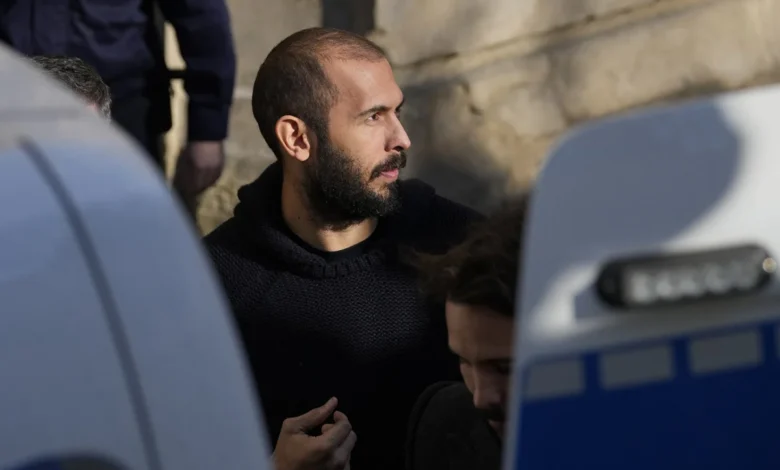
The controversial influencers Andrew and Tristan Tate, along with their alleged accomplices Georgiana Naghel and Luana Radu, have been moved from Romanian jail to house arrest, a significant legal development following their December 29th arrest on charges of organized crime and human trafficking. While this marks a procedural victory for the siblings, legal experts and authorities indicate that their actions and public pronouncements during their detention have seemingly exacerbated their legal predicament in Romania, potentially complicating their defense and inviting further scrutiny. The trial for the initial charges is anticipated to commence in late April.
Escalating Legal Challenges Amidst House Arrest
Despite the shift to house arrest, the legal challenges facing the Tate brothers appear to be intensifying. BuzzFeed News has obtained court documents and spoken with sources within the Romanian prosecutor’s office and legal community, revealing a growing "irritation" among judicial bodies concerning the defendants’ alleged conduct. These allegations include a purported plot for Andrew Tate to flee to Dubai, attempts to pressure witnesses into recanting their statements, and illicit access to classified police computer systems by an alleged accomplice, Luana Radu, prior to her arrest. These actions, if proven, could lead to additional criminal investigations and further complicate the brothers’ legal standing.
Mihai Mareș, a criminal defense lawyer in Bucharest and a law lecturer at Alexandru Ioan Cuza University of Iași, commented that the palpable frustration of judges, as documented in court papers, could significantly impact how future statements from the Tates are received. "Any subsequent statements they may give will be viewed with a certain amount of skepticism by the judicial bodies," Mareș stated, underscoring the potential for their past actions to cast a long shadow over their defense.
Timeline of Key Events
- December 29, 2022: Andrew and Tristan Tate, along with Georgiana Naghel and Luana Radu, are arrested in Romania on suspicion of organized crime and human trafficking.
- Late March 2023: The Tate brothers and their alleged accomplices are released from jail and placed under house arrest.
- February 21, 2023: A judge cites "new reasons" for refusing to release the Tates from detention, including alleged preparations to evade investigation, witness intimidation, and pressure on victims.
- March 24, 2023: Romanian authorities add Senator Diana Șoșoacă to Ukraine’s sanctions list.
- March 31, 2023: Two appeals court judges approve the Tate brothers’ move to house arrest.
- Early April 2023: The Tates’ trial for initial charges is expected to begin.
Allegations of Evasion and Witness Intimidation
Central to the judicial frustration are allegations of attempts to undermine the investigation. Court documents reveal wiretap evidence suggesting Andrew Tate’s desire to flee to Dubai under the guise of seeking medical treatment. Romania does not have an extradition treaty with the United Arab Emirates, a detail that prosecutors believe was a calculated aspect of the alleged evasion plan. While a representative for the Tates cited a "most likely tumor" as the reason for potential travel to Dubai in early March, Andrew Tate later clarified on Twitter that the spot was "scarring from an old battle." His request to travel was ultimately denied by authorities.
Eugen Vidineac, a lawyer representing the Tates, has refuted claims of an escape attempt, asserting that the brothers have no reason to flee given their ties to Romania, including their home and children. Mateea Petrescu, the Tates’ spokesperson, further clarified that discussions about leaving for Dubai were contingent on their legal status and were primarily for medical inquiries, suggesting that published wiretaps lacked crucial context.
Beyond alleged evasion, Romanian authorities also contend that the Tates have orchestrated campaigns to intimidate alleged victims. Prosecutors claim the brothers have encouraged their online followers to inundate at least one accuser with messages demanding she retract her statements. A judge, in a February court summary, noted that these communications were "of a nature to provoke in the victim a state of fear as a result of the threatening tone they have in addressing her, attempting to determine her to change her statements regarding the accused in the case."
Adding another layer to the alleged intimidation, a US law firm representing the brothers reportedly sent a cease-and-desist letter to a woman in Florida, a key witness in the case, demanding she retract her accusations or face a defamation lawsuit. Romanian authorities consider this letter part of a broader pattern of intimidation. Tina Glandian, a US lawyer on the Tates’ Romanian legal team, has stated her firm was not involved in sending the letter. Petrescu characterized the letter as a "LEGAL action in the USA" and suggested that these suspicions were rendered "obsolete" by the decision to grant house arrest. However, Mareș warned that such a cease-and-desist order, if perceived as an attempt to influence criminal proceedings, could lead to an expansion of the investigation into a new crime: influencing statements. A source close to the prosecutor’s office confirmed this possibility, especially as the trial for the original charges approaches.
Suspicions of Coercion and Abuse Predating Current Charges
Further complicating the legal landscape are allegations against Luana Radu, the Tates’ alleged accomplice and a former police officer. Court documents indicate she is suspected of gaining unlawful access to a classified police database between April 2022 and December 2022, while an investigation into her and others was ongoing. A judge highlighted that such access would be "impossible…without support from others," suggesting a potential network of complicity. Petrescu did not comment on the allegations against Radu, who could not be reached for comment.
Moreover, prosecutors have reportedly uncovered new information suggesting that women had filed multiple complaints of violence, coercion, and abuse against the brothers prior to the current investigation. The fact that these earlier complaints allegedly went unresolved has fueled suspicions of undue influence, potentially involving Radu.
Alleged Political Influence Attempts
In what prosecutors perceive as another attempt to control the narrative and proceedings, Andrew Tate allegedly directed his team to approach two right-wing Romanian politicians, George Simion and Diana Șoșoacă. Both figures are known for their provocative stances on social issues and have exhibited anti-Western sentiments, occasionally echoing Russian propaganda. A wiretap, retranslated into English, reportedly captured Tate instructing an assistant to inform the politicians that they would be "rewarded for telling the truth" if they supported the brothers. It remains unclear if these approaches were successful, though both Simion and Șoșoacă reportedly declined requests from local media to defend Tate. Senator Șoșoacă was notably added to Ukraine’s sanctions list on March 24th for actions deemed a threat to national security.
Broader Implications and Analysis
The legal travails of the Tate brothers extend beyond their immediate charges. Their public persona, built on controversial online content, appears to be working against them in the Romanian legal system. An insider within the Romanian justice system, who requested anonymity, suggested that Andrew Tate’s actions during detention stemmed from a "need for public attention and his compulsion to arouse controversy." This perspective suggests a disconnect between the influencer’s online bravado and the serious legal realities he faces.
The case highlights the increasing challenges faced by legal systems in dealing with individuals who leverage online platforms and follower bases to influence public opinion and potentially obstruct justice. The alleged attempts to intimidate witnesses and influence politicians raise critical questions about the intersection of social media influence, criminal proceedings, and political maneuvering.
The move to house arrest, while a concession, does not signify an end to the legal battles. Instead, it places the Tate brothers under a different form of judicial oversight, with their compound reportedly under constant surveillance. The coming trial will be a critical juncture, where the prosecution will aim to prove the charges of organized crime and human trafficking, while the defense will likely contend with the accumulating evidence of witness intimidation and alleged evasion attempts. The outcomes of these proceedings could have far-reaching implications, not only for the Tate brothers but also for the broader discourse surrounding online influence and its impact on the justice system.