The Cultural Phenomenon of Trololo: How Eduard Khil’s 1976 Soviet Broadcast Became a Global Internet Meme

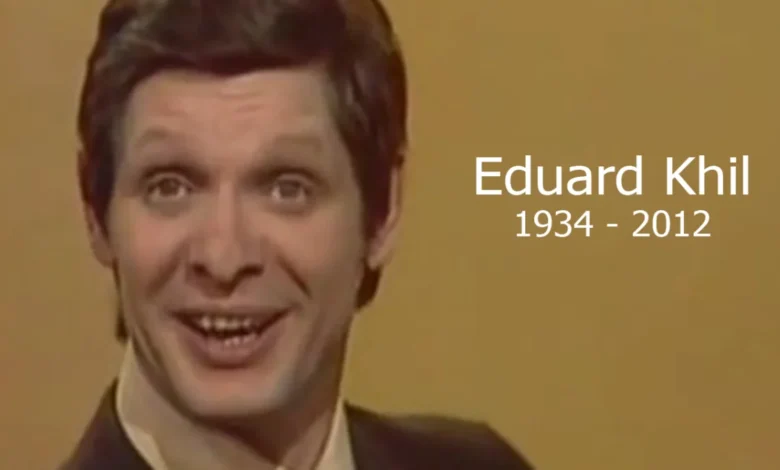
The digital age has routinely demonstrated an unpredictable capacity to unearth, recontextualize, and immortalize cultural artifacts from decades past, transforming them into modern touchstones of internet culture. Few examples illustrate this phenomenon as vividly as the viral ascent of the "Trololo" meme. Centered around a 1976 television performance of the Soviet-era pop song "I am Glad, ’cause I’m Finally Returning Back Home" (originally titled in Russian as "Я очень рад, ведь я наконец возвращаюсь домой") by the celebrated Russian baritone Eduard Khil, the meme captured the imagination of millions worldwide. What began as a forgotten broadcast recording from state television evolved into an international viral sensation, a favored instrument for online bait-and-switch pranks, and ultimately, a poignant posthumous tribute to a veteran artist whose career experienced an unexpected global renaissance in the twilight of his life.
Main Facts and Origins of the Performance
The core of the phenomenon rests on a video performance recorded and broadcast during the Soviet era. The performer, Eduard Anatolyevich Khil—widely known internationally as Edward Hill—was a prominent fixture of Soviet popular music. Over the course of his decades-long career, Khil achieved significant national acclaim, earning prestigious state honors including the title of "Honored Artist of the USSR" in 1968 and "People’s Artist of the USSR" in 1974. His rich baritone voice and theatrical stage presence made him a household name across the Soviet Union.
The specific composition that would later achieve global internet notoriety was written by composer Arkady Ostrovsky, with lyrics originally penned by Lev Oshanin. However, the iteration that captivated internet audiences features a distinct twist: a wordless vocalization. According to historical accounts and musicological context, the song was initially intended to feature lyrics about a cowboy riding home to his prairie farm to see his beloved Mary. However, Soviet censors reportedly objected to the overt American Western imagery, prompting Khil and his collaborators to drop the lyrics entirely. Instead, Khil performed the melody using the vokaliz tradition—a style of wordless singing closely aligned with pantomime and American scat singing popularized in the 1920s. Replacing conventional words with rhythmic, nonsensical syllables such as "trololo" or "tro-lo-lo-lo-lo," Khil delivered a performance characterized by animated facial expressions, effervescent charm, and a catchy, upbeat melody.
For decades, the footage remained archived in the annals of Soviet broadcasting history, preserved primarily as a relic of mid-century light entertainment. This obscurity persisted until late 2009, when the architecture of modern video-sharing platforms provided the catalyst for its rediscovery.
Chronology of Viral Spread
The trajectory of the Trololo phenomenon from a niche archival discovery to a mainstream internet meme followed a swift and calculated trajectory characteristic of late-2000s digital culture.
The revival commenced on November 26, 2009, when a YouTube user operating under the handle RealPapaPit uploaded a video clip titled "I am very glad, because I’m finally back home." Initially receiving modest attention, the video gradually caught the eye of internet curators due to its bizarre, highly expressive nature and infectious vocal delivery. Recognizing its comedic and surreal value, community members quickly began isolating elements of the broadcast. On December 20, 2009, another YouTuber, KamoKatt, uploaded a focused, isolated clip highlighting the infectious laughing and vocalization section of the performance, which accelerated its distribution across social networks.
By January 2010, the video penetrated major aggregator platforms. A submission to the popular online forum Reddit on January 27, 2010, by user gn3xu5 under the title "Trololololololololo" drove significant initial traffic, accumulating hundreds of upvotes and sparking vibrant discussions before archiving.
The meme crossed over into mainstream digital journalism in February 2010. On February 19, viral content platform BuzzFeed featured the video under the headline "Lyrical Genius." Two days later, The Huffington Post published an inquiry titled, "Is This Weird Russian Guy the Best Lyricist of All Time? No." The viral momentum was further cemented on February 26 with the launch of a dedicated single-serving website, Trololololololololololo, which featured the original video on an automated loop, allowing visitors to subject themselves and others to endless repetitions of the catchy refrain.
March 2010 marked the meme’s entrenchment into mainstream internet video culture. On March 4, prominent internet personality Ray William Johnson featured the clip on his widely viewed web show Equals Three, explicitly suggesting that the video had the potential to become "the next Rickroll"—referencing the ubiquitous bait-and-switch prank associated with Rick Astley’s "Never Gonna Give You Up." This comparison was apt; internet users swiftly adopted the Trololo video as a primary tool for deceptive hyperlink sharing, directing unsuspecting audiences to the cheerful Soviet vocalist instead of their intended destinations.
Supporting Data and Digital Metrics
The quantitative footprint of the Trololo phenomenon underscores its massive global reach. Over an eight-year span following its initial re-upload, the primary archival video of Eduard Khil’s performance amassed over 26 million views and tens of thousands of comments, bridging generational and linguistic divides. The isolated laughing segment uploaded by KamoKatt accumulated upward of 6.6 million views within its first three years online.
Furthermore, the meme inspired a cottage industry of derivative content. Creators produced diverse remixes, parodies, and extended editions, most notably a time-stretched iteration titled "Trololo – 800% Hyper Extended Mix," uploaded by YouTuber 24KaratGoldFish in August 2010, which appealed to the burgeoning market for ambient and surreal internet audio experiments. Search engine interest metrics during peak periods in 2010 and 2012 reflected spikes corresponding to major news events involving the video and its performer, cementing its status as a recognized cultural touchstone of the Web 2.0 era.
Official Responses and Artist Reaction
Unlike many reluctant internet celebrities who expressed confusion or dismay at finding themselves the butt of global jokes, Eduard Khil embraced his sudden, unexpected resurgence with remarkable warmth and humor.
Khil first learned of his digital fame through a remarkably modern conduit: his grandson. In a March 2010 interview with Radio Free Europe/Radio Liberty, Khil recounted that he discovered his internet celebrity status after hearing his grandson humming the familiar melody around the house. Recognizing the cultural shift, Khil and his family actively engaged with his new international audience. On March 11, 2010, footage emerged of Khil reacting with delight and amusement to various YouTube parodies and tributes crafted by global fans. His relatives subsequently established an official YouTube channel, saitEdHil, to connect directly with his new admirers.
The peak of his institutional re-acceptance arrived in the years that followed. Khil’s enduring cultural footprint was highlighted on a grand international stage in 2014, when elements of the song and its associated imagery were incorporated into the opening ceremonies of the Winter Olympics in Sochi, Russia, acknowledging the deep affection domestic and international audiences held for the cheerful tune.
Illness, Death, and Posthumous Legacy
The lighthearted narrative surrounding the Trololo meme experienced a somber turn in mid-2012. On May 28, 2012, international news outlets, including Radio Free Europe/Radio Liberty, reported that Eduard Khil had been hospitalized following a severe stroke. Subsequent updates from Russian state and independent media sources, such as RT, confirmed that the 77-year-old singer had suffered irreversible brain damage, plunging him into a coma. Medical professionals worked urgently to stabilize his condition, but the severity of the stroke precluded a viable recovery.
On June 4, 2012, Eduard Khil passed away at a hospital in St. Petersburg, Russia, exactly one week after suffering the stroke. His death prompted an outpouring of grief and remembrance across both traditional news outlets and digital platforms. Major international publications, including The Washington Post, NPR, and The Huffington Post, published extensive obituaries detailing his storied career as a Soviet-era baritone and his improbable second act as a global internet icon. On social aggregation platforms like Reddit, a memorial post sharing news of his passing reached the front page within hours, garnering tens of thousands of upvotes as users worldwide paid tribute to the man who had brought unexpected joy to millions of computer screens.
The legacy of the Trololo phenomenon was further solidified five years after his passing. On September 3, 2017, in honor of what would have been Khil’s 83rd birthday, technology giant Google dedicated a Google Doodle to the artist. The interactive feature showcased an animated rendition of Khil performing his signature number, complete with his trademark expressive hand gestures and cheerful vocalizations. Major newspapers, including The Telegraph, published retrospectives examining how a suppressed lyric from a 1970s television broadcast managed to transcend geopolitical and generational boundaries to become a universal language of internet absurdity and delight.
Broader Impact and Implications
The evolution of the Trololo phenomenon offers valuable insights into the mechanics of digital folklore and cultural preservation in the twenty-first century. By rescuing an obscure archival clip from mid-century Soviet television, global internet communities demonstrated how digital platforms can serve as democratic archives, rescuing culturally significant works from institutional neglect.
Furthermore, the phenomenon highlighted a shift in how generational divides are bridged online. A performance originally designed for Soviet citizens during the Cold War found its ultimate audience among digital natives half a century later, proving that wholesome humor, theatrical expression, and infectious melodies require no translation. Eduard Khil’s transformation into the "Trololo Guy" remains a unique testament to the unpredictable nature of internet virality—one that ultimately transformed a forgotten broadcast footnote into an immortalized celebration of human joy.