Bridging the Accessibility Gap: How AudioEye Combines AI and Human Expertise to Make the Digital World Usable for Everyone

The modern internet is often taken for granted as a universal utility, yet for a significant portion of the global population, navigating the web remains an obstacle course of inaccessible designs, broken links, and unreadable text. With over 1.3 billion individuals globally living with some form of disability, digital accessibility has rapidly transformed from a niche compliance checkbox into a critical business, legal, and ethical imperative. At the forefront of this evolution is AudioEye, a leading digital accessibility platform that has spent nearly two decades refining how organizations ensure their digital real estate is open to all users.
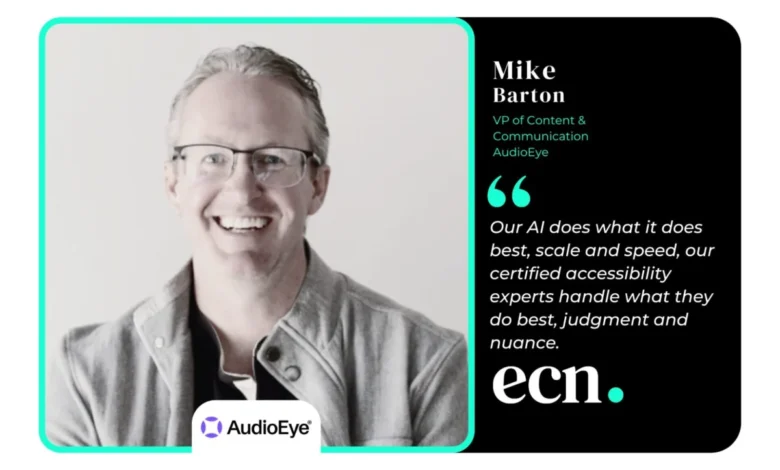
To understand the current state of digital inclusion, the intersection of legal risks, and the emerging role of artificial intelligence, Mike Barton, Vice President of Content Marketing and Communications at AudioEye, outlines the company’s mission, technological framework, and the broader global shifts reshaping the internet.
The Evolution of Digital Accessibility: From Niche Concern to Global Imperative
When AudioEye was founded nearly twenty years ago, digital accessibility was largely treated as an afterthought by corporate entities. Most companies viewed compliance through a minimalist lens, addressing accessibility only when forced or ignoring it entirely in favor of aesthetic or functional updates. Over the past decade, however, the stakes have risen dramatically, driven by a convergence of heightened litigation, expanding international regulations, and a profound shift in how websites are constructed and consumed.
In the United States, digital accessibility lawsuits have doubled over the last five years, catching many unprepared businesses off guard. Simultaneously, international legislative frameworks have broadened their reach. The European Accessibility Act (EAA), which came into force in June 2025, has established strict requirements that extend far beyond Europe’s borders, impacting any enterprise serving EU customers. Furthermore, the rapid integration of artificial intelligence is fundamentally altering both web development practices and user discovery methods.
Despite these rapid technological and legal shifts, AudioEye has maintained a core philosophy: automation is essential for scaling accessibility across thousands of pages, but human expertise is indispensable for getting it right. While the platform continues to heavily invest in advanced AI capabilities to detect and remediate issues at the speed demanded by the modern web, the company insists that algorithms alone are insufficient. Complex accessibility barriers—such as those involving context, user intent, and lived experience—require the nuance of human judgment. By pairing automated scanning with certified specialists, including individuals with disabilities, AudioEye has created a hybrid model designed to withstand rigorous legal and practical scrutiny.
Defining Digital Accessibility: A Matter of Revenue, Law, and Brand Integrity
For businesses unfamiliar with the terminology, digital accessibility is defined as the practice of designing and maintaining websites, applications, and digital content so that individuals with disabilities can perceive, understand, navigate, and interact with them just as effectively as anyone else. This includes populations relying on assistive technologies, such as screen readers, voice recognition software, and keyboard-only navigation.
Today, failing to prioritize digital accessibility carries severe commercial consequences. People with disabilities collectively represent approximately $18 trillion in global disposable income. Research indicates that roughly 70 to 83 percent of consumers with disabilities will abandon a non-compliant website immediately and take their business to a competitor, rarely returning. Consequently, web accessibility is no longer merely a legal obligation; it functions as a primary conversion lever and brand differentiator.
On the legal front, the risks are equally pronounced. In the U.S., litigation under the Americans with Disabilities Act (ADA) continues to target e-commerce platforms, healthcare providers, financial institutions, and government portals. Organizations that treat accessibility as a mere one-time audit or a superficial overlay widget frequently find themselves facing expensive legal challenges, whereas proactive enterprises view accessibility as foundational table stakes.
The Mechanics of Hybrid Remediation: How the Platform Operates
In practical terms, AudioEye’s platform functions through a streamlined deployment model. A single line of JavaScript—integrated similarly to a cookie consent banner or a live chat widget—is embedded into a website’s codebase. Once active, the platform’s AI scans rendered pages against the internationally recognized Web Content Accessibility Guidelines (WCAG). According to an independent study conducted by Adience, AudioEye’s detection engine identifies up to 2.5 times more accessibility issues than competing automated solutions.
Approximately half of all detected issues are resolved automatically in real time. However, to address the more intricate barriers that exist within gray areas—such as complex drop-down menus, video content, carousels, and nuanced form labels—certified accessibility experts step in. These specialists conduct manual audits, write custom code fixes, and deploy them directly through the platform.
This dual approach ensures that roughly 97 percent of accessibility issues are resolved before an organization’s internal development team is required to intervene. Software identifies structural patterns and scale, while human experts navigate context and nuance, resulting in comprehensive compliance and significantly higher rates of legal protection.
Industry-Wide Impact and Regulatory Compliance
While any organization with a digital footprint holds an obligation to maintain accessibility, certain sectors face heightened urgency due to regulatory scrutiny and consumer dependence. E-commerce remains the primary target for litigation, with approximately 78 percent of accessibility lawsuits directed at online retailers. Healthcare organizations, financial service providers, and government agencies also carry substantial regulatory exposure under laws like Section 508 in the U.S. and the EAA in Europe.
AudioEye’s client base exceeds 127,000 organizations, spanning small local businesses to large global enterprises. The platform’s infrastructure is designed to scale evenly across different tiers of operation. Rather than treating compliance as the end goal of a static audit, AudioEye frames compliance as the natural byproduct of continuous remediation.
When organizations receive demand letters or legal claims alleging non-compliance, AudioEye provides forensic support, including expert validation reports and collaboration with legal counsel. The company reports a documented track record of courtroom dismissals and provides structured legal indemnification, distinguishing its service from automated-only widgets or traditional consulting firms that rely solely on static checklists.
The Future of the Web: AI Discovery and Global Standards
Looking ahead, industry experts anticipate that digital accessibility will intersect heavily with the proliferation of artificial intelligence agents. As autonomous AI agents increasingly navigate the web on behalf of users—reading a site’s accessibility tree to retrieve information, compare products, and complete transactions—accessibility is becoming directly tied to digital visibility. Websites that lack proper accessibility structures risk becoming entirely invisible to these emerging AI-driven discovery channels.
Simultaneously, the widespread use of general-purpose AI coding tools threatens to accelerate the creation of inaccessible web pages, as these models are frequently trained on historical internet data that lacked inclusive design standards. Addressing this growing gap will require continuous automated monitoring combined with rigorous human validation.
As global regulations like the European Accessibility Act mature and enforcement mechanisms tighten across international borders, businesses are being forced to expand their compliance strategies. AudioEye aims to lead this transition, operating on the foundational principle that the internet should function seamlessly for every user, transforming accessibility from an expensive legal scramble into the default standard of the digital age.