How Grok Bot is revolutionizing small business operations and scaling productivity for entrepreneurs

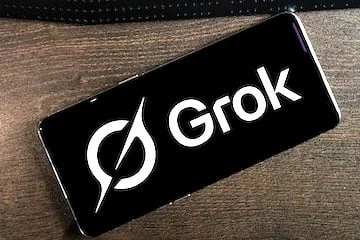
The landscape of small-to-medium enterprise (SME) operations is undergoing a rapid transformation as generative artificial intelligence moves from simple text-generation to autonomous, task-oriented agentic workflows. Recent developments by xAI—the artificial intelligence company founded by Elon Musk—have brought this shift into sharp focus. By leveraging the Grok Bot platform and the associated Grok Voice API, business owners are now deploying sophisticated, voice-enabled agents capable of managing customer service, administrative screening, and complex data analysis with minimal human intervention.
For lean operations, such as the grooming brand Beardbrand, the implementation of these tools represents a shift in economic efficiency. By replacing traditional, high-cost human support infrastructure with specialized AI agents, these organizations are demonstrating that a 10-person team can achieve the operational output traditionally requiring a significantly larger workforce. This evolution underscores a broader trend: the era of the "10x entrepreneur," where individual contributors use AI to bridge the gap between small-team constraints and enterprise-level execution.
The Evolution of Voice-Enabled AI Agents
The deployment of voice-based customer service agents is no longer the exclusive domain of large corporations with dedicated call centers. The integration of Grok Bot’s natural language processing capabilities with the Grok Voice API allows for a level of conversational fluency that was historically difficult to achieve without extensive latency or robotic articulation.
Last week, reports surfaced detailing the successful implementation of a Grok-powered voice agent for Beardbrand. The project, completed in under 24 hours, serves as a proof-of-concept for the accessibility of high-end AI tools. The agent is designed to handle inbound customer support calls, maintaining a natural, human-like cadence while providing accurate, context-aware responses to shopping inquiries. This transition from manual call management to automated voice agents allows businesses to maintain a 24/7 support presence, mitigating the financial burden of staffing live human support teams during off-peak or after-hours periods.
Chronology of Implementation: From Pilot to Production
The integration of Grok Bot into business workflows generally follows a tiered maturity model. Based on recent implementation patterns observed in the e-commerce sector, the timeline typically begins with low-stakes automation before scaling to mission-critical operations:
- Phase One (The Diagnostic Phase): Businesses begin by using AI to crawl existing documentation and internal company data to identify inconsistencies. In the case of Beardbrand, this involved cross-referencing product application instructions across different web pages. The AI identified discrepancies in suggested usage for new product lines, effectively acting as an automated compliance and quality assurance auditor.
- Phase Two (Administrative Delegation): Entrepreneurs move to utilize the bot as an "executive assistant." This includes the screening of high-volume email accounts. By filtering, flagging, and prioritizing correspondence, the AI reduces the cognitive load on business owners, allowing them to shift from constant connectivity to a batched, efficient review process.
- Phase Three (Workflow Automation): The final stage involves complex integration with external platforms such as Shopify, Klaviyo, and Google Search Console. This includes generating performance reports, managing customer acquisition flows, and optimizing content for search engine visibility.
Data-Driven Productivity Gains
The economic implications of these AI-driven workflows are significant. Historically, setting up automated marketing flows—such as those found in Klaviyo, which trigger messages based on user browsing history or purchase latency—required hiring specialized agencies. These projects could span several months and incur costs reaching into the thousands of dollars.
Current data suggests that AI agents can collapse this timeline from months to hours. In recent tests, a user was able to configure a complete email marketing platform and establish 48 distinct automated flows in a single afternoon using Grok Bot. This represents a radical reduction in the cost of customer acquisition and retention infrastructure.
Furthermore, the integration of AI into data analytics replaces the need for manual report generation. By pulling data from diverse sources—including Meta advertising metrics, Amazon marketplace sales, and post-purchase survey tools like Grapevine—Grok Bot creates centralized, real-time spreadsheets. This eliminates the "human-in-the-loop" bottleneck that traditionally plagues weekly staff meetings, ensuring that decision-makers are viewing the most accurate, up-to-date information without the risk of manual entry errors.
The Strategic "Gatekeeper" and the Human Element
Despite the capabilities of these tools, there remains a clear distinction between operational tasks and strategic decision-making. Industry experts emphasize that while AI is an excellent tool for execution—such as booking appointments, managing schedules, or performing technical audits—it is not currently positioned to replace the human element of strategic planning.
The deployment of an "email screener" bot, for instance, functions as a high-level gatekeeper. While this improves productivity by filtering out spam and non-essential pitches, it also changes the nature of professional networking. Proactive outreach must now adapt to satisfy the parameters set by the AI, as the bot is designed to prioritize urgent business matters over unsolicited inquiries. This creates a more disciplined communication environment, though it necessitates a shift in how external partners engage with the business.
Broader Implications for the Workforce
The capacity for a single employee or entrepreneur to train a bot to perform specialized tasks, such as video editing or technical writing, introduces a new dynamic into human resource management. By "training" a bot to mimic the workflow of a specific team member, businesses are effectively creating a digital twin. This allows for business continuity during periods of employee leave or turnover.
This, however, raises questions regarding the future of the workforce. If a 10-person team can perform the work of 100, the nature of job descriptions will inevitably change. Skills that were once considered "core" (such as manually generating reports or configuring email flows) are becoming commoditized. The value proposition for human workers is shifting toward high-level strategy, creative oversight, and the management of the AI systems themselves.
Regulatory and Technical Outlook
As businesses continue to adopt xAI’s tools, the focus is shifting toward the "single source of truth." Organizations are using AI to ensure that legal disclosures, terms of service, and About pages remain consistent across all digital touchpoints. This level of auditability is vital for e-commerce, where conflicting information can lead to legal complications or customer dissatisfaction.
Looking ahead, the integration of Grok Bot with major e-commerce platforms like Shopify is expected to deepen. As these APIs become more robust, the barrier to entry for building complex, bespoke e-commerce solutions will continue to drop.
For the entrepreneur, the current landscape offers a unique advantage. The operational friction that once defined the "start-up" phase—hiring for support, paying agencies for basic configuration, and manually reconciling data—is being replaced by automated intelligence. While the technology is not yet capable of autonomous business strategy, it has effectively solved the "operational burden" that historically hindered the growth of small teams. The result is a more agile, data-literate, and highly efficient business model that is redefining what it means to be a modern entrepreneur. As these tools mature, the focus for business owners will increasingly shift from "how do we get this done" to "what should we be doing with the time we have saved."
Related posts: