From Political Cartoon to Absurdist Internet Phenomenon: The Evolution and Controversy of the "Who Are You Voting For, Daddy?" Meme

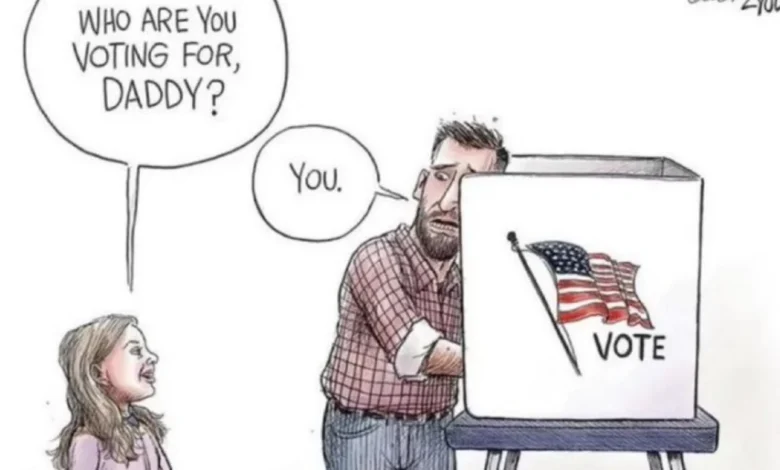
The digital landscape of political discourse often serves as an unpredictable crucible where serious commentary is rapidly distilled into viral irony, a phenomenon vividly illustrated by the unexpected trajectory of an editorial illustration created by award-winning artist Adam Zyglis. Originally published in The Buffalo News during the high-stakes environment of the 2024 United States presidential election, the cartoon—featuring a young daughter inquiring about her father’s ballot choice and receiving the sentimental, protective response, "You"—has undergone a profound transformation. By late October and November 2026, coinciding with the U.S. midterm elections, the poignant sentiment of the original work was entirely hijacked by internet subcultures. It re-emerged as an exploitable meme format characterized by surrealist edits, cross-cultural political commentary, and a contentious reliance on artificial intelligence generation that ultimately drew sharp rebukes from its original creator.
Origins in the 2024 U.S. Presidential Election
The genesis of the phenomenon dates back to the autumn of 2024, a period marked by intense political polarization and heightened voter mobilization across the United States. Adam Zyglis, a prominent editorial cartoonist known for his incisive visual commentary, crafted the single-panel cartoon to capture a specific emotional register of the electoral cycle. In the authentic illustration, a small child looks up at her father with an innocent expression, asking, "Who are you voting for, daddy?" The father looks down with a warm, resolute gaze and answers simply, "You."
The intended message of the artwork was straightforward and deeply rooted in traditional political advocacy: it underscored the concept of voting with future generations in mind, specifically framing the act of casting a ballot as a measure to protect and preserve the rights, freedoms, and well-being of one’s children against perceived legislative threats. Published in The Buffalo News, the cartoon resonated with audiences seeking emotional resonance amidst a cacophony of negative campaign messaging. For nearly two years, the image remained a standard piece of regional editorial art, serving its intended purpose within the traditional media ecosystem before quietly slipping into the vast archive of political ephemera.
The 2026 Resurgence and the Pivot to Irony
The dormant illustration experienced a sudden and viral revival in October 2026, just as the United States entered the final stretch of the midterm election cycle. Social media users across Facebook, X (formerly Twitter), and Instagram began exhuming the cartoon, recognizing its rigid structural format—a straightforward question followed by a pithy, definitive answer—as an ideal vehicle for modern meme culture.
Unlike the earnest tone of the 2024 original, the 2026 iterations quickly abandoned political sincerity in favor of extreme absurdity. The format lent itself effortlessly to exploitability, allowing creators to substitute the punchline with nonsensical statements, bizarre pop-culture references, and non-sequiturs. Early examples began circulating in mid-October 2026, such as a localized edit shared on Facebook referencing Alberta’s provincial separatist referendum debates in Canada, which reframed the earnest family dialogue through the lens of regional geopolitical secession.
As the weeks progressed toward November 2026, the meme descended further into surrealism. Prominent social media accounts began generating variations where the father’s protective motivation was replaced by wildly inappropriate or absurd allegiances. Memetic edits featured the father declaring he was voting for fictional internet characters like Big Chungus, niche web personalities such as streamer TheBurntPeanut, controversial public figures like Kanye West (Ye), or entirely nonsensical physical conditions and abstract concepts, such as having a "soft stool" or establishing a theoretical Dyson Swarm space megastructure. Other iterations twisted the emotional gravity of the original panel into dark humor, political trolling, or direct parodies of partisan talking points.
The Artificial Intelligence Controversy and Creator Backlash
Compounding the rapid spread of the meme was an intersecting technological trend that escalated tensions between internet users and traditional artists: the widespread use of generative artificial intelligence to replicate and alter the comic. As the meme gained traction in October 2026, numerous automated accounts and casual internet users began deploying AI tools to redraw Zyglis’s original panel. These AI-generated recreations preserved the core composition and dialogue of the original cartoon but fundamentally altered the visual style, often introducing the uncanny aesthetic typical of early-generation diffusion models.
This digital replication did not go unnoticed by the original creator. On October 15th, 2026, Adam Zyglis took to Facebook to formally address the viral phenomenon, expressing a mixed sentiment of appreciation for his work’s enduring resonance and deep dismay over how it was being co-opted. In a strongly worded public statement, Zyglis denounced the AI-altered iterations, writing that while he was glad people connected with the underlying message, "using AI to tailor an artist’s work to a different audience bastardizes it and makes it soulless."
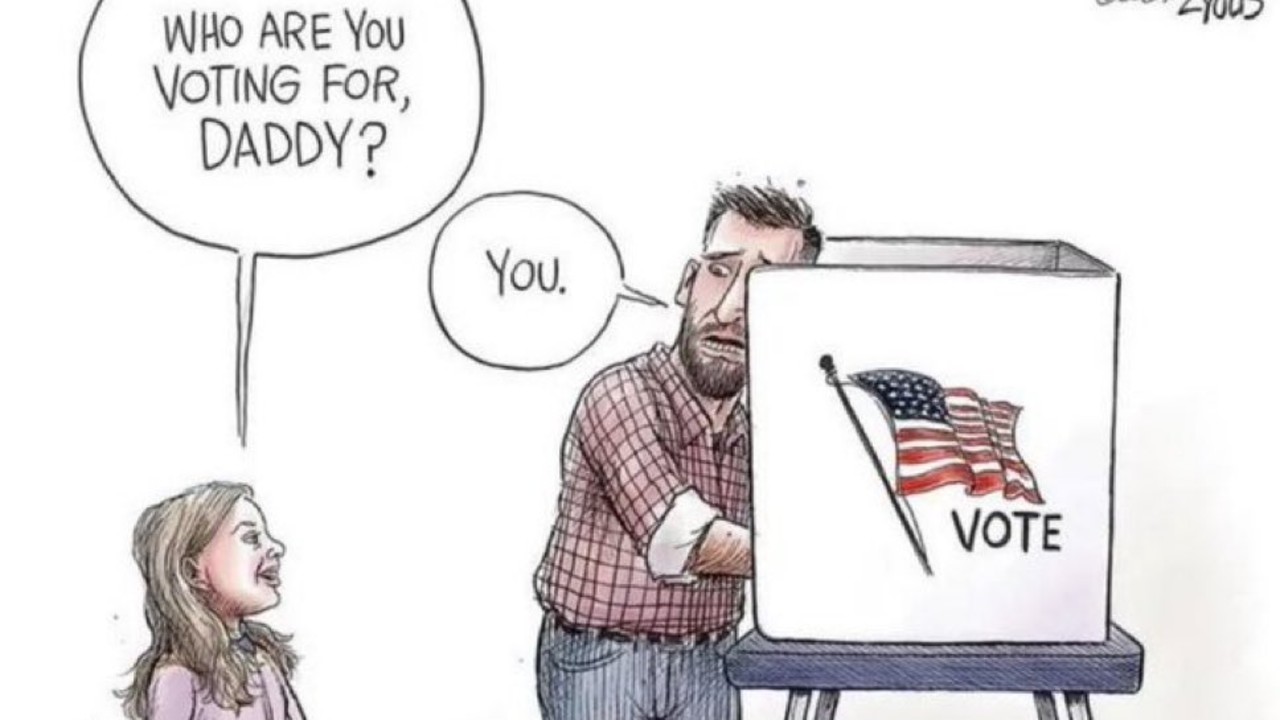
Zyglis actively pushed back against the trend by posting his original, hand-drawn 2024 cartoon and encouraging his followers to police social media platforms. He urged the online community to call out and report AI-manipulated versions of his artwork, highlighting a growing anxiety within the professional artistic community regarding intellectual property rights, the unauthorized training of AI models, and the casual defacement of copyrighted visual art for digital engagement. Despite his denunciation, the AI-generated variants continued to circulate widely, demonstrating the difficult reality artists face when their work is ingested into the decentralized machinery of internet meme culture.
Quantitative Spread and Platform Analytics
The trajectory of the "Who Are You Voting For, Daddy?" meme provides a clear case study in how modern algorithmic platforms accelerate the life cycle of digital media. Within a matter of weeks, localized edits snowballed into mainstream viral content driven by high-engagement accounts.
For instance, the early Alberta referendum edit secured over 350 reactions within its first month on Facebook, a modest start that signaled the meme’s cross-border versatility. Zyglis’s own statement addressing the AI controversy garnered substantial mainstream attention, pulling in over 5,600 reactions on Facebook as supporters and fellow artists rallied around intellectual property concerns.
As the calendar approached early November, the comedic iterations achieved exponential reach. On October 26th, an Instagram edit featuring Big Chungus surpassed 3,000 likes in ten days. The momentum reached a peak in the first week of November leading up to election day: an X post by user @benji_bacon featuring a surrealist punchline achieved staggering metrics, amassing over 126,000 likes and 7,400 reposts in just 48 hours. Concurrent edits posted by prominent meme aggregator accounts on X and Instagram—including jokes about streamer personalities and hip-hop artist Ye—consistently generated thousands of likes and shares within single-day windows.
Broader Implications for Political Discourse and Digital Art
The metamorphosis of "Who Are You Voting For, Daddy?" offers valuable insight into the current state of digital communication, political fatigue, and the shifting boundaries of artistic ownership in the age of generative AI.
From a sociological perspective, the meme reflects a broader trend of public disillusionment with traditional political messaging. By taking an earnest, highly sentimental appeal designed to evoke civic duty and subverting it into absolute nonsense, internet users demonstrated a collective defense mechanism against heavy-handed political propaganda. The absurdism acts as a leveller, draining the high-stakes anxiety out of electoral cycles and replacing it with communal, low-stakes irony.
Simultaneously, the controversy surrounding the AI recreations underscores a critical friction point in modern media ethics. The incident highlights the vulnerability of traditional creators whose copyrighted works can be instantly harvested, restyled, and disseminated by generative algorithms without consent or compensation. As AI tools become more integrated into social media workflows, the line between harmless fan parody and unauthorized digital plagiarism continues to blur, leaving artists like Zyglis to rely on public shaming and community policing to defend their creative output.
Ultimately, "Who Are You Voting For, Daddy?" transcends its humble origins as a regional newspaper cartoon to stand as a multifaceted artifact of 2026 internet culture. It bridges the gap between traditional political editorializing and the hyper-fast, AI-assisted, irony-poisoned ecosystem of modern social media, leaving behind a complex legacy of viral reach, technological debate, and cultural subversion.
Related posts: