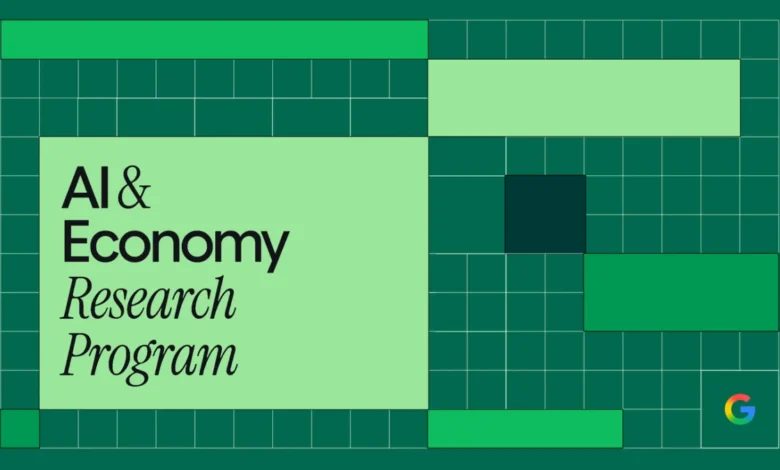
As artificial intelligence continues to transform global industries, redefine workplace dynamics, and accelerate digital transformation across various sectors, technology leaders are increasingly pressed to measure these transformations with academic rigor. Google has taken a significant step toward addressing this imperative by announcing a major expansion of its AI & Economy Research Program. The initiative is bolstered by the inclusion of several prominent global economists, visiting scholars, and academic advisors, headlined by Nobel Laureate Philippe Aghion and Professor Ajay Agrawal. This strategic expansion is designed to deepen the scientific understanding of how artificial intelligence influences economic activity, labor markets, productivity, and innovation worldwide.
The announcement follows closely on the heels of Google’s recent release of the AI & Economy ATLAS v1.0 and its accompanying interactive open-access portal. The ATLAS platform was developed to track and visualize how individuals integrate Google’s suite of artificial intelligence tools into their daily professional routines and personal lives. However, company executives and chief economists recognize that tracking adoption patterns represents only the foundational phase of a much broader, long-term economic shift. Navigating the profound structural changes brought about by generative and foundational AI requires a multidisciplinary approach that bridges fine-grained empirical data with rigorous macroeconomic theory.
By integrating world-class external academic advisors and appointing seasoned empirical researchers to direct its internal initiatives, Google aims to provide organizations, workers, policymakers, and researchers with the analytical tools necessary to comprehend this complex economic transition.
Core Research Pillars and the Evolution of the AI Economy
Technological revolutions throughout history have rarely unfolded instantaneously. From the mechanization of agriculture to the widespread adoption of the internet, structural economic transformations occur along protracted adoption curves characterized by gradual efficiency gains, organizational restructuring, and secondary market adaptations. Google’s expanded AI & Economy Research Program is deliberately structured to measure and analyze this ongoing evolution in real time.
The research agenda focuses on four core pillars:
- The Future of Work: Analyzing how generative tools alter job descriptions, task allocations, skill requirements, and wage structures across different income brackets and geographic regions.
- Productivity and Growth: Quantifying the net economic output generated by AI implementation in corporate, small-business, and public-sector environments.
- Global Technology Diffusion: Examining the speed and variance with which AI technologies propagate across developing and developed economies, monitoring potential digital divides.
- Impact on Scientific Discovery: Assessing how advanced machine learning models accelerate R&D cycles in pharmaceuticals, materials science, clean energy, and theoretical research.
To execute a research agenda of this unprecedented scope, Google is fostering deeper collaboration among academic institutions, industry leaders, and public policymakers. The initiative leverages a collaborative framework that connects independent economic research with enterprise-level usage data, ensuring that theoretical models are constantly tested against empirical market realities.
Leadership and Key Appointments
To steer empirical projects and seamlessly integrate diverse economic insights across the research agenda, Google has appointed two renowned empirical researchers as Directors of the AI & Economy Research Program: Anu Madgavkar and Daniel Rock.
Anu Madgavkar brings extensive expertise in labor economics, productivity trends, and the future of work, having previously spent decades researching global economic shifts and regional labor market dynamics. Daniel Rock, a recognized academic authority on the economics of artificial intelligence, digital business strategies, and technological diffusion, brings cutting-edge methodological frameworks to the program.
Madgavkar and Rock will lead Google’s AI & Economy Research Program alongside Alex Imas, Director of AGI Economics at Google DeepMind, and Zanna Iscenko, AI & Economy Lead in Google’s Chief Economist’s Office. This leadership team combines deep corporate insight with rigorous academic pedigree, establishing a powerful bridge between commercial technological development and independent macroeconomic analysis.
Furthermore, the program is significantly strengthened by the addition of Nobel Laureate Philippe Aghion and Professor Ajay Agrawal, alongside a distinguished cohort of leading external advisors and visiting scholars. These academic luminaries will provide critical oversight, critique empirical methodologies, and help formulate policy frameworks that can guide both corporate strategies and legislative responses to the AI transition.

Context, Background, and the Broader Industry Landscape
The launch of the ATLAS platform and the subsequent expansion of Google’s research initiatives occur against a backdrop of intense global debate regarding the economic consequences of artificial intelligence. Governments, central banks, and labor organizations worldwide are grappling with dual realities: the immense potential for AI to drive unprecedented productivity growth, and the legitimate anxieties surrounding labor displacement, wage stagnation, and market concentration.
Historically, major technological breakthroughs create more jobs than they destroy over the long term, but the transitional friction can be severe. Workers in cognitive and administrative fields—traditionally insulated from the disruptions of automation that targeted manufacturing—now find their daily tasks augmented or challenged by large language models and predictive algorithms. Economists have warned that without targeted interventions, upskilling programs, and adaptable regulatory frameworks, the benefits of the AI economy could concentrate disproportionately among a handful of tech-forward enterprises and highly skilled knowledge workers.
Google’s initiative directly addresses these systemic concerns by committing to open-access data sharing. By opening the ATLAS platform to the public and engaging independent academic authorities, the tech giant is attempting to foster unprecedented transparency. Policymakers can utilize this empirical data to design robust social safety nets, modernize educational curricula, and establish labor laws that protect workers while encouraging innovation.
Implications for Policymakers, Businesses, and Workers
The implications of Google’s expanded research program extend far beyond corporate boardrooms and academic symposiums. As the data accumulated by the ATLAS platform and analyzed by Aghion, Agrawal, Madgavkar, Rock, and their colleagues becomes publicly available, it will serve as an empirical baseline for national and international economic policy formulation.
For business leaders, the research offers actionable insights into organizational restructuring. Integrating AI successfully is not merely a matter of purchasing software licenses; it requires fundamental redesigns of workflow processes, management structures, and internal training ecosystems. The research program aims to identify the specific organizational practices that enable companies to successfully upskill their workforce, transforming potential apprehension into collaborative productivity.
For policymakers, the insights generated by this multidisciplinary team will help clarify the boundary conditions for effective regulation. Issues concerning intellectual property, data privacy, algorithmic bias, and market competition require nuanced economic understanding that traditional regulatory models struggle to provide. By grounding policy discussions in rigorous, real-time data, governments can avoid reactionary legislation that stifles innovation while remaining vigilant against monopolistic practices and labor exploitation.
For workers, the ultimate promise of this research lies in its focus on democratizing expertise. If artificial intelligence can be effectively harnessed to lower the barrier to entry for complex professional tasks, it holds the potential to reduce inequality and drive broadly shared prosperity.
Future Outlook and Next Steps
The newly expanded AI & Economy team has wasted no time in setting its sights on upcoming deliverables. The experts will immediately begin serving as a scientific bridge, directly informing future iterations of the ATLAS platform and guiding ongoing empirical research papers.
As the program progresses, stakeholders can expect a continuous stream of white papers, public datasets, and interactive tools designed to demystify the macro- and micro-economic impacts of machine learning. By maintaining an open dialogue between private enterprise and independent academia, Google’s initiative sets a new standard for how the technology sector can responsibly engage with the societal disruptions of its own innovations.
Organizations, researchers, policymakers, and workers interested in tracking these developments, reading the latest research publications, and interacting with global adoption data can access the portal directly at ai.google/economy.