Google Partners with Five Elite European Football Clubs to Integrate Gemini AI and Pixel Smartphones into Matchday Experiences

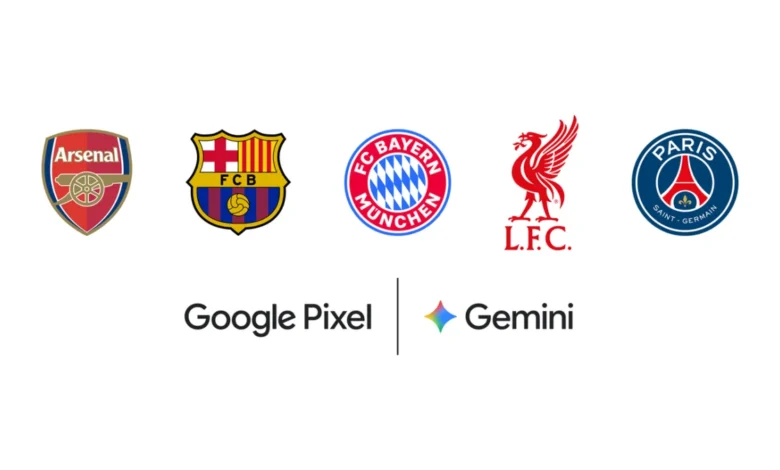
Google has announced a series of sweeping, long-term partnerships with five of the most prestigious and culturally significant football clubs in the world: Arsenal FC, FC Barcelona, FC Bayern München, Liverpool FC, and Paris Saint-Germain. By securing official status as the Official Consumer AI and Official Smartphone Partner for each of these institutions, Google aims to intertwine its flagship Gemini artificial intelligence models and Pixel hardware ecosystem directly into the daily operations, fan engagement strategies, and media production workflows of European elite football.
The announcement represents a strategic convergence of Big Tech and global sport. As football leagues become increasingly digitized and data-driven, technology companies are no longer treating sports organizations merely as advertising billboards. Instead, brands like Google are embedding their core software infrastructures directly into how clubs communicate with hundreds of millions of supporters worldwide. This partnership model spans both men’s and women’s senior teams, signaling a concerted effort to leverage high-end consumer technology to bridge historical visibility gaps in professional sports.
Main Facts of the Collaboration
The multi-year agreements designate Google’s Gemini as the official consumer AI assistant and the Pixel smartphone lineup as the official mobile hardware provider for Arsenal, Barcelona, Bayern Munich, Liverpool, and Paris Saint-Germain. The initiative targets three primary pillars: supercharging matchday fan experiences through advanced AI, transforming behind-the-scenes content creation via mobile camera technology, and elevating the prominence of women’s football globally.
Under the terms of the agreement, supporters of the five clubs will gain access to specialized Gemini integrations. These tools are designed to parse vast quantities of historical data, tactical statistics, and live match metrics to serve as an intelligent, real-time football assistant. Whether fans are debating historical head-to-head records during a post-match broadcast or attempting to understand complex mid-game tactical shifts orchestrated by managers in high-stakes European fixtures, Gemini’s agentic capabilities are engineered to deliver precise answers instantaneously.
Simultaneously, the club media production teams will be equipped with Google Pixel devices. These smartphones will serve as the primary capture tools for the popular "Shot on Pixel" digital series, utilizing computational photography and integrated AI editing suites to produce raw, cinematic, and unfiltered glimpses into the dressing rooms, training grounds, and tunnel walks of elite athletes. Furthermore, device personalization features—such as custom-designed official club wallpapers—are being rolled out for newer device iterations, including the Pixel 11, allowing supporters to visibly display their allegiance through their hardware interface.
Background Context: The Evolution of Fan Engagement and AI in Sports
To understand the significance of this multi-club coalition, one must examine the shifting landscape of sports media consumption over the past decade. Traditional broadcasting rights have long dominated club revenues, but digital monetization and direct-to-consumer engagement channels have rapidly emerged as critical growth vectors. Modern football fans, particularly younger demographics, consume sports non-linearly. They demand second-screen experiences, real-time statistical breakdowns, vertical video formats on social media platforms, and intimate, behind-the-scenes storytelling that humanizes elite athletes.
Simultaneously, artificial intelligence has transitioned from a backend enterprise tool to a consumer-facing utility. Companies like Google are fiercely competing to establish their conversational AI assistants as indispensable daily companions. By embedding Gemini into the daily routines of hundreds of millions of passionate football supporters, Google creates a powerful pipeline for habitual user adoption. Football acts as a universal cultural touchstone; pairing Gemini’s analytical prowess with the emotional resonance of European football creates a compelling use case for consumer AI that transcends traditional tech-industry marketing.
Chronology and Strategic Timeline

The groundwork for this comprehensive partnership reflects a multi-stage approach to sports marketing and technology deployment. Over the past several years, technology conglomerates have tested isolated sponsorships with individual clubs, often focusing on cloud computing, stadium connectivity, or localized data analytics. However, securing concurrent agreements with five Tier-1 European clubs represents an unprecedented consolidation of sports-tech alignment.
Phase one of the rollout involves the immediate integration of official club branding elements into Google’s hardware ecosystem, alongside the mobilization of social media content pipelines utilizing Pixel devices. Media teams within Arsenal, Barcelona, Bayern Munich, Liverpool, and Paris Saint-Germain have already begun integrating Pixel-shot content into their digital channels, targeting platforms like Instagram, TikTok, and YouTube.
Phase two focuses on the deeper deployment of Gemini’s agentic capabilities for consumers. As artificial intelligence models evolve to execute multi-step tasks autonomously, Google plans to roll out sports-specific features that allow users to automate match tracking, receive personalized tactical digests, and query complex databases using natural language inputs during live broadcasts.
Closing the Visibility Gap in Women’s Football
A cornerstone of Google’s multi-club partnership is its explicit commitment to addressing the systemic visibility disparities between men’s and women’s professional football. While global attendance figures and viewership records for women’s tournaments—such as the UEFA Women’s Champions League and domestic leagues—have surged exponentially in recent years, traditional media packaging, broadcast infrastructure, and digital content production often lag behind the men’s game.
By structuring the partnership to encompass both men’s and women’s squads equally, Google and its partner clubs are dedicating technical resources, high-end camera equipment, and promotional bandwidth to the women’s divisions. The initiative aims to produce broadcast-quality, pitch-side content that elevates the profiles of female athletes. Industry analysts note that corporate partnerships of this scale play a vital role in commercializing women’s sports, transforming athletic talent into globally recognized personal brands and inspiring the next generation of players and fans.
Analysis of Implications and Industry Impact
The alliance between Google and these five football giants carries profound implications for both the technology and sports industries. For Google, the collaboration provides a massive, highly engaged demographic through which to showcase the practical utility of Gemini and Pixel hardware. In a saturated smartphone and AI market, differentiation increasingly relies on cultural integration and ecosystem branding. By aligning Pixel with the visceral emotion of match days, Google positions its hardware not merely as a utility device, but as a gateway to cultural passion.
For the football clubs, the partnership unlocks sophisticated digital infrastructure and production capabilities that might otherwise require significant internal capital expenditure. As clubs transition into modern media entities, the ability to rapidly generate high-volume, high-fidelity digital content is paramount to maintaining global audience engagement across time zones.
Furthermore, this multi-club alignment highlights a broader trend of cross-border sports marketing. Rather than relying on regional or domestic sponsorships, global technology brands seek platforms with universal resonance. Arsenal, Barcelona, Bayern Munich, Liverpool, and Paris Saint-Germain command hundreds of millions of followers across every continent, offering a truly global canvas for Google’s technological showcase.
As the season progresses, supporters of these clubs can expect to encounter an increasingly integrated digital experience—from AI-driven tactical insights delivered via Gemini to cinematic, unfiltered matchday perspectives captured on Pixel devices. Through this ambitious collaboration, Google and Europe’s football elite are redefining the boundaries where fan culture and artificial intelligence intersect.