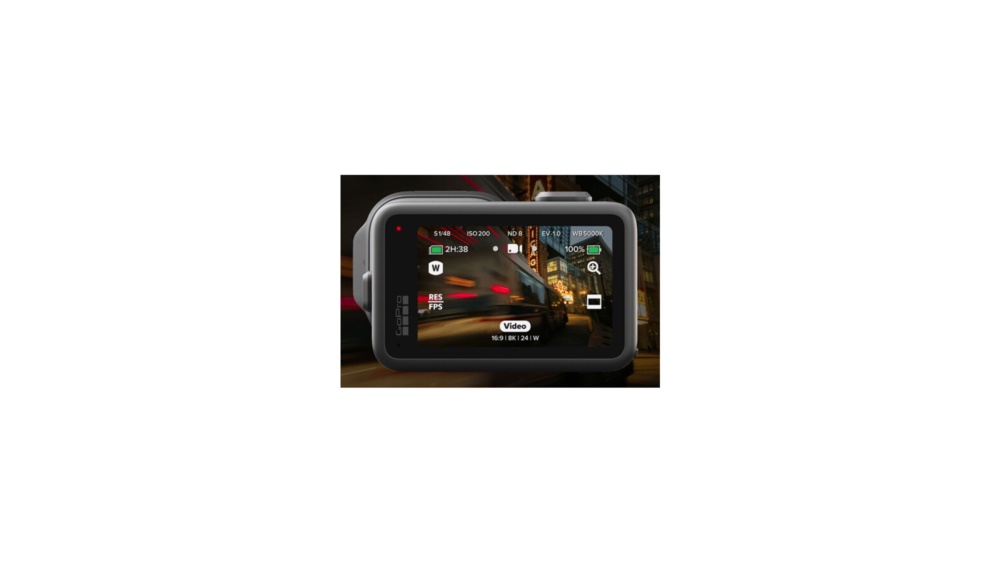
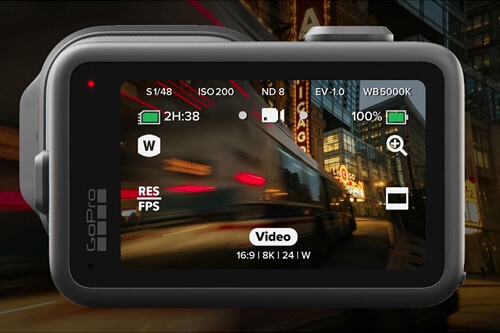
The release of the GoPro Mission 1 Pro ILS, retailing at an MSRP of $699.99 for the body-only configuration, has reignited a long-standing technical debate within the professional cinematography and broadcast community. While GoPro remains a dominant force in the action camera market, the company’s latest flagship model continues to exhibit what industry experts describe as "framerate malpractice"—the practice of displaying non-integer framerates (such as 23.976, 29.97, and 59.94) as their integer counterparts within the camera’s menu system. This discrepancy, which persists despite industry standards moving toward greater precision, creates significant workflow friction for editors, broadcast engineers, and production crews who rely on metadata accuracy for multi-camera synchronization.
Technical Context and Industry Standards
In modern digital production, the distinction between integer and non-integer framerates is not merely academic; it is a fundamental requirement for signal integrity. Standardized rates such as 23.976, 29.97, and 59.94 fps are essential for compatibility with legacy NTSC broadcast systems, which operate on a slightly slowed-down clock to accommodate color subcarrier signals. Conversely, integer rates like 24, 30, and 60 fps are the standard for digital cinema, high-end gaming, and web-based streaming platforms.
When a camera manufacturer labels a 23.976 fps capture as "24p," it introduces a metadata mismatch. While the difference is fractional, it can lead to drift in long-form audio synchronization, complications in multi-cam editing timelines, and errors during broadcast ingest. Manufacturers such as Blackmagic Design, Canon, Panasonic Lumix, and Sigma have largely transitioned to displaying rates to two decimal places in their interface, acknowledging the necessity of precision in professional environments. GoPro’s persistence in rounding these values in the Mission 1 Pro ILS firmware is seen by critics as a design choice that prioritizes consumer simplicity at the expense of professional utility.
A Chronology of the Framerate Discrepancy
The issue of framerate nomenclature is not a new grievance. For years, the professional video community has advocated for transparency in camera menus.
- 2020-2023: As high-end production began incorporating action cameras as "B-roll" or "crash-cam" units, the technical limitations of consumer firmware became apparent. The necessity for precise matching with industry-standard cinema cameras (e.g., ARRI, RED, Sony) highlighted the "integer-only" labeling in GoPro firmware.
- 2024: Industry analysts and long-form producers began publishing technical white papers and critiques, documenting how GoPro’s firmware obfuscates the actual frame count.
- 2025: GoPro introduced minor updates to its Labs program, providing a "hack" or custom firmware workaround that allows power users to unlock specific integer and fractional modes.
- 2026: The release of the Mission 1 Pro ILS confirms that, despite industry feedback, the default out-of-the-box user experience remains unchanged. The camera continues to group non-integer rates under integer headings, necessitating external software intervention for professionals seeking technical accuracy.
Supporting Data: The Impact on Production Workflows
To understand the gravity of this issue, one must examine the requirements of a typical production workflow. A professional production often involves an "A-cam" shooting at a true 23.976 fps and a "B-cam" (the GoPro) also set to what the menu calls "24p." If the GoPro is actually recording at 23.976 but the metadata is flagged incorrectly, or if the user is misled about the specific timing, the editor may encounter issues during the conforming process.
The following table summarizes the standard industry rates that professional workflows require for seamless integration:
| Standard | Broadcast/Cinema Use Case | Correct FPS Notation |
|---|---|---|
| NTSC/Broadcast | Legacy Television | 23.976 / 29.97 / 59.94 |
| Cinema | DCI Digital Theatre | 24.00 |
| PAL/SECAM | International Broadcast | 25.00 / 50.00 |
| High Frame Rate | Gaming/Live Streaming | 30.00 / 60.00 |
The confusion arises because, while 25 and 50 fps (standard in PAL regions) are correctly identified in the Mission 1 Pro ILS, the North American and Japanese broadcast standards (29.97, 59.94) are frequently mislabeled. This inconsistency forces producers to perform "post-hacks" using GoPro Labs, a secondary software layer, to force the camera into a known, verified state.
The Role of GoPro Labs
GoPro Labs represents a significant acknowledgment of the power-user segment. By allowing users to modify firmware via QR codes or custom configurations, the company provides a pathway for those who need to bypass the "consumer-friendly" menu defaults. While this demonstrates that the hardware is technically capable of handling accurate frame rates, it remains a point of contention that such a fundamental feature is relegated to an optional, secondary utility rather than being integrated into the standard user interface.
For a professional operator, relying on experimental or optional firmware for a $699.99 device introduces a layer of risk. Official firmware updates are tested for stability, whereas Labs features, while innovative, are often categorized as beta or community-supported, which may not meet the reliability requirements of high-budget commercial shoots.
Industry Implications and Future Outlook
The implications for the industry are clear: as the barrier between "consumer" and "professional" equipment continues to blur, manufacturers must adopt a more rigorous approach to technical specifications. The demand for accurate metadata is growing, particularly as AI-driven editing tools and automated post-production workflows rely heavily on precise file headers.
If a file is mislabeled as 24fps but is actually 23.976, an automated ingest system may incorrectly conform the footage, leading to dropped frames or audio desync. By aligning their interface with industry-standard notation, companies like GoPro could significantly improve the integration of their products into professional environments without alienating the casual user base.
Summary of Recommendations
Industry experts, including those within the broadcast engineering community, have identified three primary areas where GoPro could improve the Mission 1 Pro ILS experience through a free firmware update:
- Menu Precision: Update the display to show the true framerate to at least two decimal places, matching the accuracy of professional competitors.
- Standardized Labeling: Replace ambiguous integer labels (e.g., "24p") with accurate designations (e.g., "23.98p") to eliminate ambiguity.
- Unified Firmware: Integrate the functionality currently found in GoPro Labs directly into the core settings, ensuring that all users have access to reliable, industry-standard frame rates without the need for external tools.
While the GoPro Mission 1 Pro ILS offers impressive optical performance and form-factor advantages, its current handling of framerates represents a missed opportunity to fully embrace the professional market. As production standards evolve, the technical transparency of hardware interfaces will become an increasingly critical factor for content creators, agencies, and broadcasters. A simple, software-based adjustment to the camera’s display logic could rectify this long-standing issue, effectively bridging the gap between its current consumer-oriented design and the rigorous needs of modern professional cinema.
As of the current product cycle, there has been no official statement from GoPro regarding an impending firmware update to address these specific UI concerns. Until such time, professional operators are advised to verify their camera settings via the GoPro Labs interface before initiating critical production tasks to ensure that the recorded media aligns with the technical requirements of their specific project deliverables.
Related posts: