IFixit Teardown Reveals Modest Gains in AirPods 5 Repairability Amid Apple’s Evolving Design Philosophy

The landscape of consumer electronics repair has long been dominated by the narrative of the "disposable" earbud, a stigma Apple has struggled to shake since the debut of the original AirPods in 2016. However, with the release of the AirPods 5—unveiled earlier this month during Apple’s high-profile "Surprise and Shine" event—the tech giant appears to be making incremental, albeit deliberate, steps toward modularity. A comprehensive teardown performed today by the hardware analysis experts at iFixit confirms that while the AirPods 5 remain far from the gold standard of user-serviceable devices, they have officially shed their "unrepairable" status, moving from a 0/10 to a 2/10 on the site’s proprietary repairability scale.
A Departure from the AirPods 4 Architecture
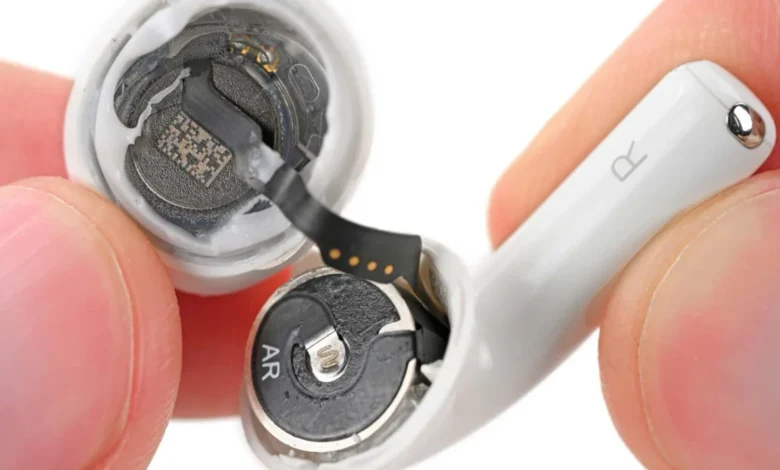
The engineering changes found within the AirPods 5 represent a significant departure from the structural design of the AirPods 4. Central to this shift is the return of pronged batteries, a component architecture Apple previously utilized in the AirPods 3 but notably omitted in the subsequent generation.
By reintroducing these pronged connectors, Apple has simplified the process of disconnecting the power source from the internal logic board. During their evaluation, iFixit technicians successfully removed the battery using specialized tongs, noting that the component felt "intuitive to unplug." This is a stark contrast to the adhesive-heavy, tightly integrated interiors of previous models, which often required destructive prying that frequently resulted in shredded ribbon cables or fractured plastic shells.
However, the ease of removal comes with specific technical constraints. The AirPods 5 employ reversed polarity for the left and right earbuds, meaning that the batteries are not interchangeable. This design choice serves as a reminder that Apple’s pursuit of repairability is still heavily gated by proprietary hardware constraints, necessitating that any potential repair kit includes specific, side-coded replacement parts.
The Thermal Challenge
Despite the inclusion of more accessible connectors, gaining entry to the earbuds remains a barrier for the average consumer. iFixit’s methodology required the application of localized heat—using a hair dryer—to soften the industrial-grade adhesive that seals the earbud casings. Once the adhesive reached the appropriate temperature, the team utilized a specialized clamp to hold the housing in place while carefully prying the seams open.
While this process is achievable for skilled technicians, it underscores the persistent difficulty of performing "home repairs." The risk of damaging the sensitive acoustic drivers or the delicate microphones remains high, and the necessity of precise heat application prevents this from being a casual DIY endeavor.
Furthermore, the charging case—the critical companion to the earbuds—remains, in iFixit’s words, "a disaster." The internal structure of the case continues to rely on heavy-duty adhesives and structural designs that effectively ensure that any attempt to reach the internal charging circuitry results in the total destruction of the casing. For consumers, this means that while the earbuds themselves may see a longer lifespan through battery replacement, the failure of the charging case remains a terminal event for the product.
Contextualizing the September 2026 Launch
The arrival of the AirPods 5 is the latest chapter in a busy month for Apple’s audio hardware division. On September 9, 2026, during the "Surprise and Shine" keynote, the company positioned the $129 AirPods 5 as a significant upgrade to its entry-level lineup. The primary value proposition centered on the integration of Active Noise Cancellation (ANC), a feature that had previously been reserved for the higher-end "Pro" and "Max" tiers.
According to technical specifications released at the event, the AirPods 5 are capable of suppressing up to 50% more external ambient noise compared to the ANC-equipped AirPods 4. This leap in performance is attributed to a complete redesign of the internal acoustic architecture and the implementation of updated Adaptive EQ algorithms. Following the launch, Apple moved quickly to integrate these hardware capabilities into the broader ecosystem, releasing firmware version 9A348 on September 14. This update, compatible with the entire current AirPods lineup, introduced new iOS 27 features, including a revamped interface, a granular slider for Adaptive mode, and enhanced custom EQ controls, signaling Apple’s commitment to unifying the user experience across its diverse audio hardware.
Broader Implications for Industry Sustainability
The shift in repairability scores—however slight—reflects a growing pressure on tech manufacturers to address the "Right to Repair" movement. As regulatory bodies in the European Union and several U.S. states continue to draft legislation requiring greater product longevity, companies like Apple are facing a delicate balancing act. They must maintain the sleek, water-resistant, and compact form factors that consumers expect, while simultaneously moving away from the "glue-and-forget" manufacturing methods that define modern portable audio.
Industry analysts suggest that the 2/10 score awarded to the AirPods 5 is a symbolic victory for proponents of sustainable design. While a 2/10 is objectively low, it marks the first time in the history of the AirPods product line that a device has moved off the zero-point floor.
"The fact that we can now replace a battery without destroying the housing is a major technical milestone for this specific product category," noted one industry consultant familiar with the teardown. "However, the case remains the Achilles’ heel. Until Apple redesigns the charging case to be as accessible as the earbuds themselves, the ecosystem as a whole will continue to face criticism regarding e-waste."
Looking Ahead: The Future of Apple Audio
For the consumer, the takeaway from this teardown is one of cautious optimism. The AirPods 5 are objectively more durable than their predecessors in terms of component accessibility, which could theoretically extend the functional life of the earbuds by years. For those who invest in these devices, the ability to swap a degraded battery—even if performed by a professional technician—transforms the AirPods from a disposable commodity into a semi-permanent piece of hardware.
As Apple moves into the next phase of its hardware cycle, the industry will be watching to see if this design philosophy extends to the AirPods Pro and AirPods Max lines. If the company continues to favor modularity, it may eventually lead to a shift in the standard repair pricing models at Apple Stores and authorized service providers.
For now, the AirPods 5 stand as a testament to an iterative design process. They are a product that acknowledges the necessity of repair, even if they have not yet fully embraced the modularity that would satisfy the most stringent critics. For "skilled technicians and intrepid DIYers," the barrier to entry has lowered, but for the vast majority of the public, the AirPods remain a device best serviced by the manufacturer, albeit with a slightly higher chance of a successful, non-destructive repair than ever before.