Kurt Caldwell Laughing Then Shocked Becomes a Viral Internet Phenomenon Across Social Media Platforms

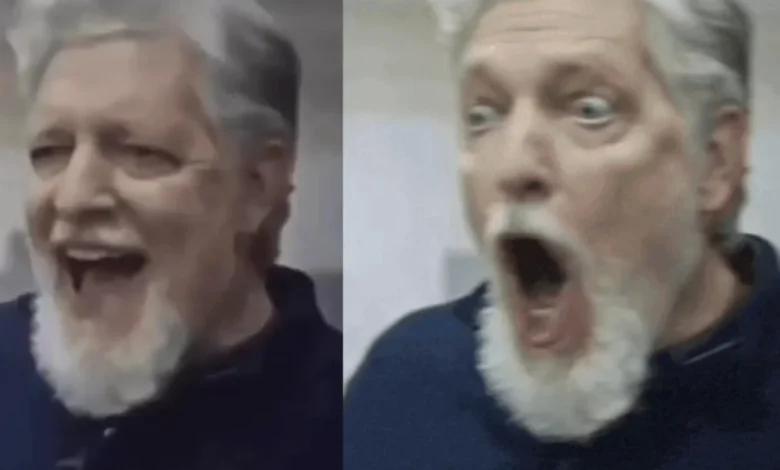
The internet’s insatiable appetite for niche television moments has once again transformed a fleeting scene from a prestige drama into a ubiquitous digital artifact. The "Kurt Caldwell Laughing Then Shocked" reaction GIF—featuring veteran actor Clancy Brown portraying the chilling antagonist Kurt Caldwell in the Showtime limited series Dexter: New Blood—has cemented its place as one of the most recognizable and versatile meme formats of 2025 and 2026. What began as a localized joke within fan subreddits has rapidly evolved into a cross-platform phenomenon, illustrating the unique ways modern audiences repurpose dramatic television for comedic and satirical commentary.
Background Context and the Source Material
To understand the cultural trajectory of the meme, one must examine its origins in Dexter: New Blood, a revival series designed to bring closure to the critically acclaimed psychological thriller Dexter. Aired in late 2021, the series introduced Clancy Brown as Kurt Caldwell, an influential, beloved, yet deeply sinister truck stop owner operating in the fictional snowy town of Iron Lake, New York. Brown, a prolific character actor widely recognized for roles in The Shawshank Redemption, Highlander, and as the voice of Mr. Krabs in SpongeBob SquarePants, brought a formidable physical presence and menacing gravitas to the role.
The specific sequence that birthed the internet meme occurs during season one, episode six, titled "Too Many Tuna Sandwiches," which premiered on television on December 12th, 2021. In this pivotal narrative beat, a high school wrestling match takes an unexpectedly violent turn when Dexter’s teenage son, Harrison, aggressively breaks an opponent’s arm during the competition. In the audience, Kurt Caldwell is initially seen chuckling and enjoying the high-stakes athletic atmosphere alongside fellow townspeople. However, the mood shifts instantaneously from lighthearted entertainment to genuine horror as the gruesome nature of the injury becomes apparent. Caldwell’s demeanor transitions seamlessly from amusement to a wide-eyed, slack-jawed expression of absolute shock.
For over three years, the scene remained a minor footnote in the broader cultural footprint of the Dexter franchise. That changed in early 2025, when internet communities began isolating specific frames of Brown’s expressive face to convey sudden realizations, dramatic reversals of fortune, and instances of dark humor.
Timeline and Chronology of Viral Spread
The evolution of the clip from a static image macro into a looping, combined reaction GIF showcases the organic, decentralized nature of modern meme creation.
The earliest iterations of the meme surfaced on Reddit in March 2025. Users on the forum /r/okbuddymotherfucker—a community dedicated to satirical and surrealist humor surrounding the Dexter universe—began pairing the isolated image of Caldwell’s shocked face with absurd, absurdist text captions. Early examples juxtaposed the terrifying character with deadpan inquiries into television logic or absurd trivia, setting a precedent for using the imagery to subvert serious narrative contexts.
The critical turning point for the meme’s current format occurred on April 10th, 2025. TikTok creator @mbvlayne published a meticulously edited video loop that bridged the two distinct beats of the scene: Caldwell’s hearty, booming laugh immediately crashing into his horrified expression of disbelief, paired with atmospheric background music. The seamless looping of the two emotions captured the exact psychological whiplash experienced by internet users encountering unexpected, chaotic news or social media posts. The TikTok video resonated deeply with algorithmic preferences, accumulating over one million views within its first year online.
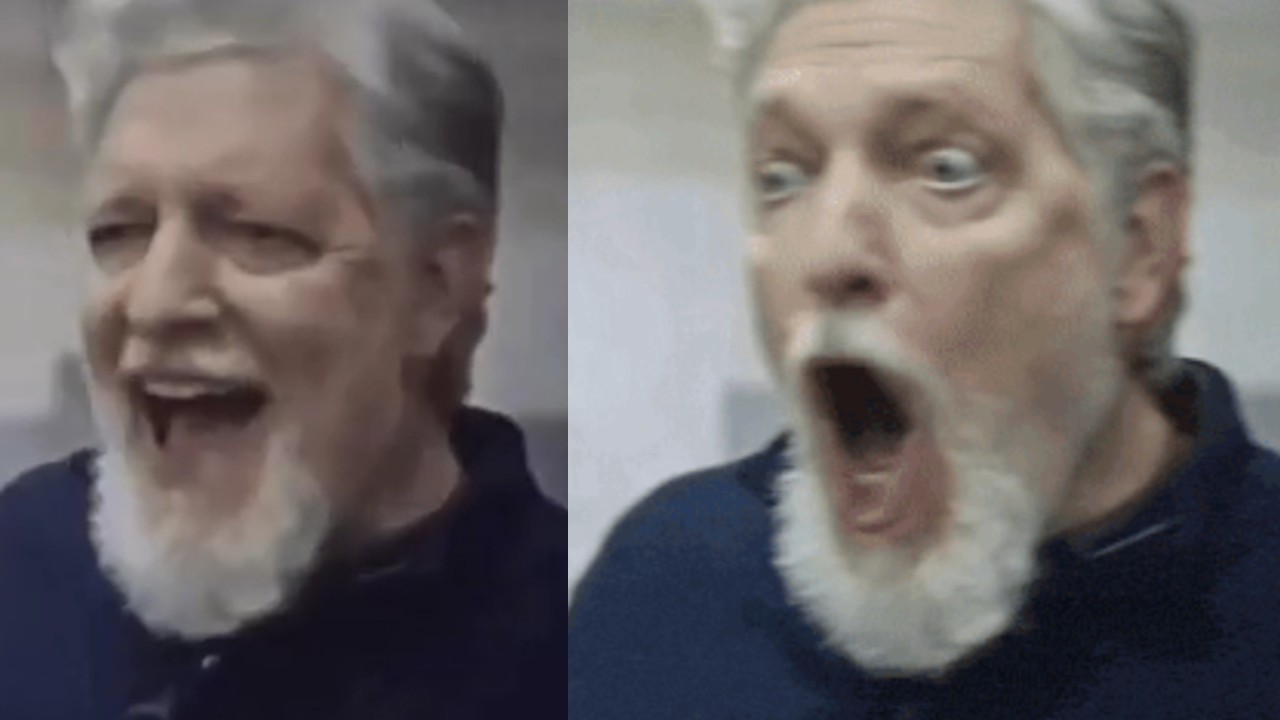
Recognizing the cross-platform potential of the video edit, users quickly extracted the media for broader deployment. On July 27th, 2025, a user on the GIF-hosting platform Tenor uploaded the clip, effectively democratizing its use across messaging applications, workplace communication tools, and social networks.
By September 2025, the meme had broken containment from television-specific fanbases into mainstream internet culture. Redditor No_Temperature3844 posted the reaction GIF to /r/marvelmemes, applying it to the collective audience response to a trailer for the animated series Marvel Zombies. The post generated nearly 3,000 upvotes, proving that the format was easily adaptable to blockbuster entertainment commentary.
Throughout late 2025 and into 2026, the meme’s usage accelerated exponentially. On April 21st, 2026, X user @CS11__ posted the GIF with an expression of astonishment that a widely circulated reaction image originated from the late-stage Dexter revival, garnering more than 22,000 likes in five months. Subsequent viral posts on X, TikTok, and Reddit utilized the template to illustrate awkward social blunders, professional missteps, and historical gaming hypotheticals, such as a September 2026 post in the Warhammer 40,000 community depicting a Primarch’s sudden realization of a catastrophic military error.
Anatomy of a Modern Reaction Format
The enduring popularity of the Clancy Brown laughing-then-shocked template relies on a precise psychological mechanism: the juxtaposition of schadenfreude or casual amusement with immediate, unavoidable consequences. As an image macro and GIF caption format, it serves as a visual shorthand for scenarios where an individual partakes in or laughs at a situation, only to abruptly realize that the circumstances are far more severe, inappropriate, or personally incriminating than initially perceived.
Communication analysts note that reaction GIFs featuring veteran actors with highly expressive facial structures tend to outperform generalized graphics because they convey complex emotional states without requiring elaborate textual explanation. Clancy Brown’s weathered features, white beard, and imposing stature amplify the comedic contrast between a jovial patriarch and a man who has witnessed something entirely horrifying. Whether applied to geopolitical hypotheticals, embarrassing social media faux pas, or deeply specific video game lore, the template translates complex narratives into a universally understood visual punchline.
Broader Impact and Cultural Implications
The transformation of Kurt Caldwell into a viral internet meme highlights the shifting relationship between prestige television and internet subcultures. Historically, network television executives and streaming platforms attempted to tightly control intellectual property, relying on traditional marketing campaigns to drive engagement. In the streaming era, however, cultural relevance is frequently sustained—and occasionally resurrected—by digital natives who dismember, recontextualize, and democratize scenes from dramatic works.
Furthermore, the phenomenon provides an unexpected secondary wave of visibility for actors whose careers span decades. While Clancy Brown remains a celebrated figure in Hollywood with a resume boasting dozens of iconic live-action and voice-acting credits, the viral resonance of his Dexter: New Blood performance introduces his work to younger demographics who may not have engaged with the original broadcast of the series.
As digital communication continues to prioritize visual shorthand over traditional prose, reaction formats derived from prestige television dramas remain a cornerstone of online discourse. The Kurt Caldwell laughing-then-shocked meme stands as a testament to the unpredictable lifecycle of media in the twenty-first century, where a single second of television acting can be repurposed into a timeless digital language.