LTTStore TrueSpec Cables Finally Solve the Universal Serial Bus Confusion That Has Plagued Tech Enthusiasts for a Decade

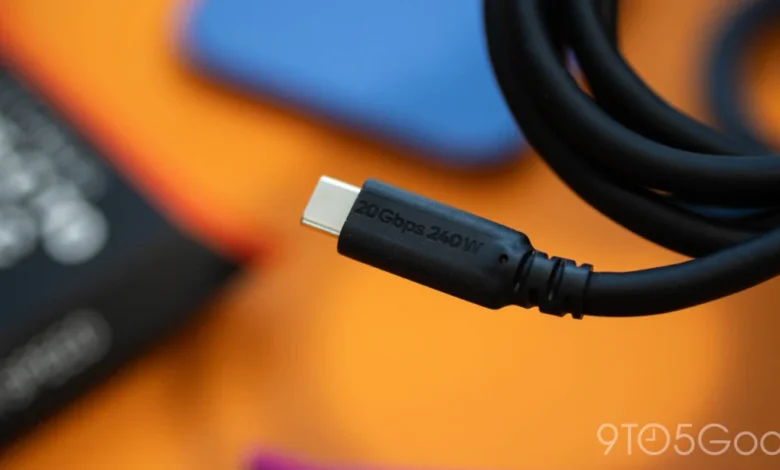
The evolution of the Universal Serial Bus (USB) standard has been marked by a transition from specialized, proprietary connectors to a single, sleek, and seemingly universal interface: USB-C. While this shift has drastically reduced electronic waste and simplified the lives of mobile users, it has simultaneously introduced a complex, often opaque, layer of technical ambiguity. Consumers are frequently left to navigate a market where two cables, physically identical in appearance, may offer wildly different performance capabilities regarding data transfer speeds, power delivery, and video output. Recently, the LTTStore—the retail arm of the Linus Media Group—introduced a line of cables dubbed “TrueSpec,” designed to address this widespread lack of transparency by etching technical specifications directly onto the hardware.
The Anatomy of USB-C Complexity
To understand the necessity of the TrueSpec initiative, one must look at the underlying architecture of USB-C. Unlike its predecessors, such as USB-A or Micro-USB, the USB-C specification is a multi-lane, high-bandwidth standard capable of supporting various protocols, including USB 2.0, 3.2, USB4, and Thunderbolt 3 or 4. Furthermore, the Power Delivery (PD) specification allows cables to manage electrical loads ranging from a standard 15W smartphone charge to a 240W high-performance laptop power supply.
![It took way too long for someone to make USB-C cables that say what they can actually do [Gallery]](https://9to5google.com/wp-content/uploads/sites/4/2026/09/ltt-truespec-cables-1.jpg?quality=82&strip=all&w=1600)
The inherent problem is that the physical connector—the plug itself—is a common denominator for hardware that operates on vastly different technical tiers. An entry-level USB-C cable might be restricted to USB 2.0 speeds (480 Mbps) and 60W of power, while a premium cable might facilitate 40 Gbps of data throughput and 240W of power. Without standardized, mandatory, and highly visible labeling, consumers have traditionally been forced to rely on packaging or product descriptions, which are often lost, discarded, or misleading. This leads to “silent failures,” where a user attempts to connect a high-resolution display or transfer massive files, only to find the cable incapable of supporting the required bandwidth, often with no clear indication as to why the connection is failing.
A Chronology of the Universal Standard
The USB-C connector was first introduced by the USB Implementers Forum (USB-IF) in 2014, with the goal of replacing the fragmented landscape of connectors. By 2016, major smartphone manufacturers, including Google and Samsung, began mass adoption of the port. However, the years that followed saw a bifurcation in the market: as the port became ubiquitous, the certification process for the cables themselves failed to keep pace with consumer awareness.
In 2021, the USB-IF attempted to mitigate this by introducing specific logos for cable packaging to denote wattage and data speeds. Despite these efforts, compliance among third-party manufacturers remained inconsistent. Small-scale boutique manufacturers occasionally attempted to label their products, but these efforts were often localized or lacked the supply chain scale to influence the broader industry. The launch of the TrueSpec line earlier this year represents the first time a high-profile, consumer-facing technology brand has committed to applying these specifications directly to the molding of the cable head as a primary feature of the product line.
![It took way too long for someone to make USB-C cables that say what they can actually do [Gallery]](https://9to5google.com/wp-content/uploads/sites/4/2026/09/ltt-truespec-cables-2.jpg?quality=82&strip=all&w=800)
Data-Driven Implications for Consumers
The TrueSpec cables are designed to mitigate the risks of hardware incompatibility. By laser-etching labels such as “100W” or “40Gbps” directly onto the connectors, the user is provided with an immediate visual audit of the cable’s capabilities. From a technical perspective, this reduces the risk of “brownout” conditions—where a device attempts to pull more power than a cable is rated to handle—and eliminates the time-consuming trial-and-error process currently required to identify which cables in a home or office are suitable for high-speed data tasks.
While these cables carry a premium price tag—starting at approximately $22 for USB-C to USB-C configurations and $17 for USB-A to USB-C—the market value proposition lies in the reduction of "diagnostic time." For professionals managing complex workflows, the ability to discern a cable’s capability at a glance translates to increased productivity and a reduction in the need to replace entire sets of cables due to uncertainty.
Industry and Regulatory Perspective
The USB-IF, the organization responsible for overseeing the development of USB standards, has long provided guidelines for the labeling of USB-C cables, including the usage of the "Certified USB" logo program. However, these guidelines are voluntary for manufacturers unless they wish to market their products as "USB-IF Certified." This creates a scenario where the market is flooded with "spec-compliant" cables that lack official certification, leading to the current state of consumer confusion.
![It took way too long for someone to make USB-C cables that say what they can actually do [Gallery]](https://9to5google.com/wp-content/uploads/sites/4/2026/09/ltt-screwdrivers.jpg?quality=82&strip=all)
Independent testing labs and industry analysts have noted that while the TrueSpec approach is not a regulatory requirement, it serves as a "best practice" model. Should other manufacturers follow suit, it could force a shift in consumer expectations, eventually compelling the broader market to adopt similar labeling standards to remain competitive. The implication is a potential shift toward "specification transparency" as a standard consumer demand, similar to how food packaging is required to list ingredients or how electronics are required to display energy efficiency ratings.
Expanding the Ecosystem: Beyond Cables
The introduction of the TrueSpec line is part of a larger trend in the tech retail space, where brands are focusing on modularity and longevity. The LTTStore’s inclusion of precision tools, such as their multi-bit screwdriver kits, aligns with the broader "Right to Repair" movement. By providing high-quality, durable tools and verified, clearly labeled infrastructure accessories, these companies are catering to a demographic that prioritizes sustainability and technical transparency over the disposable, low-cost model that has defined the tech accessory market for the past decade.
In the case of the precision kits, the focus is on enabling users to perform internal maintenance, such as the safe removal of degraded lithium-ion batteries. This is particularly relevant as mobile devices age and batteries reach the end of their lifecycle, often referred to colloquially as "spicy pillows" due to the chemical expansion that occurs in failing cells. By pairing high-quality tools with clear, robust cabling solutions, the industry is seeing a move toward empowering the end-user to manage their own hardware ecosystem with greater confidence.
![It took way too long for someone to make USB-C cables that say what they can actually do [Gallery]](https://9to5google.com/wp-content/themes/ninetofive/dist/images/google-preferred-source-badge-dark.png)
The Path Forward
The success of the TrueSpec initiative remains to be seen in terms of mass market adoption. The primary hurdle is the cost of manufacturing and the logistical challenges of ensuring that every unit in a mass-produced line features consistent, legible, and permanent labeling. However, the initial response from the enthusiast community suggests a significant appetite for products that treat technical specifications as a primary user interface element.
As the industry moves toward higher power delivery standards, such as the 240W Extended Power Range (EPR), the potential for damage due to improper cable usage increases. This makes the need for clear, physical labeling not just a convenience, but a necessary safety feature for the next generation of computing hardware. Whether through official regulatory mandate or continued pressure from niche brands setting higher standards, the move toward "TrueSpec" labeling is a vital step toward maturing the USB-C ecosystem, ensuring that the promise of a universal standard is finally matched by the reality of a transparent and reliable user experience.
The integration of these standards into the everyday workflow of users—from power users to casual consumers—will likely be the final metric by which this shift is judged. By removing the guesswork from the connection process, manufacturers can improve user trust, reduce electronic waste, and ultimately provide a more stable and efficient environment for the diverse array of hardware that relies on the USB-C standard today.