Massive Data Breach Exposes 153 Million North American Identity Records Through Verification Firm Vulnerability

A catastrophic security failure involving a Louisiana-based identity verification company has resulted in the exposure of over 153 million digital scans of driver’s licenses, government identification cards, and sensitive travel documents. The breach, which was weaponized this week through a dark web service branded as "Nexus," has sent shockwaves through federal law enforcement and privacy advocacy circles. The scope of the exposed data is staggering, encompassing millions of citizens in the United States and Canada, and even reaching high-ranking government officials, including U.S. Defense Secretary Pete Hegseth.
The incident was first identified on Monday, August 31, when an anonymous source alerted security researchers to a new portal on the Russian-language cybercrime forum Exploit. The service, operating under the name Nexus, marketed itself as a high-end repository for stolen PII (Personally Identifiable Information), offering prospective buyers a granular search interface capable of filtering by geography, document type, and issuing authority.
Anatomy of the Breach and the Nexus Repository
The sheer volume of records hosted by Nexus suggests a long-term, systematic exfiltration of data rather than a singular, isolated hack. A preliminary audit of the database revealed approximately 11.5 million search result pages, each containing roughly 15 entries, corroborating the claim that the service held over 153 million driver’s license images.

The records are notably sophisticated. Rather than simple JPEGs, the stolen files include high-resolution scans that incorporate infrared and ultraviolet versions of the documents. This level of detail is typically only achievable through industrial-grade scanning hardware used by retailers, rental car agencies, and security checkpoints. Each image file was appended with a precise timestamp, which researchers were able to correlate with real-world events, such as travel dates and vehicle rentals.
The data repository was not limited to standard driver’s licenses. It included:
- Commercial Driver’s Licenses (CDLs): Critical credentials that grant holders authority to operate heavy transport vehicles.
- Medical Marijuana Cards: Sensitive health-related documentation that could be exploited for blackmail or discriminatory practices.
- Common Access Cards (CACs): Government-issued identification used for physical entry into secure federal facilities, raising significant national security concerns.
- International Travel Documents: Millions of passports and secondary travel IDs that facilitate cross-border movement.
Chronology of the Exposure
The discovery of the Nexus portal has provided a roadmap for understanding how third-party identity verification services have become a single point of failure for millions of consumers.
- June 2025: Initial exfiltration of data likely begins, as evidenced by timestamps on recovered records.
- August 31, 2026: A security researcher is alerted to the existence of the Nexus portal, which uses the researcher’s own stolen Virginia driver’s license as a "free sample" for prospective buyers.
- September 1–2, 2026: Researchers conduct cross-referencing tests, comparing their personal travel histories—specifically vehicle rentals and dispensary visits—with the metadata found on the stolen files.
- September 2, 2026: Following inquiries from journalists and the notification of federal authorities, the FBI’s New Orleans field office launches a formal investigation into idscan.net, the primary provider implicated by the metadata patterns.
- September 8, 2026: idscan.net officially acknowledges the security incident, confirming that an unauthorized third party had accessed and potentially copied sensitive customer information.
- September 8, 2026 (Evening): Shortly after the story gains mainstream traction, the Nexus service shuts down, posting a brief message indicating the service is "no longer available."
The Role of Third-Party Verification Providers
The investigation points directly to idscan.net, a prominent identity verification firm that acts as an intermediary for thousands of businesses globally. The company provides the hardware and software used to scan IDs at the point of sale. Their client list, which includes major retailers, national car rental agencies, and financial services, suggests that the breach occurred at the centralized database level rather than through individual retailers.

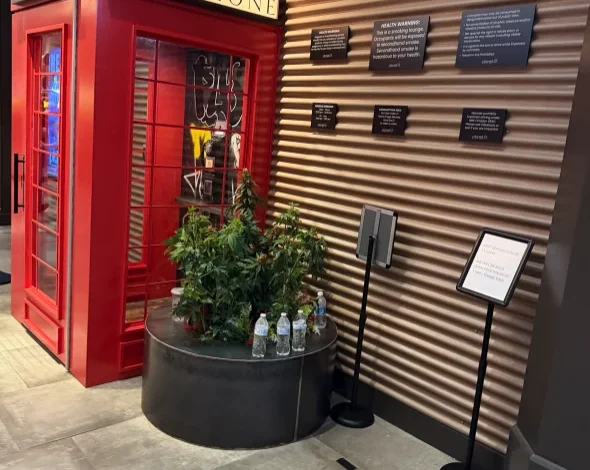
Security researcher Zach Edwards, who identified that his own ID scan was likely compromised during a visit to a Planet13 marijuana dispensary, highlighted the danger of "vendor sprawl." In the pursuit of regulatory compliance, businesses have increasingly offloaded identity verification to third-party vendors. When these vendors are breached, the exposure is not limited to a single company’s customer base but spans the entire ecosystem of that vendor’s clients.
Caesars Entertainment, which had been listed as a client on the idscan.net website, issued a clarification following the news, stating they had ceased using the service in February 2025 and did not authorize the retention of their customer data by the firm. This underscores a growing industry problem: even when companies discontinue services with a vendor, the vendor often retains massive troves of legacy data, leaving it vulnerable to future attacks.
National Security and Privacy Implications
The presence of federal officials’ credentials in the Nexus database—including those of the assistant director of the FBI—has elevated this from a consumer privacy issue to a matter of national security. The ability of hostile actors to purchase verified identification of government employees could facilitate sophisticated social engineering, physical access to secure buildings, or synthetic identity fraud.
Larry Baldwin, principal intelligence researcher at Cybera, emphasized that the damage caused by this breach is likely permanent. Unlike a password or a credit card number, a driver’s license or a government-issued ID cannot be easily "reset." For individuals in sensitive situations—such as those in witness protection or victims of domestic violence—the exposure of their identity documents, combined with AI-driven facial recognition tools, creates an existential risk that no credit monitoring service can mitigate.

"We are seeing a massive degradation of trust in authentication controls," Baldwin noted. "When the very systems designed to verify identity become the primary source of identity theft, the foundational security model for modern commerce and travel is effectively broken."
Official Response and Mitigation
The FBI’s involvement marks a significant escalation in the response to this incident. Federal agents are now working to determine the extent of the exfiltrated data and whether the images were used to facilitate other criminal activities beyond the Nexus marketplace.
idscan.net has begun the process of notifying affected individuals and offering credit protection services. However, industry analysts argue that these measures are insufficient given the scope of the exposure. The "full scan" nature of the stolen data—front, back, and specialized infrared/ultraviolet imagery—means that attackers have the exact replicas required to pass most automated digital "Know Your Customer" (KYC) checks used by banks and online services.
Future Outlook
The Nexus breach serves as a watershed moment for the data privacy industry. It highlights the inherent danger of "data hoarding," where service providers collect and retain highly sensitive biometric and identification data without sufficient oversight or robust destruction policies.

As investigations continue, the focus will likely shift toward legislative action. Lawmakers are under increasing pressure to mandate stricter data minimization policies, requiring companies to delete sensitive scans immediately after a verification event rather than maintaining centralized "honey pots" of PII that become prime targets for international cybercrime syndicates. For the millions of affected citizens, the reality is a long-term struggle against the potential for identity fraud, as their most personal credentials now circulate in the digital shadows of the dark web.