Mastering Google Ads video sequence campaigns to drive audience engagement and brand storytelling


Google Ads video sequence campaigns represent a sophisticated departure from standard YouTube advertising by enabling brands to present a series of video clips to individual viewers in a specific, predetermined order. While most YouTube ad formats function as standalone impressions, sequence campaigns treat the viewer’s journey as a narrative, ensuring that the marketing message evolves based on previous interactions. By leveraging this tool, advertisers can move beyond simple reach metrics to create structured storytelling experiences that guide potential customers through the marketing funnel, from initial awareness to final conversion.
The evolution of digital video advertising has shifted from high-volume, indiscriminate reach toward personalized, high-intent engagement. Google introduced video sequence campaigns to bridge the gap between long-form storytelling and the fragmented nature of short-form mobile viewing. Because viewers are often distracted or prone to skipping, the ability to control the progression of an ad—ensuring that a user who saw a brand introduction is later served a product-specific value proposition—is a significant technical advantage for performance marketers.
The Strategic Framework of Sequence Campaigns
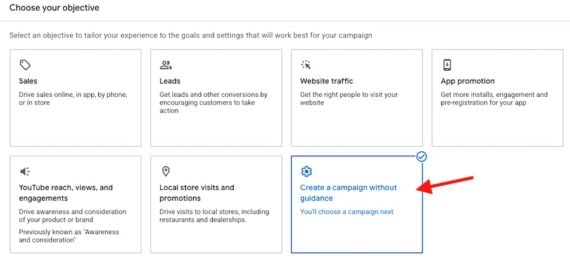
Unlike standard "Reach" or "Conversion" campaigns, sequence campaigns are built on a logic-based architecture. A sequence campaign requires a specific setup path within the Google Ads interface. Advertisers must select "Create a campaign without guidance" and subsequently choose the "Video" campaign type. It is critical to note that selecting common objectives like "YouTube reach, views, and engagements" often omits the sequence option entirely, as these goals are optimized for broad dissemination rather than sequential storytelling.
Once the "Ad sequence" subtype is selected, the campaign enters a rigid structure governed by target CPM (cost-per-thousand impressions) bidding. This is a deliberate design choice by Google to prioritize the delivery of the sequence over individual video optimization. Furthermore, frequency capping is a mandatory component of these campaigns, restricted to once every 7 or 30 days. This limitation prevents ad fatigue and ensures that the narrative progression remains meaningful rather than repetitive.

Architecture and Step-Based Logic
The core of a sequence campaign is its ad group structure. Each step in the sequence functions as an individual ad group, which contains the creative asset, the associated bidding strategy, and the targeting parameters. The true power of the format lies in the "step transition" logic, which dictates when a user qualifies for the next phase of the narrative.
Advertisers can define transitions based on three distinct viewer behaviors:
- Impression: The user is served the ad, regardless of whether they engaged with it. This is useful for building high-level brand familiarity.
- View: The user engages with the video (typically watching 30 seconds or the duration of a shorter clip). This indicates a higher level of interest and is often used to transition a user from a broad introduction to a specific product demonstration.
- Skip: The user bypassed the ad. This allows for a "re-engagement" strategy, where the advertiser can serve a different, perhaps more compelling, variation of the message to users who were not captured by the initial creative.
This logic allows for complex decision trees. For instance, a brand could show a high-energy 15-second teaser to those who skipped the initial ad, while showing a deep-dive technical feature video to those who successfully viewed the first clip.
Practical Application: The Yarbo Case Study
To illustrate the practical utility of these campaigns, consider the hypothetical example of Yarbo, a manufacturer of autonomous robotic lawn mowers. In a real-world scenario, a company like Yarbo would benefit from an "Introduce and Reinforce" sequence.
In the initial stage, the company might present a comprehensive 60-second product demo trimmed via Google’s Asset Studio. This tool, which includes a "Trim videos" feature, allows marketers to repurpose existing long-form content into shorter, punchier segments without requiring a full re-edit. The first video might focus on the convenience of autonomous maintenance with a headline like "Save Time" and a call-to-action (CTA) pointing to the general homepage.
Following the initial impression or view, the second step in the sequence—triggered by the user’s previous interaction—might shift to a promotional focus. The second video could feature a "Labor Day Sale" headline with a "Buy Now" CTA, directing the user specifically to the product purchase page. This progression transforms the advertising from a generic brand awareness play into a targeted, intent-driven conversion strategy.
Interpreting Performance and Metrics
Measuring the success of a sequence campaign requires a different analytical lens than standard display or search advertising. Because the goal is narrative progression, performance is measured through engagement metrics, specifically view-through rates, completion rates, and the progression rate between steps.
Google provides specific reporting that tracks how many users moved from Step 1 to Step 2, and subsequently to Step 3 or 4. If a campaign shows a sharp drop-off between the first and second video, it provides clear, data-backed evidence that the creative in the first step may not be sufficiently compelling or that the transition logic is misaligned with user interest.
Industry benchmarks suggest that successful sequence campaigns typically see a higher "brand lift" than non-sequential campaigns. This is attributed to the "mere exposure effect," where repeated, logical contact with a brand increases favorability. However, advertisers must be wary of "creative burnout." Even with sophisticated targeting, serving the same sequence to the same user repeatedly can lead to negative brand sentiment.
Broader Implications for Digital Marketing
The rise of AI-driven creative tools within Google Ads, such as Asset Studio’s video trimming and automated editing features, has lowered the barrier to entry for sequence campaigns. Historically, producing four or five distinct but related videos was cost-prohibitive for small to mid-sized enterprises. Today, a single high-quality video asset can be subdivided into multiple narrative steps with minimal production overhead.

However, the reliance on automation carries risks. As Google continues to integrate generative AI into video production, there is a growing concern regarding brand consistency. Automated sequences may lack the nuanced storytelling voice that human-led creative teams provide. Therefore, the most effective strategies involve a hybrid approach: using AI for the mechanical tasks of trimming and formatting, while keeping the narrative arc and strategic positioning firmly under human control.
Ultimately, video sequence campaigns are an essential tool for brands aiming to shorten the customer journey. By controlling the order of information, advertisers can effectively manage the "cognitive load" placed on a potential buyer, ensuring that they receive the right information at the right stage of the purchasing decision. As the digital advertising landscape becomes increasingly saturated, the ability to curate a coherent story—rather than simply bidding on a series of disconnected impressions—will likely become the primary differentiator for successful e-commerce growth.