India Open Network for Digital Commerce Reshapes the Digital Economy for Small Merchants and Global Brands

India is currently witnessing a paradigm shift in its digital ecosystem, driven by a combination of a massive demographic dividend and aggressive government-led technological interventions. With a population that has officially become the world’s largest, India presents an unparalleled frontier for e-commerce growth. However, despite the sheer volume of consumers, online commerce penetration remains remarkably low when compared to mature markets such as China or the United States. This gap represents a significant opportunity, particularly as half of the nation’s 1.4 billion people are under the age of 25 and over 840 million individuals now possess smartphones with high-speed internet access.
As the nation stands on the precipice of an e-commerce boom, the Indian government is navigating a complex balancing act. Policymakers are tasked with accelerating digital transformation while simultaneously safeguarding the livelihoods of millions of small-scale, physical "mom-and-pop" merchants, known locally as kiranas. These traditional retailers currently account for approximately 75% of all national consumer goods sales, forming the backbone of the Indian retail economy. To modernize this sector without displacing it, the government has introduced the Open Network for Digital Commerce (ONDC), a non-profit initiative designed to democratize the digital marketplace.
The Strategic Vision Behind ONDC
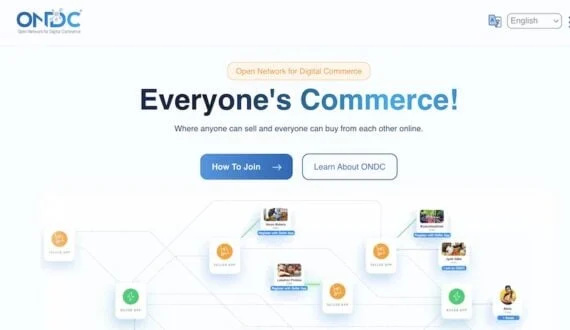
Launched in late 2021 by the Department for Promotion of Industry and Internal Trade (DPIIT), the ONDC is not a standalone application or a centralized marketplace like Amazon or Flipkart. Instead, it is a set of open-source specifications and network protocols designed to foster interoperability between various participants in the e-commerce chain. The initiative is modeled after the Unified Payments Interface (UPI), which revolutionized peer-to-peer digital payments in India by allowing seamless transactions across different banking apps.
The primary objective of ONDC is to break the "platform-centric" model of e-commerce, where a few dominant players control the entire ecosystem—from seller discovery and pricing to logistics and consumer data. By shifting to a "network-centric" model, ONDC allows any seller, regardless of their size or technical sophistication, to be visible to any buyer across any participating application. This unbundling of services means that a merchant can use one provider for their digital storefront, another for payment processing, and a third for last-mile delivery, all within a single integrated network.
Chronology of Development and Implementation
The journey of ONDC began as a strategic response to the growing dominance of foreign-funded e-commerce giants. In July 2021, the Quality Council of India was tasked with creating a framework that would prevent digital monopolies and provide a level playing field for small businesses.
In April 2022, the ONDC entered its pilot phase, launching in five cities: Delhi NCR, Bengaluru, Bhopal, Shillong, and Coimbatore. This initial phase focused on grocery and food delivery, testing the technical stability of the protocol. By September 2022, the network opened to the public in Bengaluru, allowing residents to order food and groceries through buyer apps like Paytm.
Throughout 2023 and into 2024, the network expanded its scope significantly. It moved beyond simple retail to include mobility services—such as the "Namma Yatri" app in Bengaluru, which allows auto-rickshaw drivers to accept bookings without paying commissions to aggregators—and began integrating wholesale trade, fashion, and electronics. Today, the network is operational in hundreds of cities, with the government pushing for 100% national coverage.
Economic Impact and the Cost of Doing Business
One of the most compelling arguments for ONDC is the drastic reduction in transaction costs. In the traditional marketplace model, sellers often face commission fees ranging from 18% to 40% of the transaction value. These fees cover platform listing, marketing, and the platform’s own logistics services. For a small kirana store operating on thin margins, such costs are often prohibitive.
Under the ONDC framework, selling fees are significantly lower, typically ranging from 3% to 10%. Because the network is unbundled, sellers have the freedom to choose the most cost-effective logistics and payment partners. Furthermore, ONDC utilizes transparent algorithms and non-discriminatory sorting. Unlike private marketplaces that may prioritize their own "private label" brands or high-paying advertisers, ONDC ensures that search results are based on objective criteria such as proximity, price, and merchant ratings.
Crucially, these ratings are "portable." In a platform-centric world, if a seller leaves a marketplace, they lose their hard-earned reputation and customer reviews. On ONDC, a merchant’s reputation is tied to their digital identity on the network, allowing them to carry their credibility across different buyer-facing applications.
The Role of Global Brands and Foreign Participation
While ONDC was built with the small merchant in mind, it has increasingly become an attractive channel for large-scale domestic and international brands. Global conglomerates such as Unilever, Nestle, PepsiCo, Procter & Gamble, L’Oreal, and Johnson & Johnson have already established a presence on the network. These brands utilize ONDC as a supplementary distribution channel, allowing them to reach consumers through a wider variety of buyer apps without being solely dependent on the terms dictated by major e-commerce platforms.
For foreign companies, ONDC offers a streamlined path to enter the Indian market, provided they comply with local regulatory frameworks. India’s Foreign Direct Investment (FDI) laws for e-commerce are strict, generally prohibiting foreign-owned entities from holding inventory in a multi-brand retail model. ONDC’s structure as a facilitator rather than a retailer helps brands navigate these complexities. By registering with a "seller app" such as Mystore, CostBo, or GoFrugal, a brand’s inventory becomes instantly discoverable across "buyer apps" like Paytm, Magicpin, and Bajaj Finserv.
Supporting Data and Market Projections
The growth trajectory of ONDC is supported by a surge in digital adoption across the Indian subcontinent. Recent data indicates that:
- Transaction Volume: ONDC has seen a month-on-month growth in retail transactions, recently crossing the milestone of 5 million monthly transactions across all categories.
- Merchant Onboarding: Over 150,000 merchants have been onboarded onto the network, with a significant percentage representing small and medium enterprises (SMEs) from Tier 2 and Tier 3 cities.
- Logistics Integration: More than 20 logistics providers, including major firms like Delhivery and Shiprocket, have integrated with the network to provide pan-India coverage.
- Sectoral Diversification: While food and grocery remain the largest categories, the "mobility" sector on ONDC has facilitated millions of rides, demonstrating the protocol’s versatility.
Reactions and Stakeholder Perspectives
The reception of ONDC has been largely positive among government officials and small business advocates. Union Minister of Commerce and Industry, Piyush Goyal, has frequently described ONDC as a "democratic" force that will "end the era of monopolies." He has emphasized that the network is essential for ensuring that the benefits of the digital economy reach the "last mile" of the Indian population.
However, industry analysts remain cautious about the challenges of user experience and dispute resolution. In a decentralized network, determining accountability for a delayed delivery or a defective product can be more complex than in a centralized system where a single entity manages the entire process. Furthermore, established e-commerce giants like Amazon and Flipkart have begun exploring ways to integrate with or coexist alongside ONDC, recognizing that the network’s growth is inevitable given the government’s backing.
Broader Implications for the Global Digital Economy
The success of ONDC carries implications far beyond India’s borders. It represents a new model of "Digital Public Infrastructure" (DPI) that treats e-commerce as a public utility rather than a private silo. If successful, the ONDC framework could serve as a blueprint for other developing nations looking to digitize their retail sectors without handing over total control to global tech monopolies.
For the Indian consumer, the result is increased choice and potentially lower prices through competition. For the kirana owner, it is a chance to survive and thrive in a digital age. For global brands, it is an efficient, transparent gateway to the world’s largest emerging market. As ONDC continues to scale, it will likely redefine the rules of engagement for digital trade, proving that an open, interoperable network can coexist with—and perhaps even outperform—the walled gardens of traditional e-commerce.