Building the Ultimate Social Media Team: Essential Roles, Structures, and Compensation Frameworks for Modern Enterprises


As digital engagement continues to dictate commercial success, modern organizations face a complex challenge: scaling their social media operations to match shifting consumer habits without inflating overhead. The traditional model of a single, overburdened marketing generalist handling everything from graphic design to crisis communications is rapidly disappearing. Instead, forward-thinking enterprises are building structured, multidisciplinary social media departments equipped with specialized roles, advanced software stacks, and AI-assisted workflows.
Understanding how to design, staff, and budget a modern social media division requires a careful evaluation of corporate maturity, strategic objectives, and evolving market standards.
The Evolution of Social Media Operations
A decade ago, social media management was largely treated as an afterthought—an extension of public relations or customer service delegated to junior staff members. Today, social media functions as the primary storefront, customer service desk, and brand reputation engine for businesses worldwide.

The responsibilities of a contemporary social media team stretch far beyond daily publishing and superficial engagement. Core operations now encompass long-term brand strategy, paid advertising oversight, influencer relations, community moderation, and real-time social listening. Furthermore, social teams routinely feed critical intelligence, compliance risk signals, and revenue opportunities back into broader corporate departments, bridging the gap between brand awareness and bottom-line growth.
This expansion of duties has forced a reevaluation of team structures. Startups often begin with a lone social media manager who handles both strategy and execution. However, as organizations mature and compliance requirements, publishing volume, and channel diversification grow, dedicated specialists must be integrated. The advent of artificial intelligence has further altered this calculus. With AI assisting in drafting copy, tagging assets, and generating performance reports, lean teams can cover more ground, prompting executives to focus less on sheer headcount and more on securing specialized human talent for high-value strategic execution.
Organizational Models: Structuring for Scale
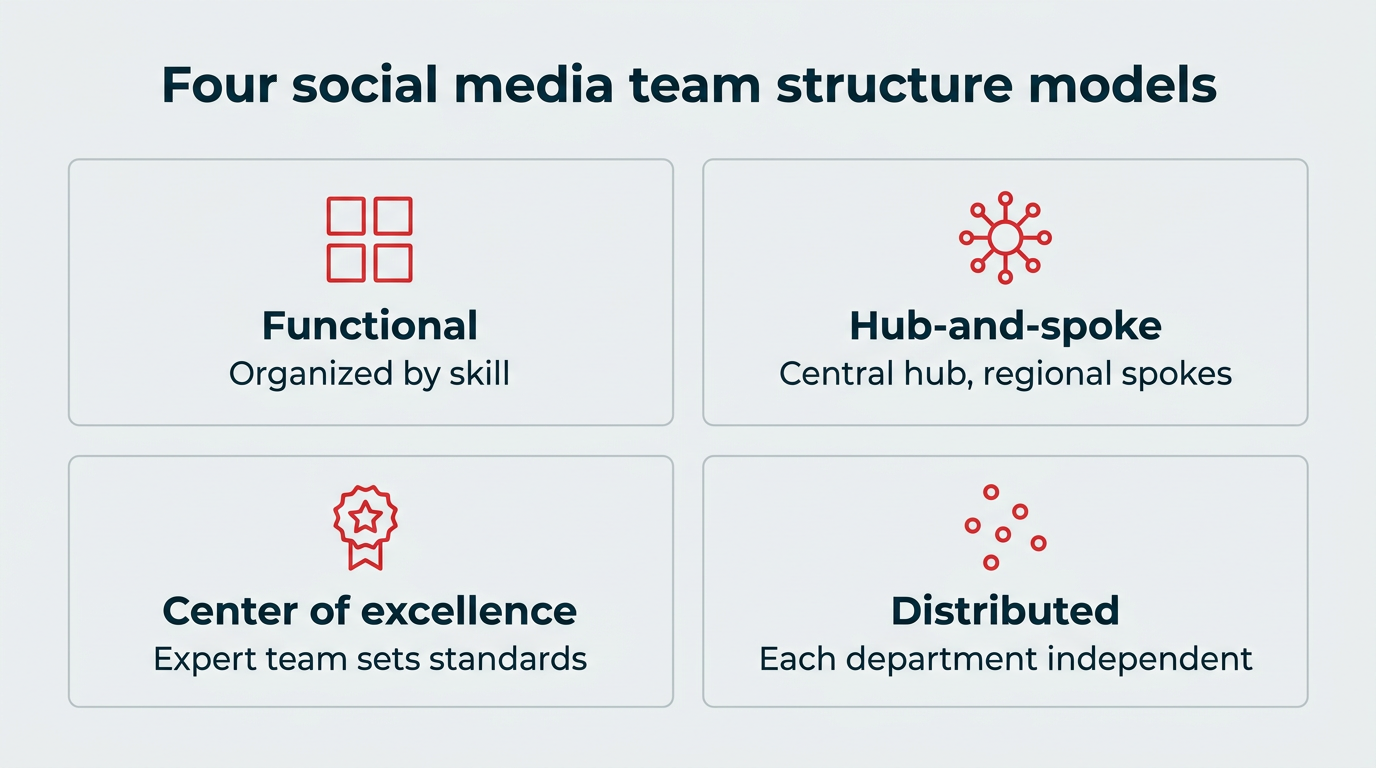
Before hiring takes place, leadership must determine how the social media department will be integrated into the broader corporate hierarchy. Organizational design directly influences how quickly content is shipped, who owns strategic direction, and how consistent the brand appears across global markets. Industry analysts generally categorize social media structures into four primary models:
-
Functional Structure: Organized strictly by skill sets, this model assigns distinct owners to content creation, community management, analytics, and paid social campaigns. It is exceptionally effective for mid-sized organizations with a centralized social team and a single primary brand, offering deep expertise and clear accountability. The primary risk is the formation of operational silos, necessitating strong cross-functional leadership to unify campaigns.

-
Hub-and-Spoke Model: In this framework, a central team establishes overall strategy, brand voice, and governance standards, while regional or business-unit teams execute local campaigns. This is the preferred structure for multinational or multi-brand enterprises that require global consistency coupled with hyper-local relevance. Success relies heavily on shared asset libraries and rigorous approval workflows to prevent brand drift.
-
Center of Excellence (CoE): A small, elite team of experts defines operational playbooks, builds toolkits, and establishes compliance guidelines, while day-to-day social execution is handled by practitioners embedded within other departments, such as human resources, public relations, or customer support. This decentralized approach scales efficiently in large organizations where social media touches multiple business units, though it requires strict governance to maintain brand cohesion.
-
Distributed Structure: Operating without a central social team, various departments manage their own social media channels independently. While this model maximizes operational speed, it introduces significant risks regarding brand compliance, message fragmentation, and reputation management. Consequently, most growing enterprises eventually transition away from this model toward a hub-and-spoke or CoE framework.
Core Roles, Responsibilities, and Market Compensation
Building a high-performing social media apparatus requires deploying the right talent into clearly defined positions. Market data and recruitment benchmarks outline eight essential roles required to scale an enterprise-grade social media program, along with their associated compensation expectations and core competencies.
Social Media Strategist
The strategist is tasked with defining the overarching direction of the brand’s social program. Responsibilities include aligning social goals with broader business objectives, establishing Key Performance Indicators (KPIs), determining channel investments, and reporting findings to executive leadership. Strategists generally command senior-level compensation packages that vary by market, typically reporting directly to the Chief Marketing Officer (CMO) or Marketing Director.
Social Media Manager
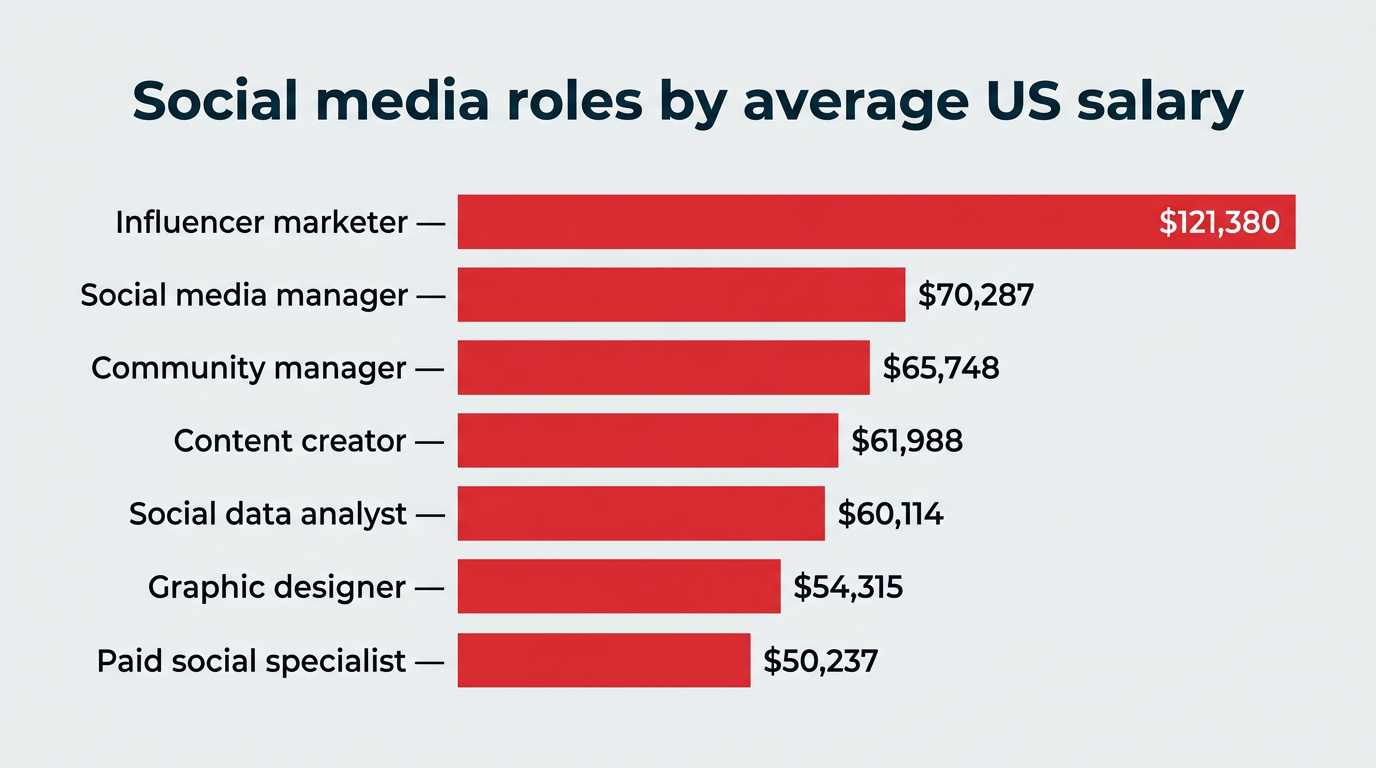
Operating as the backbone of the department, the social media manager oversees day-to-day planning and execution. They translate high-level strategies into actionable content calendars and collaborate with cross-functional teams to ensure seamless campaign delivery. The average base salary for a social media manager in the United States sits at approximately $70,287.
Content Creator
The content creator serves as the primary engine for digital assets, producing high-engagement photos, short-form videos, graphics, and written copy tailored to specific platform algorithms. Exceptional content creators possess a deep understanding of the target audience’s pain points and a firm grasp of the brand voice. The average U.S. salary for this role is $61,988.
Community Manager
Acting as the human voice of the brand, the community manager is responsible for direct audience engagement. This includes answering direct messages, moderating comment sections, and cultivating relationships within dedicated digital spaces such as specialized groups or online forums. Community managers earn an average base salary of $65,748.
Paid Social Media Specialist
With global social media advertising expenditures surging past $300 billion, the paid social specialist plays a critical role in revenue generation. This analytical professional manages ad spend, targets hyper-specific audience segments, conducts A/B testing, and scales high-performing digital ad campaigns. Paid social specialists earn an average of $50,237 annually.
Social Data Analyst
Turning raw engagement metrics into actionable insights, the social data analyst tracks campaign performance, builds comprehensive reporting dashboards, and presents data-driven recommendations to leadership. By offloading analytical duties from creative staff, this role enables the broader team to focus on content execution. The average U.S. salary for a social data analyst is $60,114.
Graphic Designer
Visual consistency is paramount for enterprise brands. Graphic designers produce campaign assets, infographics, and typography systems that elevate the brand’s aesthetic across digital channels. Working closely with content creators and paid media specialists, graphic designers earn an average base salary of $54,315.
Influencer Marketer
Managing external creator partnerships has evolved into a multi-billion-dollar industry. Influencer marketers oversee outreach, contract negotiations, campaign execution, and relationship management with external creators. Due to the cross-functional nature of managing external brand ambassadors, influencer marketing managers command higher compensation, with average U.S. salaries reaching $121,380.
Strategic Implementation: A Five-Step Hiring Framework
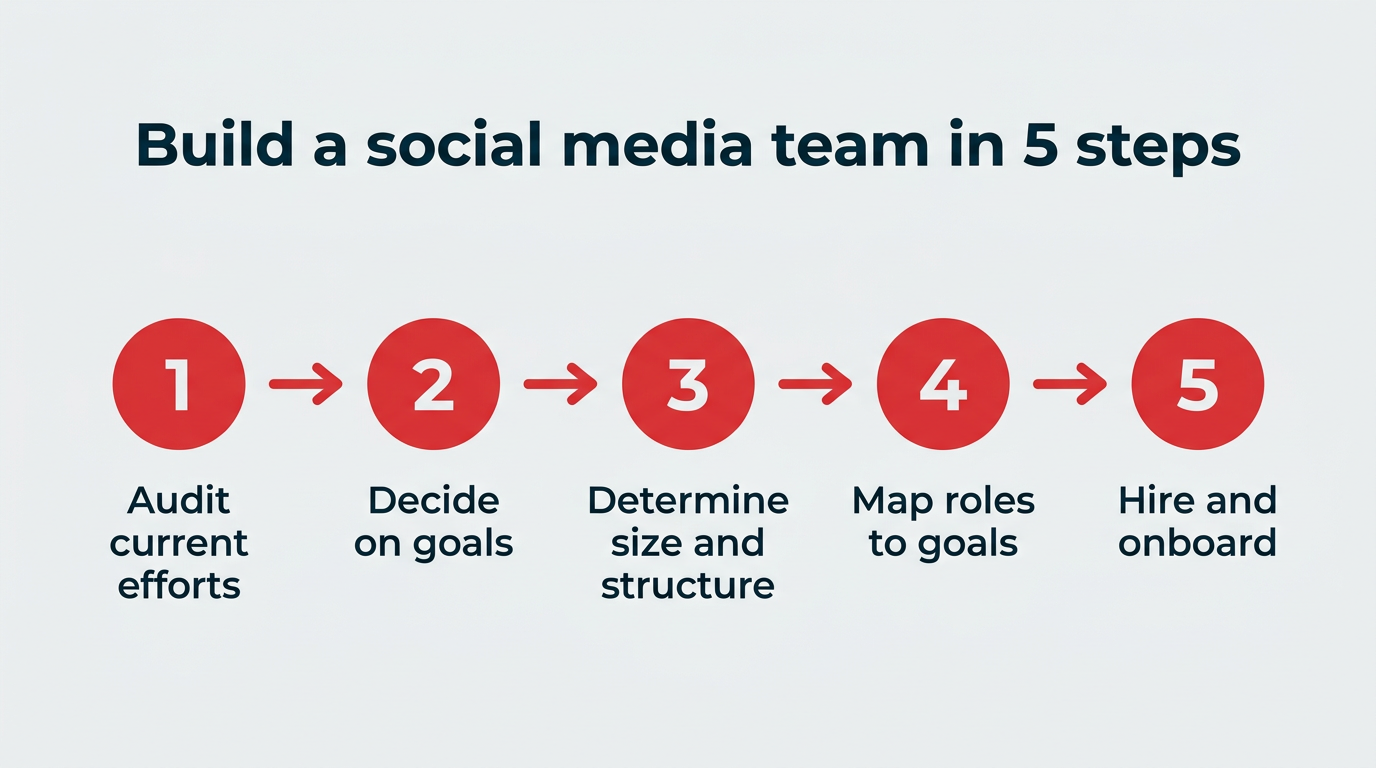
Establishing a social media team should never be an ad-hoc process. Industry experts recommend a methodical, five-step approach to ensure organizational alignment and financial prudence.
-
Audit Current Operations: Before authorizing new hires, organizations must evaluate existing social performance. Reviewing engagement metrics, content resonance, and historical ROI highlights operational gaps and determines whether current channel investments are justified.
-
Define Specific Business Goals: Team composition must be dictated by corporate objectives. Brands prioritizing community growth should focus on hiring community managers, whereas organizations focused on direct conversion will benefit immediately from paid social specialists. Avoid searching for a "unicorn" generalist; instead, hire backward from defined business goals.
-
Determine Team Size and Structure: Organizations must balance ambition with budgetary reality. Lean startups often rely on a one-to-three-person team comprising a generalist manager and a content creator. Mid-market brands frequently expand to four or six roles to cover paid and organic channels concurrently, while enterprise environments deploy seven or more specialists across regional and functional lines.
-
Map Roles to Performance Metrics: Clearly delineating responsibilities ensures accountability. Brand awareness initiatives map directly to social media managers and content creators, while reputation management aligns with community managers and customer service liaisons.
-
Hire and Onboard Systematically: Job descriptions should accurately reflect mapped responsibilities. Incorporating practical assessments—such as asking candidates to draft a mini-content strategy or complete a paid test project—offers reliable insight into execution capabilities. Onboarding should include immediate access to brand guidelines, compliance policies, tone-of-voice documents, and core scheduling tools.

The Integration of Artificial Intelligence
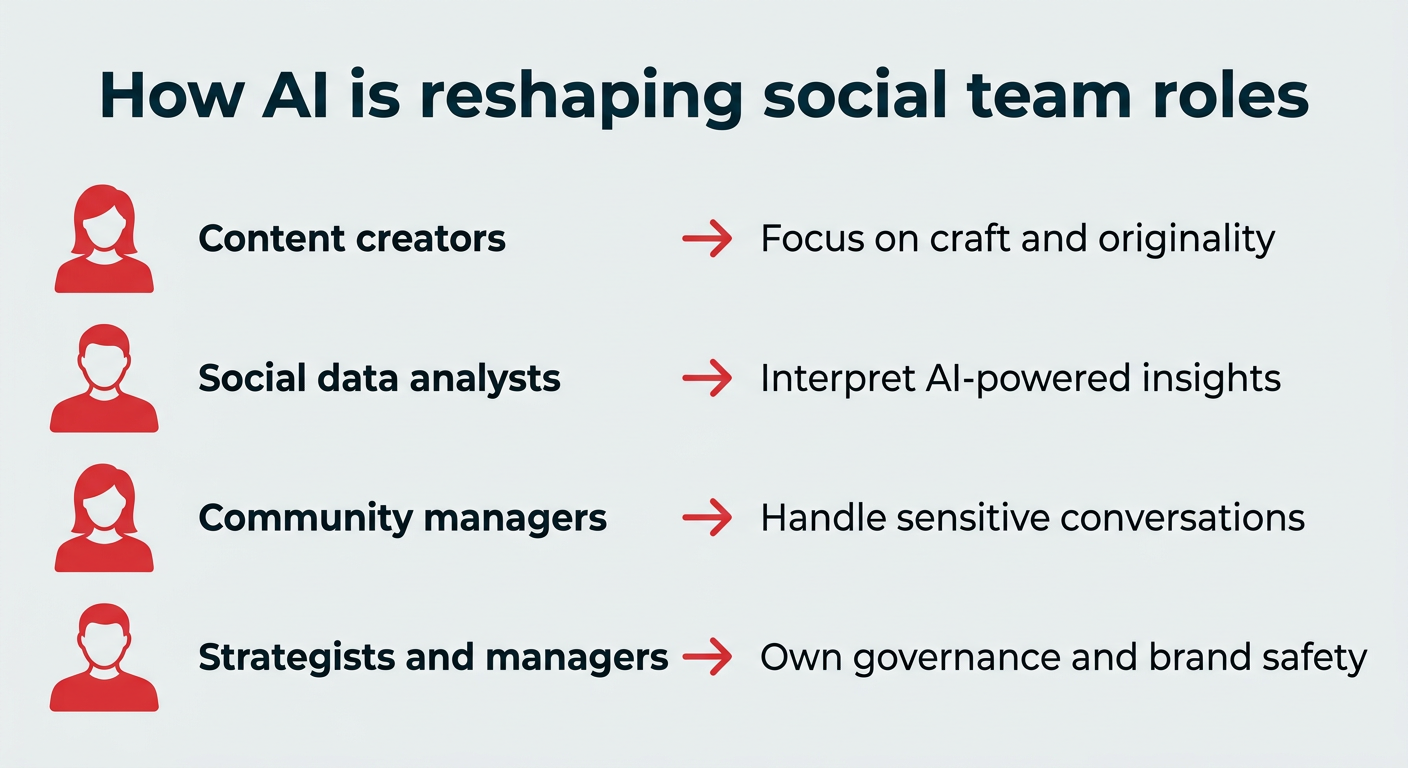
Artificial intelligence has fundamentally transformed the daily workflows of social media professionals. Rather than replacing human creativity, AI tools have largely automated administrative tasks such as initial content drafting, metadata tagging, and automated reporting generation.
This technological shift requires modern social professionals to develop new competencies. Team members must now master prompt engineering, data interpretation, and AI governance to ensure automated outputs align with brand safety standards. Consequently, while AI allows lean teams to execute at a much higher volume, the need for human oversight regarding brand voice, ethical compliance, and long-term strategy remains more critical than ever.
Essential Toolkits and Cross-Functional Integration
A high-performing social media division requires an integrated technology stack that minimizes friction and administrative overhead. Enterprise teams typically rely on centralized platforms that combine publishing calendars, unified social inboxes for community management, and automated analytics reporting into a single dashboard. For organizations operating across international markets, advanced permission controls and multi-level approval workflows are indispensable for maintaining brand governance.
Furthermore, enterprise social teams do not operate in a vacuum. Effective governance requires established communication channels with external business units, including public relations, legal, customer support, and sales. Mapping these cross-functional relationships early prevents compliance bottlenecks and ensures the brand can respond swiftly to market trends without compromising security.
Building a world-class social media team requires balancing creative intuition with rigorous data analysis, scalable structures, and thoughtful budgeting. By aligning team size and roles with specific business outcomes, organizations can transform their social media presence from a simple marketing channel into a powerful engine for sustainable enterprise growth.
Related posts: