Navigating the Complex Landscape of European E-Commerce Returns: Challenges, Strategies, and the Path Forward

The financial and operational reality of modern retail dictates that the online shopping experience does not conclude when a consumer submits a payment. Instead, the management of product returns has emerged as a central pillar of the digital retail economy, directly influencing corporate profitability, supply chain resilience, and consumer loyalty. Across Europe, the frictionless promise of online shopping has inadvertently fostered a culture of high return volumes, forcing merchants, logistics providers, and regulatory bodies to reassess how returned goods are handled, processed, and reintegrated into the supply chain.
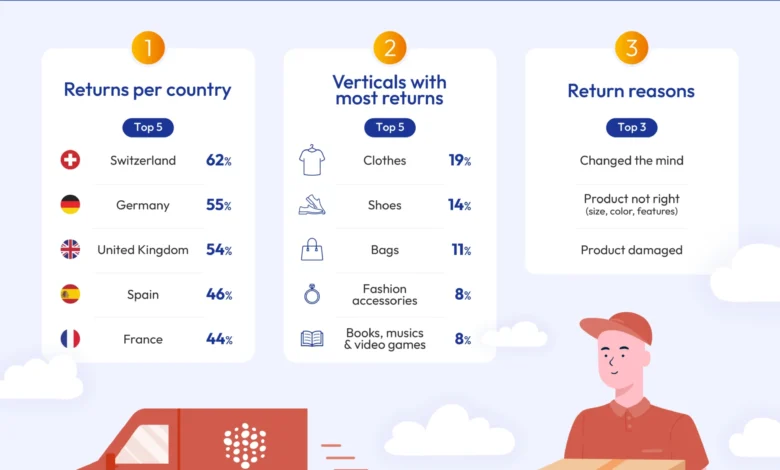
As e-commerce continues to mature across the continent, average return rates for online purchases now consistently hover between 30% and 40%. However, this macro-level statistic masks significant regional and sectoral disparities. According to comprehensive market data from Statista, Switzerland recorded the highest average return rate per online buyer in Europe at 62% in 2023. Germany closely followed at 55%, while the United Kingdom rounded out the top three with a return rate of 54%. These figures highlight a deeply ingrained consumer expectation regarding post-purchase flexibility, which has been cultivated by years of free shipping and unconditional return policies offered by dominant online marketplaces.
The economic implications of these trends are profound. Retailers face a cascade of expenses when handling returned merchandise, including reverse logistics transport fees, meticulous labor costs associated with inspection and restocking, and the inevitable revenue loss incurred when items must be liquidated or resold as open-box or refurbished goods at steep discounts. Consequently, a growing number of brands are abandoning universal free-return models, introducing nominal return fees to deter abusive purchasing habits—such as "bracketing," a practice where consumers buy multiple sizes or colors of the same item with the explicit intention of returning the unwanted variations.
Sector-specific dynamics further dictate the severity of the return challenge. The fashion and apparel sector consistently experiences the highest volume of returns, driven by the subjective nature of personal style, inconsistent sizing standards across brands, and fabric expectations. Electronics and household goods sectors, which average lower return rates around 6% each, face distinct hurdles such as technical incompatibility, manufacturing defects, or complex installation requirements that prompt consumers to send items back.
The historical evolution of European e-commerce returns reflects a shift from an afterthought to a core operational priority. In the nascent days of online retail during the late 1990s and early 2000s, return policies were largely restrictive, serving primarily to comply with baseline European Union consumer protection directives. As competition intensified over the subsequent decade, online retailers leveraged liberal return policies as a vital marketing tool to build consumer trust in digital transactions.

By the mid-2010s, the widespread adoption of mobile commerce and same-day delivery expectations accelerated return volumes. This exponential growth strained reverse logistics networks, prompting industry stakeholders to recognize that traditional linear supply chains were ill-equipped for bi-directional merchandise flows. The COVID-19 pandemic further exacerbated these trends, as locked-down consumers shifted massive portions of their discretionary spending online, driving return volumes to historic highs. By 2023, the compounding economic pressures of inflation, rising fuel costs, and stringent environmental regulations forced a systemic reckoning, compelling retailers to transition from passive return acceptance to active optimization and cost mitigation.
Logistically, managing these bi-directional flows requires sophisticated infrastructure capable of maintaining real-time parcel traceability across diverse geographic destinations. These challenges are magnified exponentially in cross-border trade within and outside the European Union. Retailers navigating cross-border commerce must contend with a labyrinthine framework of regulatory requirements, varying import and export rules, customs declarations, and localized consumer rights legislation. Discrepancies in national mandates regarding product labeling, packaging waste, and recycling protocols create significant compliance burdens for international sellers, elevating the risk of legal disputes and reputational damage.
Industry analysts and supply chain experts have increasingly voiced concerns over the compounding friction between consumer demands and operational realities. Spokespersons for major European logistics networks emphasize that cross-border returns represent one of the most complex operational hurdles in modern supply management. Industry associations have consistently urged retailers to establish localized return hubs to shorten transit times, minimize carbon footprints, and reduce the financial burden of international shipping. Furthermore, consumer advocacy groups note that while buyers demand rapid processing and swift refunds, delays caused by customs checkpoints or antiquated warehouse management systems frequently result in severe brand dissatisfaction.
Beyond financial and logistical obstacles, the ecological impact of e-commerce returns has become a critical focal point for policymakers and corporate strategists. The traditional reverse logistics lifecycle generates disproportionate carbon emissions through supplementary transport legs and produces vast quantities of packaging waste, including single-use plastics and bubble wrap. Moreover, the environmental crisis is deepened by the controversial corporate practice of destroying unsold or returned goods due to the prohibitive labor costs of inspection and repackaging. In response, European regulators are tightening environmental compliance standards, pushing companies to adopt circular economy principles, such as utilizing biodegradable packaging, promoting second-hand resale channels, and implementing batch-shipping protocols to reduce vehicular emissions.
To reconcile the competing demands of consumer satisfaction, profitability, and environmental stewardship, e-commerce merchants are deploying multifaceted optimization strategies. Foremost among these is the implementation of transparent, user-friendly return policies paired with advanced technological solutions. Retailers are increasingly investing in automated return management platforms that integrate seamlessly with existing inventory systems, offering self-service portals, real-time tracking, and predictive analytics. By leveraging data analytics to dissect the root causes of returns—such as sizing inaccuracies in apparel or recurring technical flaws in electronics—merchants can make informed adjustments to product descriptions, size charts, and quality control protocols.
Ultimately, the European e-commerce returns landscape is defined by a delicate equilibrium. While returns remain an unavoidable cost of doing business in the digital marketplace, forward-thinking enterprises are successfully transforming reverse logistics from a financial liability into a strategic differentiator. By embracing data-driven insights, localized infrastructure, and sustainable operational practices, online merchants can meet evolving consumer expectations while safeguarding their long-term viability in a competitive European market.