North Korean Threat Actors Operate Sophisticated Phishing Kit Targeting Zoom and Microsoft Teams for Malware Delivery and Cryptocurrency Theft

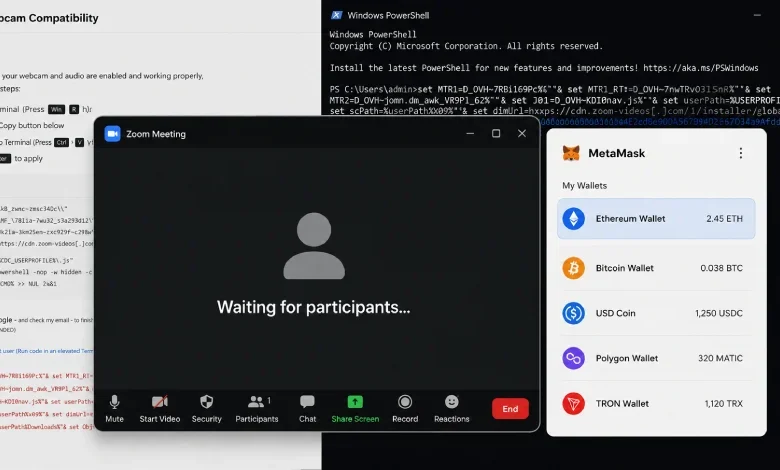
The cybercriminal group known as BlueNoroff, a well-established threat actor with suspected ties to North Korea, has been identified as operating a highly sophisticated and actively developed phishing kit. This operation, codenamed "ClickFix-style campaigns," leverages typosquatted domains impersonating popular videoconferencing platforms like Zoom and Microsoft Teams to orchestrate social engineering attacks. The ultimate goal is to deliver malware and pilfer valuable cryptocurrency assets from unsuspecting victims. Security researchers at JUMPSEC have detailed the intricate workings of this operation, revealing a repeatable victim acquisition pipeline that combines compromised industry contacts, advanced social engineering tactics, cryptocurrency wallet reconnaissance, and a stealthy malware delivery mechanism.
The ClickFix campaign represents a disturbing evolution in cybercrime, moving beyond rudimentary phishing attempts to a highly automated and personalized attack strategy. The group’s methodology focuses on exploiting trust and relationships within the cryptocurrency and finance sectors, targeting high-value individuals and organizations. This nuanced approach makes their attacks particularly difficult to detect and defend against.

The Mechanics of the ClickFix Operation: A Deep Dive
JUMPSEC’s comprehensive report, shared with The Hacker News, highlights the operationalized trust abuse at the core of BlueNoroff’s strategy. The attackers meticulously build a pipeline for victim acquisition by:
- Leveraging Compromised Industry Contacts: The initial access vector often involves hijacking legitimate Telegram accounts belonging to individuals within the cryptocurrency space. These compromised accounts are then used to contact high-ranking employees of major companies, creating a veneer of legitimacy.
- Employing Social Engineering via Telegram: Victims receive messages from seemingly trusted contacts, often sharing a Calendly meeting link. This deceptive invitation is designed to lure individuals into believing they are engaging in legitimate business communications.
- Impersonating Videoconferencing Platforms: The Calendly link directs victims to a fake domain that expertly mimics Zoom or Microsoft Teams login pages. These pages are crafted to look authentic, often featuring familiar branding and interface elements.
- Stealing Telegram Sessions: A critical component of the attack involves the theft of the victim’s Telegram session. If the victim has Telegram Web open or the desktop application installed, the payload can execute code that steals their session token. This allows the attackers to then use the victim’s account to propagate the attack to their own contacts, creating a self-sustaining attack chain.
- Exploiting Webcam and Microphone Permissions: Upon landing on the phishing page, users are prompted to grant permissions for their webcam. While they believe this is for the video conference, the attackers are actually using WebRTC technology (specifically, mediasoup) to stealthily stream the victim’s live webcam feed to their operator panel.
- Wallet Reconnaissance and Selective Targeting: Before delivering the final malware payload, the phishing kit performs a crucial step: profiling the victim’s cryptocurrency wallets. This allows BlueNoroff to identify and prioritize high-value targets, focusing their resources on individuals holding significant digital assets.
- Sophisticated Deepfake Technology: In a particularly alarming development, the "meeting" the victim experiences is not a live interaction. Instead, the attackers utilize pre-edited videos featuring AI-generated headshots. These AI-generated faces are superimposed onto authentic body movements captured from previous victims’ webcam feeds. This creates a disturbingly plausible illusion of a real meeting, further enhancing the deception.
A Timeline of Evolving Tactics
The activities attributed to BlueNoroff and related North Korean-aligned clusters have been documented by cybersecurity researchers for some time, with escalating sophistication.
- Early 2025: Initial reports begin to surface, detailing social engineering campaigns utilizing lures related to Zoom and Microsoft Teams. Researchers start to observe the use of typosquatted domains and the exploitation of trust within specific industries.
- Mid-2025: Sekoia identifies a second, related threat cluster operating under the moniker "ClickFake Interview." This cluster exhibits similar tactics, employing ClickFix-like lures to trick victims into running malicious commands, often under the guise of fixing camera or audio issues for a supposed interview.
- Late 2025 – Early 2026: The sophistication of the attacks becomes more apparent. Researchers like JUMPSEC begin to uncover the operational pipeline, including the exploitation of Telegram for initial access and propagation, and the use of fake meeting lures.
- May-July 2026: JUMPSEC’s analysis reveals active development and fine-tuning of the phishing kit, with five distinct versions discovered within a two-month period. This indicates a rapid iteration cycle and a commitment to refining their attack infrastructure.
The "ClickFix" Pretext: Why Zoom and Teams?
Sean Moran, head of threat research and enablement at JUMPSEC, provided critical insights into why Zoom and Microsoft Teams are the primary targets of this campaign. He outlined three key reasons:

- The "SDK Out of Date" Pretext: The most common lure revolves around an outdated Zoom or Teams SDK (Software Development Kit). This pretext is highly effective because it targets platforms that users perceive as having robust, heavyweight desktop clients. Google Meet, being primarily browser-based and lacking a dedicated desktop application in the same vein, doesn’t lend itself as well to this specific deception.
- Target Application Fit: Zoom and Microsoft Teams have become the de facto communication platforms for many in the cryptocurrency, venture capital, and startup founder communities. These platforms are often used for critical investor meetings, partnership discussions, and high-stakes negotiations. Google Meet, while widely used, is often perceived more as a customer service or internal team communication tool, making it a less attractive target for attackers seeking to infiltrate high-value business discussions.
- Typosquatting Surface: The domain registration strategy employed by the attackers is designed to be highly deceptive. URLs like "us.zoom.06webin.us" closely mimic legitimate Zoom links, often incorporating subdomains that make them appear authentic. This makes it significantly easier for users to fall for these fake links compared to trying to typosquat or spoof a simpler, more standardized domain like "meet.google.com."
While the current phishing kit primarily features lure pages for Zoom and Teams, Moran noted the existence of an unimplemented Google Meet equivalent within the source code. This suggests that while Google Meet is not currently a focus, the capability to target it exists, indicating a potential future expansion of their operations.
The Operator’s Panel: A Command Center for Deception
The operator’s panel, as depicted in JUMPSEC’s research, is a testament to the sophisticated nature of this operation. It provides attackers with a centralized interface to manage multiple aspects of the attack, including:
- Live Webcam Monitoring: The panel allows operators to view the real-time webcam feed from compromised victims.
- Meeting Control: Operators can actively control the fake meeting environment, sending pre-written messages to the victim, such as "waiting for other participants" or "your mic isn’t working."
- Payload Deployment: The panel facilitates the triggering of the "Zoom SDK Update," which ultimately deploys the ClickFix malware payload.
- Wallet Fingerprinting Data: Information gathered on the victim’s cryptocurrency wallets is accessible, allowing for the prioritization of attacks.
- Deepfake Video Stream Management: The system likely manages the pre-edited video streams and AI-generated headshots used to create the illusion of a live meeting.
Malware Delivery and Cryptocurrency Theft
Once the victim is successfully lured into the fake meeting and has granted the necessary permissions, the ClickFix payload is executed. This payload is designed to achieve several objectives:

- Telegram Session Hijacking: As previously mentioned, a primary function is to steal the victim’s Telegram session, enabling further propagation and potential access to sensitive conversations.
- Cryptocurrency Wallet Exfiltration: The malware actively probes the victim’s browser for installed cryptocurrency wallets. Information regarding wallet addresses, balances, and potentially private keys (though direct theft of private keys is less common and riskier for attackers) could be exfiltrated.
- Further Malware Deployment: The ClickFix payload may also serve as a dropper for other malicious software, allowing attackers to gain deeper access to the victim’s system, steal credentials, or conduct further espionage.
The hard-coded bot token and chat ID within the stealer binary have provided a crucial link to one of the operators. This token has been associated with a Telegram user named "John" (@alchemy_john_mac). Recent activity from this individual in May 2026 involved inquiries about vesting contracts and withdrawing funds from cryptocurrency groups, further solidifying the link between the operators and their illicit cryptocurrency activities.
Broader Implications and Analysis
The BlueNoroff ClickFix campaign represents a significant advancement in the tactics, techniques, and procedures (TTPs) employed by North Korean-aligned threat actors. The implications of this operation extend far beyond individual cryptocurrency theft and highlight several critical security considerations:
- The Maturation of Web3 Threats: As the Web3 ecosystem and digital asset landscape continue to evolve, threat actors are increasingly recognizing the immense value of compromising individuals who control access to these assets. Attacking the infrastructure remains a focus, but targeting key individuals offers a potentially more accessible and lucrative pathway.
- The Exploitation of Human Trust: The campaign’s success hinges on its ability to expertly manipulate human trust and relationships. By leveraging compromised contacts and sophisticated social engineering, BlueNoroff bypasses many traditional technical security measures.
- The Blurring Lines Between Identity and Security: The campaign underscores the critical importance of identity verification and the security of communication channels. In an era where digital interactions are paramount, the compromised identity of a trusted contact can be the most potent weapon in an attacker’s arsenal.
- The Need for Comprehensive Security Postures: Organizations must move beyond solely focusing on network and endpoint security. A robust security posture must now encompass the protection of identities, the integrity of relationships, and the security of communication channels. This includes implementing multi-factor authentication for all critical services, providing ongoing cybersecurity awareness training, and establishing clear protocols for verifying external communications, especially those involving financial transactions or sensitive information.
- The Evolving Landscape of Deepfakes in Cybercrime: The use of AI-generated deepfakes to create convincing yet fabricated meeting scenarios is a chilling development. This technology, readily accessible and increasingly sophisticated, can be weaponized to overcome skepticism and enhance the effectiveness of social engineering attacks.
The continuous refinement and active development of the ClickFix phishing kit by BlueNoroff serve as a stark warning. Organizations and individuals, particularly those operating within the cryptocurrency and finance sectors, must remain vigilant and adapt their security strategies to counter these increasingly sophisticated and personalized threats. The future of cybersecurity will undoubtedly involve a heightened focus on safeguarding digital identities and the trust that underpins our interconnected world.