Orcas Filmed Teaming Up to Ram Sunfish, Causing Explosive Fragmentation, Suggesting Culturally Learned Behavior

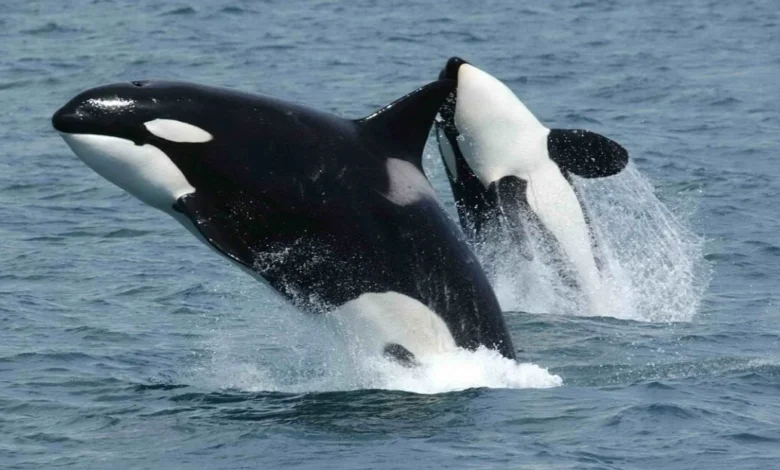
Recent observations in the Gulf of California have unveiled a novel and astonishing hunting strategy employed by orcas (Orcinus orca), where groups coordinate to ram sunfish with such force that the prey disintegrates into small fragments. This unprecedented behavior, captured on video and detailed in a new paper published in the journal Frontiers in Ethology in 2026, adds a compelling new dimension to our understanding of orca intelligence, social learning, and cooperative hunting strategies. Scientists propose this "ram-to-fragment" technique may facilitate easier feeding for younger orcas or could simply be a form of play, aligning with the species’ known proclivity for complex social interactions and sometimes destructive amusements. The discovery emerges amidst a backdrop of increasing reports of orcas ramming and occasionally sinking boats, a phenomenon widely believed to be a culturally transmitted behavior, further underscoring the sophisticated cognitive abilities and dynamic social learning within orca populations.
The incident, which took place in July 2024 off the coast of San Jose del Cabo in Mexico, was initially documented by a tourism operator. The footage captured a pod consisting of three adult female orcas, one adult male, and a single juvenile, first engaging in the successful capture and consumption of a spine-tail devil ray. Immediately following this event, the same operator filmed a remarkable interaction involving a sunfish. An adult female orca was observed holding the carcass of a sunfish in her mouth. The sunfish already bore a significant lateral wound, indicating that its viscera had likely been removed in an earlier stage, consistent with typical orca hunting patterns for this species. What followed, however, deviated dramatically from previously documented behaviors.
The adult male orca then executed a powerful charge directly at the held sunfish carcass. Crucially, the female holding the prey released it just moments before impact, allowing the male’s full force to connect with the target. The impact was reportedly accompanied by an audible sound, and the carcass of the sunfish fragmented explosively, dispersing bits of flesh and tissue across the water. The juvenile orca in the pod swiftly moved in to consume the smaller, scattered fragments, while the adult orcas proceeded to feed on the larger pieces that remained of the split-open body. This highly coordinated action, involving precision timing and significant force, presents a stark departure from the more common orca strategies for handling large prey.
Unpacking the "Ram-to-Fragment" Strategy
The scientific community is now analyzing the potential motivations and implications of this "ram-to-fragment" behavior. Kathryn Ayres, a co-author of the Frontiers in Ethology paper and affiliated with Beneath The Waves, a non-profit organization dedicated to ocean health, posited, "We think this may help younger orcas feed more easily, or it could also just be for fun. Orcas are known for playing with their food." This statement encapsulates two leading hypotheses. The first suggests a utilitarian purpose: by fragmenting a large, cumbersome prey item like a sunfish – which can weigh over 2,000 pounds and measure up to 11 feet – the adults effectively "pre-process" the meal into more manageable portions, particularly beneficial for a juvenile learning to forage. Sunfish, with their dense, cartilaginous bodies and thick skin, are challenging prey, and tearing off pieces can be energy-intensive. Fragmenting them could significantly reduce the effort required for consumption, especially for less experienced hunters.
The second hypothesis, that of "play," is equally compelling given the established complexity of orca social lives and their observed behaviors. Orcas are apex predators that often find themselves with surplus energy, which they frequently channel into elaborate social interactions, training exercises, and what can only be described as playful acts. These can range from tossing seals into the air to intricate chases and coordinated maneuvers that don’t always result in consumption. The sheer force and dramatic outcome of the sunfish fragmentation might offer a stimulating experience for the participants, serving as both a form of entertainment and potentially a demonstration of prowess within the pod. This dual possibility – utility and play – highlights the multifaceted nature of orca behavior, where actions often serve multiple purposes within their complex social and ecological frameworks.
Orca Culture and Learned Behaviors: A Broader Context
The observation of this novel hunting technique resonates strongly with the broader understanding of orcas as highly intelligent creatures capable of culturally transmitting behaviors across generations. The concept of "culture" in non-human animals refers to behaviors that are learned and shared within a group, rather than being genetically programmed. Orcas exhibit this phenomenon in numerous ways, from distinct vocal dialects specific to certain pods or ecotypes to specialized hunting techniques tailored to particular prey in different geographical regions.
Perhaps the most widely publicized example of such learned behavior in recent years is the increasing incidence of orcas ramming boats, particularly off the Iberian Peninsula. Beginning around 2020, a specific subpopulation of orcas, notably led by an adult female dubbed "Gladis," began interacting aggressively with sailboats, often targeting rudders and sometimes causing significant damage or even sinking vessels. Scientists believe this behavior originated with one or more individuals and then spread through social learning within the population, potentially as a response to a traumatic event or simply as a novel form of interaction that gained traction. The parallels between the boat-ramming incidents and the sunfish-ramming behavior are striking: both involve coordinated, forceful impacts on objects, suggesting a capacity for strategic planning and the adoption of new tactics that serve a purpose, whether it’s perceived as play, defense, or an efficient hunting method.
A History of Cooperative Hunting and Strategic Adaptation
Orcas are renowned for their diverse and sophisticated cooperative hunting strategies, which vary dramatically depending on the prey species and environmental conditions. Their ability to adapt and innovate in hunting is a hallmark of their intelligence. Previously documented cooperative tactics include:
- Herding mobile rays: Orcas will work together to corral large schools of rays, concentrating them into a tight formation before individual members pick off targets.
- Blocking escape paths for sharks: When hunting formidable prey like white sharks, orcas have been observed coordinating to block escape routes, effectively trapping the shark before delivering a fatal blow.
- Wave-washing penguins off ice floes: In Antarctic waters, specific pods have developed the ingenious technique of creating powerful waves by swimming in unison, designed to wash seals or penguins off ice floes directly into the water, where they become vulnerable.
- Ramming whale sharks: Orcas have been filmed ramming whale sharks while another orca holds the immense prey steady, illustrating a similar principle of coordinated force application.
When hunting species like sunfish, orcas typically employ a three-pronged strategy that emphasizes precision and efficiency. First, an orca will target the pectoral fins, immobilizing the large fish. Following this, the orca slashes the sunfish across its body to remove the viscera, which are often the most nutrient-rich parts. Finally, the orca uses its beak to access the remaining tissue. The newly observed "ram-to-fragment" behavior, while seemingly more brutal, might represent a more sophisticated or, at the very least, an alternative version of this basic strategy. By fragmenting the sunfish, the orcas could be achieving the goal of viscera removal and tissue access in a single, powerful action, potentially reducing the overall effort and time spent on processing the prey, especially if the initial strike targets the body directly.
Chronology of Discovery and Research
The timeline of this discovery underscores the ongoing nature of scientific exploration into marine life. While orca intelligence has been recognized for decades, new behaviors continue to emerge, often facilitated by advancements in observational technology and increased human presence in their habitats.
- Pre-2020: Extensive research on orca cooperative hunting, social structures, and cultural transmission is well-established, with various ecotypes demonstrating specialized hunting techniques across global oceans.
- Circa 2020-2021: The first documented instances of orcas interacting aggressively with boats off the Iberian Peninsula begin to surface, quickly escalating in frequency and drawing global attention. This phenomenon initiates a new wave of research into culturally transmitted behaviors in orcas.
- July 2024: The specific event of orcas ramming and fragmenting a sunfish is filmed by a tourism operator off San Jose del Cabo, Mexico. This critical piece of visual evidence provides the foundation for the subsequent scientific analysis.
- Early 2025 – Mid 2026: Researchers, including Kathryn Ayres and her team, analyze the footage, contextualize it within existing knowledge of orca behavior, and draft the scientific paper detailing the "ram-to-fragment" strategy.
- 2026: The paper detailing this novel behavior is published in Frontiers in Ethology, bringing the discovery to the broader scientific community and public.
Expert Reactions and Scientific Implications
The findings have been met with significant interest within the marine biology community. While direct quotes from other scientists are not yet widely available post-publication, the general sentiment would likely be one of excitement and a renewed call for sustained observation. Dr. Ayres’s comments already provide crucial insight into the immediate hypotheses. Other researchers would likely emphasize the following:
- Validation of Social Learning: This new behavior provides further compelling evidence for the rapid social learning capabilities of orcas. The coordination required for the "ram-to-fragment" technique suggests not only individual learning but also effective communication and synchronicity within the pod.
- Cognitive Flexibility: The ability of orcas to invent or adapt entirely new hunting methods demonstrates remarkable cognitive flexibility and problem-solving skills. They are not bound by instinct alone but can innovate based on environmental factors, prey availability, and social dynamics.
- Importance of Citizen Science: The initial footage from a tourism operator highlights the invaluable role of citizen science and opportunistic observations in contributing to our understanding of complex animal behaviors. Many groundbreaking discoveries in marine biology begin with such chance encounters.
- Need for Continued Monitoring: This discovery underscores the need for continued, long-term monitoring of orca populations globally. As ocean environments change and prey distributions shift, orcas may continue to adapt their strategies, offering new insights into their ecological roles and evolutionary pathways.
Broader Impact and Future Research
The implications of this discovery extend beyond merely adding a new entry to the catalog of orca hunting techniques. It significantly deepens our understanding of orca cognition, social structure, and their adaptive capacity.
- Enhanced Understanding of Orca Intelligence: The coordinated ramming of sunfish, especially if primarily for the benefit of juveniles, speaks volumes about the altruistic and educational aspects of orca social bonds. It suggests a proactive approach to teaching and facilitating the development of younger members, which is a hallmark of highly intelligent species. This level of intentionality and foresight in a hunting context is remarkable.
- Ecological Implications: While sunfish populations are generally robust, the development of such an efficient, almost industrial, method of prey processing could theoretically have localized ecological impacts if widely adopted and applied to other species. It highlights the profound influence of apex predators on marine ecosystems and their capacity to shape food webs through behavioral innovation.
- Rethinking Human-Orca Interactions: The confluence of boat-ramming incidents and this new hunting strategy further complicates our understanding of human-orca interactions. If orcas are capable of such precise and forceful coordinated actions for prey, it reinforces the idea that their interactions with human vessels might also be driven by complex, albeit still mysterious, motivations rather than mere accidental collisions. It demands a more nuanced approach to mitigating conflicts, recognizing the high cognitive capacity of these animals.
- Avenues for Future Research: This discovery opens several exciting avenues for future research. Scientists will be keen to:
- Observe if this "ram-to-fragment" behavior spreads to other orca pods or populations.
- Investigate the specific cues and communication signals used by orcas to coordinate such precise actions.
- Conduct comparative studies on the energetic efficiency of this method versus traditional sunfish hunting.
- Explore potential links between the prevalence of such behaviors and the health or abundance of specific prey populations.
- Analyze the long-term impacts of such behaviors on the target species.
In conclusion, the filming of orcas in the Gulf of California employing a novel "ram-to-fragment" technique to dismember sunfish represents a monumental stride in marine ethology. It underscores the profound intelligence, social complexity, and adaptive genius of orcas. Whether driven by the pragmatic goal of facilitating feeding for their young or by the sheer exuberance of play, this behavior solidifies the orca’s reputation as one of the ocean’s most sophisticated and enigmatic predators, continually revealing new layers of complexity that challenge and enrich our understanding of the natural world. The ocean’s depths, it seems, still hold countless secrets regarding the lives of its most magnificent inhabitants.