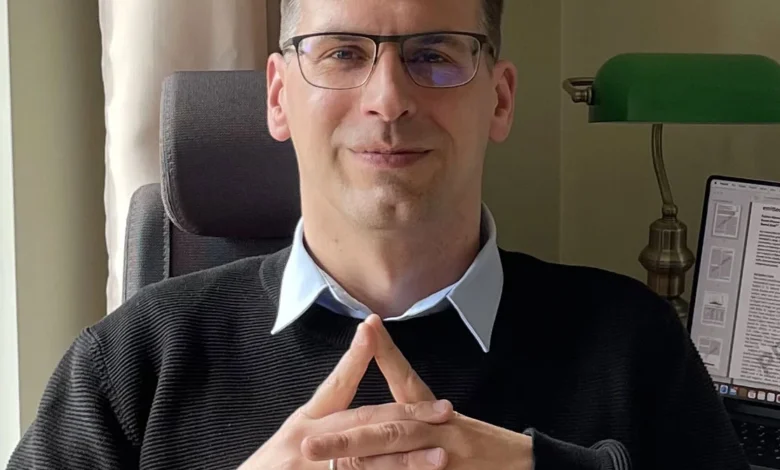
For nearly four decades, the field of condensed matter physics has been haunted by a fundamental enigma: why do certain copper-based materials, known as cuprates, exhibit superconductivity at temperatures significantly higher than conventional materials? While conventional superconductors generally require cooling to temperatures near absolute zero, cuprates can reach a superconducting state at temperatures achievable with liquid nitrogen—a milestone that has promised a revolution in energy efficiency, transportation, and computing. Despite the potential for a technological paradigm shift, the mechanism behind this high-temperature superconductivity has remained elusive. Now, a team of researchers led by Milan Allan of the Ludwig Maximilian University of Munich and Ingmar Swart of Utrecht University has utilized a novel approach, "listening" to the microscopic electrical crackle within these materials to uncover a long-sought secret: the existence of pre-formed electron pairs.
A Chronology of the Superconductivity Quest
The history of high-temperature superconductivity is marked by sudden breakthroughs followed by long periods of stagnation. In 1911, Heike Kamerlingh Onnes first discovered superconductivity in mercury, noting that its electrical resistance vanished completely below 4.2 Kelvin. For decades, this phenomenon was strictly limited to cryogenic environments. The landscape changed in 1986, when Johannes Georg Bednorz and Karl Alexander Müller discovered superconductivity in a lanthanum-based cuprate, which pushed the transition temperature (Tc) to 35 Kelvin. By 1987, materials such as YBCO (Yttrium Barium Copper Oxide) demonstrated superconductivity above 90 Kelvin, surpassing the boiling point of liquid nitrogen (77 Kelvin) and making the phenomenon economically viable for industrial application.
Despite this success, the theoretical framework—the BCS theory, which explains how electrons form Cooper pairs in conventional superconductors—did not fully account for the behavior of cuprates. Physicists observed that as these materials cooled toward their superconducting state, they entered a "pseudogap" phase. In this state, a significant portion of the charge carriers—electrons—appeared to "vanish" from measurements of electronic energy states. For thirty-five years, the scientific community debated whether these missing electrons were trapped in static, ordered patterns like charge density waves, or if they were forming pairs that had not yet achieved the collective motion necessary for superconductivity.
The Methodology: Shot Noise as a Diagnostic Tool
To resolve this debate, the research team employed a technique that monitors "shot noise," which refers to the tiny, stochastic fluctuations in current caused by the discrete arrival of charge carriers. The analogy often used is that of rain on a roof: a steady, light drizzle produces a distinct sound compared to a downpour of heavy, clustered drops. In the context of electronic transport, if electrons travel individually, the noise remains at a baseline level. If they travel in pairs—a hallmark of the Cooper pairs responsible for superconductivity—the effective charge is doubled, leading to a measurable increase in the noise profile.

Using a sophisticated scanning tunneling microscope (STM), the team navigated the surface of bismuth strontium calcium copper oxide (BSCCO) crystals. By positioning a needle-sharp tip mere nanometers above the material, they were able to inject current and record the noise signal with unprecedented sensitivity. This process required years of meticulous electronic calibration. According to Milan Allan, there was no single "magic" solution; rather, it was a triumph of experimental craftsmanship, requiring the team to suppress extraneous noise from the environment to isolate the faint signature of the electrons themselves.
Data and Experimental Findings
The researchers mapped the noise levels across the surface of the BSCCO samples at temperatures just above absolute zero. Their primary objective was to correlate the "extra noise" with the energy levels associated with the pseudogap. If the pseudogap were merely the result of static electron "freezing," the noise profile would remain unchanged. However, the data revealed a consistent rise in noise precisely at the energies where the pseudogap occurs.
To verify these findings, the team introduced a powerful magnetic field of up to six tesla. Magnetic fields are known to disrupt Cooper pairing, effectively breaking the pairs into individual electrons. As the field strength increased, the observed shot noise dropped significantly, returning to the level expected for single-electron flow. This served as a "smoking gun," confirming that the pseudogap is fundamentally linked to the formation of electron pairs, rather than a purely static, structural phenomenon.
The implications of this finding are profound. In standard BCS superconductors, the formation of electron pairs and the onset of "phase coherence"—the state where those pairs begin to move in perfect, synchronized rhythm—happen almost simultaneously. The study indicates that in cuprates, these two processes are decoupled. Pairs form at relatively high temperatures, but the material remains non-superconducting until the system cools further, allowing for the establishment of phase coherence. The real bottleneck to achieving room-temperature superconductivity, therefore, may not be the difficulty of pairing electrons, but the difficulty of forcing those pairs to act in unison.
Broader Scientific Impact and Future Outlook
The study, published in Science, provides a critical piece of the puzzle that has occupied condensed matter physicists for generations. By ruling out the theory that the pseudogap is a consequence of frozen, non-superconducting patterns, researchers can now focus their efforts on the dynamics of phase coherence.
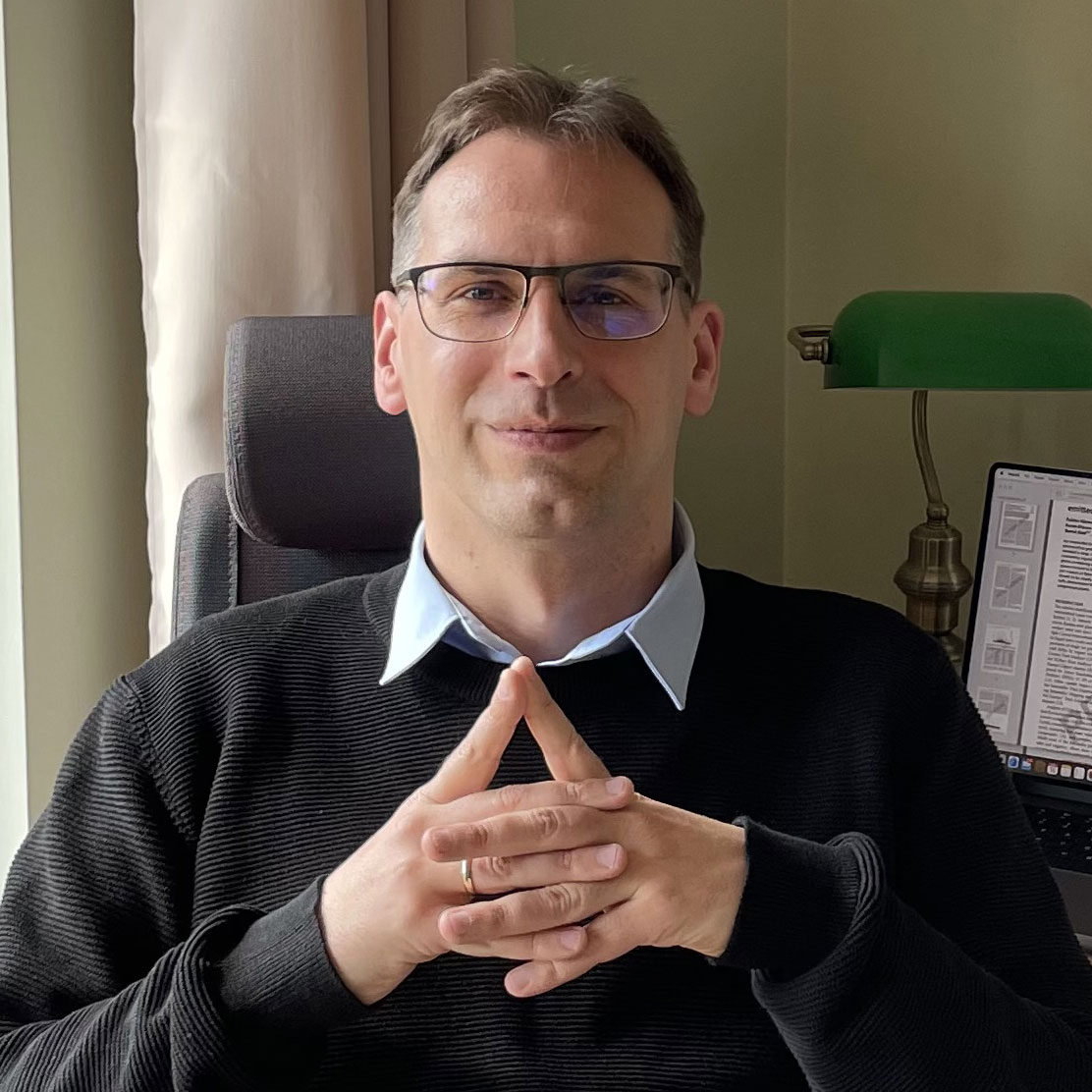
The research has also tempered some of the more hyperbolic expectations surrounding room-temperature superconductivity. While the discovery that pairing occurs at high energy levels theoretically suggests that the upper limit for Tc could be much higher than currently observed, both Allan and Swart caution against oversimplification. "It is not going to be that simple," Allan noted, citing the complex interplay of chemical and physical variables that influence the superconducting transition. The experiment demonstrates that while pairing is a necessary condition, it is not a sufficient one for high-temperature superconductivity.
Moving forward, the field is expected to pivot toward new experimental designs. Swart has indicated interest in developing higher-resolution noise mapping to further isolate the transition into phase coherence. Meanwhile, the role of artificial intelligence in materials science is becoming increasingly central. Allan suggests that rather than continuing to pursue purely analytical models, the path to discovering "room-temperature" materials may lie in high-throughput chemical discovery, where AI-driven simulations can predict stable, superconducting compounds that humans might not intuitively design.
This research marks a significant transition from speculative theory to direct observation in the study of cuprates. By transforming the "missing electrons" mystery into a measurable physical process, the team has provided a new roadmap for future investigations. As physicists continue to probe the delicate balance between pair formation and phase coherence, the dream of room-temperature superconductivity remains a daunting, yet increasingly grounded, scientific goal. The "listening" approach, by treating electronic noise as a source of information rather than interference, may prove to be one of the most effective tools in the next generation of materials research, offering a new perspective on the fundamental interactions that govern the quantum world.