Radaris and the crumbling empire of opaque data brokerage: A legal reckoning for the people-search industry


The consumer data broker Radaris.com has finally faced a definitive legal reckoning, marking a significant turning point in the ongoing battle between privacy advocates and the multi-billion-dollar people-search industry. After years of systematically ignoring requests to purge personal information from their vast, interconnected network of databases, the company has seen its primary domain and over a dozen affiliate sites transferred to the plaintiffs in a landmark lawsuit. This judicial action, centered in New Jersey, stems from persistent violations of Daniel’s Law—a critical statute designed to protect the privacy of state law enforcement officials, judicial officers, and their families by mandating the removal of their personal data from commercial search engines.
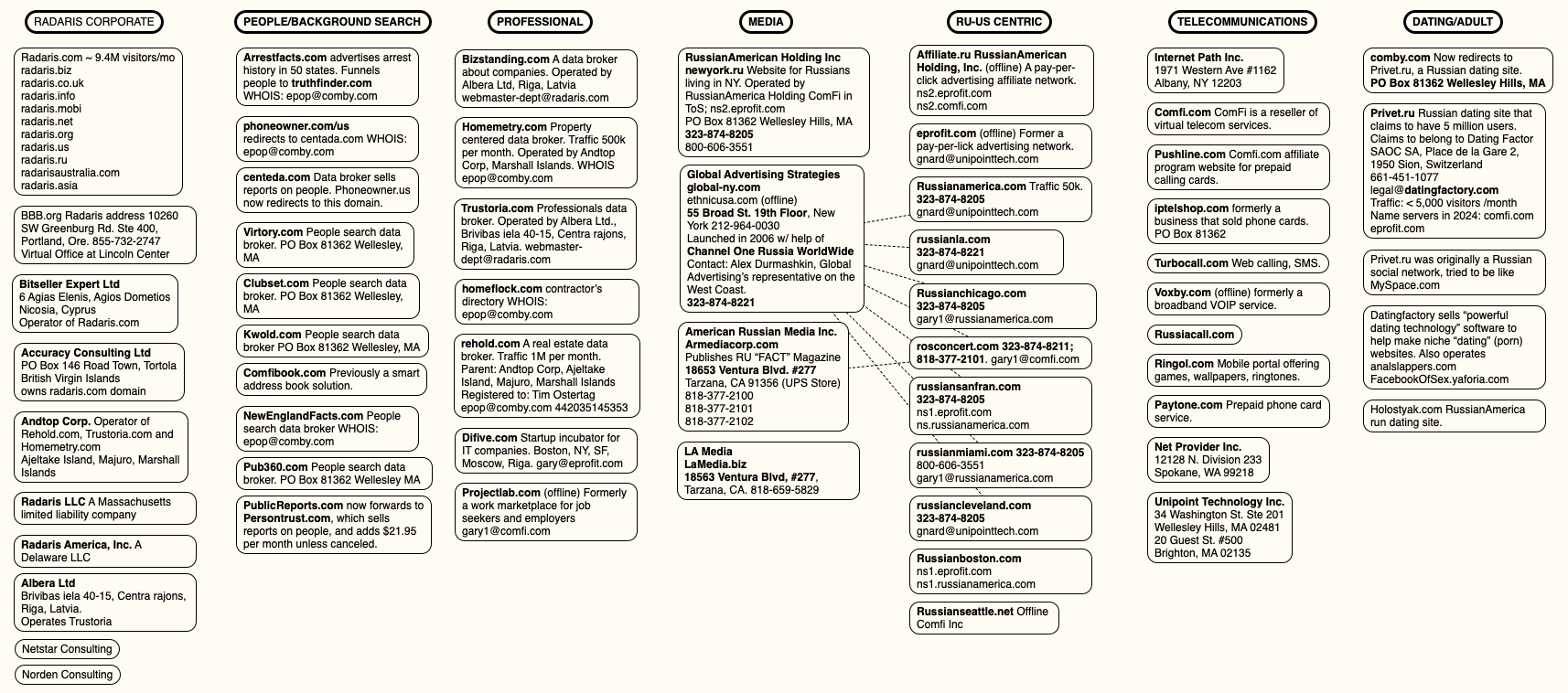
The transfer of these digital assets represents the culmination of a high-stakes legal strategy employed by Atlas Data Privacy Corp. For years, Radaris operated behind a complex web of shell companies, fictitious executives, and international jurisdictions, effectively insulating its true owners—the Russian-born brothers Igor and Dmitry Lubarsky—from accountability. By systematically ignoring court mandates and employing "island-hopping" tactics to obscure ownership, the brothers successfully operated under the radar for nearly a decade. However, the rigor of recent litigation has stripped away these layers, exposing a centralized, Boston-based operation that has allegedly skirted federal and state privacy requirements while monetizing the personal dossiers of millions of Americans.
A Chronology of Evasion and Litigation
The legal friction between Radaris and privacy advocates dates back to at least 2017, when the company was the subject of a class-action lawsuit. In that instance, Radaris effectively dodged a $7.5 million default judgment by failing to appear in court, only to later emerge through its legal counsel to contest the ownership of the domains involved. By successfully arguing that the plaintiffs had failed to serve the "actual" owners—at the time, a Cyprus-based entity called Bitseller Expert Limited—the defense secured a stay on the domain transfer.
Following this victory, the company underwent a series of corporate restructurings, moving its operational base to the Marshall Islands and incorporating under new entities such as Andtop Company. This period, described by Atlas Data Privacy Corp. CEO Matt Adkisson as an "island-hopping phase," saw the company constantly shifting its terms of service and legal jurisdiction to frustrate service of process.
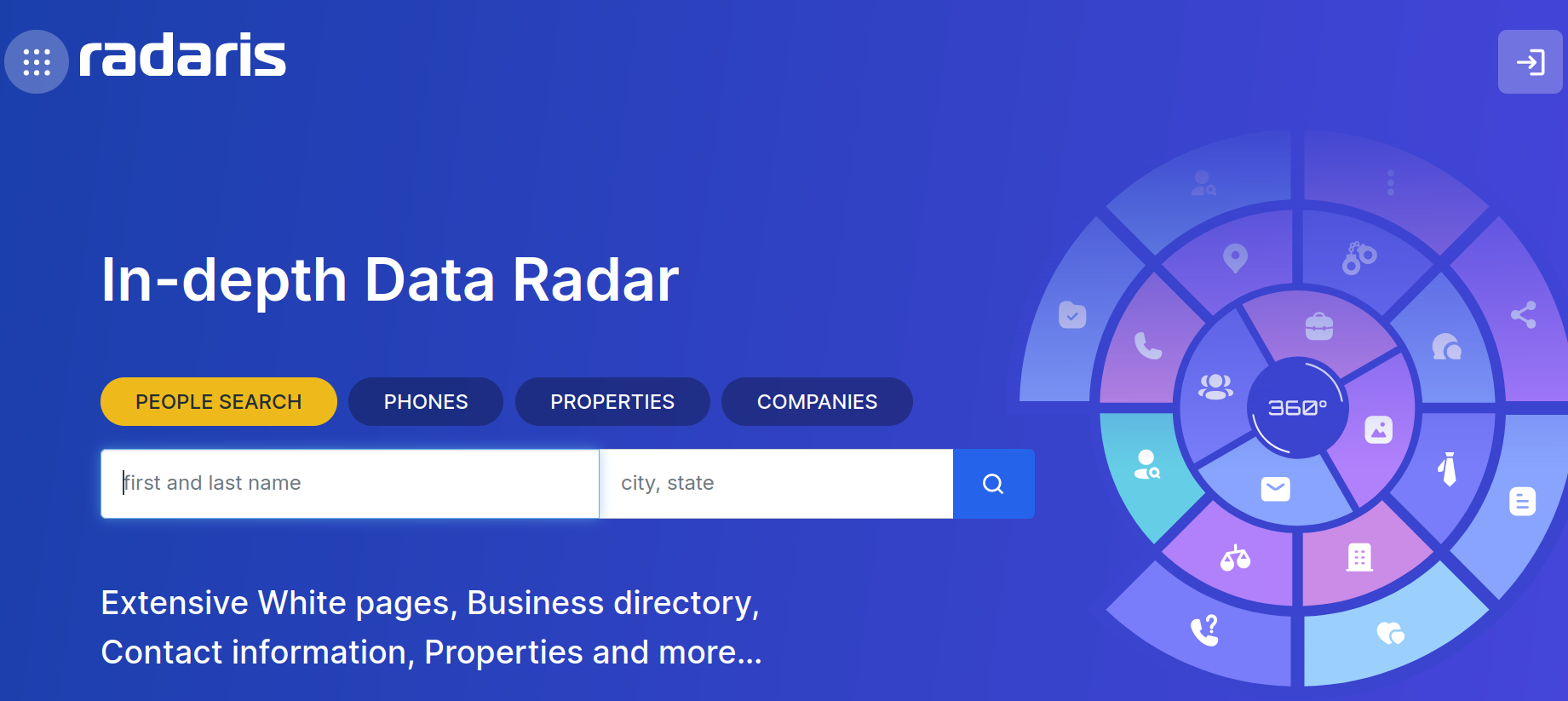
The current legal offensive, initiated in February 2024, signaled a more aggressive approach. Atlas, leveraging the specific protections afforded by Daniel’s Law, sought to force compliance through the seizure of the assets themselves. Throughout 2024 and into 2025, as evidence mounted, Radaris attorneys maintained a strategy of obstruction, claiming that the entities sued were either defunct or not the true owners of the domains. The courts, however, eventually exhausted their patience with these procedural games. In August 2026, a New Jersey judge determined that the defendants had been afforded ample opportunity to defend their actions and had failed to do so, resulting in the court-ordered transfer of the radaris.com domain to Atlas.
The Anatomy of a Data Brokerage Shell Game
Discovery documents obtained during the litigation have provided an unprecedented look into the infrastructure of the Radaris operation. Atlas reported that it had secured over 10,000 internal emails and financial records, which collectively dismantle the notion that Radaris was a decentralized or foreign-owned entity. The documents confirm that at least 25 different people-search websites were controlled by the same small group of individuals operating out of the Boston area.
These entities, including Radaris America, Inc., Veripages Inc., and Virtura Corp, shared a common administrative and financial backbone. The data reveals that these sites functioned as a single, highly profitable machine, generating monthly revenues in the tens of thousands of dollars per domain. Perhaps most controversial is the evidence regarding the company’s "marketing" partnerships. The emails indicate that Radaris and its affiliates maintained lucrative arrangements with other industry players, including the Lifetime Value Company and even Onerep—a company that markets itself as a solution for removing personal data from the very sites it is accused of helping to sustain.
The use of the fictitious CEO persona "Gary Norden" in press releases and investor pitches serves as a microcosm of the company’s operating philosophy. By fabricating leadership and hiding behind international shell corporations, the Lubarsky brothers maintained a facade of legitimacy while simultaneously ignoring the real-world safety risks posed to law enforcement and government personnel listed on their platforms.
Official Responses and the Defense Strategy
Legal counsel for Radaris has remained defiant in the wake of the domain seizures. Attorney Victor Worms, representing the defendants, has filed motions to vacate the default judgment, arguing that "Radaris.com" is not a legal entity capable of being sued and that the transfer of the domain constitutes an unconstitutional forfeiture.

"We intend to pursue all appropriate appeals because we believe the transfer of Radaris.com amounts to a violation of various constitutional principles," Worms stated in response to inquiries. The defense maintains that the court’s actions overstep legal boundaries regarding corporate personhood and property rights, setting the stage for what many legal experts believe will be a protracted battle likely to reach the U.S. Supreme Court.
Conversely, the plaintiffs view the seizure as a necessary intervention. Raj Parikh, a partner at PEM Law, noted that the defense’s strategy was built on the assumption that plaintiffs would eventually tire of the "procedural games." By committing significant resources to the case, Atlas sought to break the cycle of attrition that had protected data brokers from liability for over a decade.
Broader Implications for Privacy Legislation
The collapse of the Radaris domain empire is not merely a local legal victory; it is a bellwether for the future of data privacy in the United States. While Daniel’s Law has been a potent tool in New Jersey, its application is currently under fire. At least 70 similar lawsuits filed by Atlas have been moved to federal court, where the data broker industry is challenging the constitutionality of the law on First Amendment grounds, arguing that it represents an impermissible restriction on the dissemination of public information.
The constitutional landscape remains fragmented. While 14 states have followed New Jersey’s lead in crafting similar legislation, these laws are facing stiff headwinds. In August 2025, a federal district court ruled West Virginia’s version of Daniel’s Law facially unconstitutional. The tension between the public’s right to information and an individual’s right to safety remains the central conflict of the debate.
Privacy expert Justin Sherman points out that the real problem lies in the absence of comprehensive federal privacy legislation. Most current state laws are riddled with exemptions for "public" records—such as voting registries, property filings, and motor vehicle data—which form the bedrock of the people-search industry. As long as these records are classified as public, data brokers can continue to scrape, aggregate, and monetize them with impunity.
"We don’t need more wake-up calls," Sherman remarked. "The lack of a comprehensive federal privacy law is not for a lack of knowledge." He emphasized that until Congress addresses the fundamental collection and sale of digital dossiers, the "whack-a-mole" approach—where individual companies are sued or domains are seized—will do little to alter the underlying surveillance economy.
Looking Ahead: The Cost of Inaction
The recent breach at IDScan.net, which exposed the driver’s license data of 153 million Americans, underscores the catastrophic potential of the current regulatory vacuum. When data brokers and identity verification services become "point-and-click" tools for identity thieves, the societal costs far outweigh the commercial profits of the industry.
The Radaris case serves as a stark warning to the data brokerage sector: the era of total impunity is facing significant, if localized, resistance. However, for the average citizen, the path to true digital privacy remains obstructed by intense lobbying from big tech, social media, and data-intensive firms that argue against any restriction on data movement. As the legal challenges surrounding Daniel’s Law wind their way through the appellate courts, the outcome will likely dictate whether the future of the internet is one of open-access personal data or one where individuals can finally exercise control over their digital identities. For now, the redirected radaris.com homepage stands as a quiet testament to the fact that even the most opaque digital empires are subject to the reach of the law, provided there is the resolve to pursue them.