Radaris Domain Seizure Marks a Pivotal Legal Shift in the Battle Against Data Broker Privacy Violations


The consumer data broker Radaris.com, long criticized for its systemic refusal to honor personal information removal requests, has suffered a significant legal defeat that could redefine the landscape of the digital privacy industry. Following a prolonged legal battle characterized by what plaintiffs describe as deliberate obfuscation and procedural evasion, a New Jersey court has ordered the transfer of Radaris.com and over a dozen associated domains to the plaintiffs. This landmark judgment stems from the company’s repeated violations of Daniel’s Law, a critical New Jersey statute designed to shield law enforcement officials, judges, and government personnel from the dangers of having their personal data commodified and published online.
The enforcement action was brought by Atlas Data Privacy Corp, a firm that has positioned itself as an aggressive litigant against data brokers failing to comply with state privacy mandates. The court-ordered transfer represents a rare and decisive victory in a sector where companies frequently utilize international shell entities and complex corporate structures to avoid accountability.
A Chronology of Concealment and Corporate Shell Games
The roots of the current crisis for Radaris lie in its long-standing operational model, which critics argue is designed to prioritize profit over individual safety. The company, founded by Russian-born brothers Igor and Dmitry Lubarsky, has operated a vast network of people-search websites that aggregate everything from criminal records and property filings to contact information.
The conflict intensified in February 2024, when Atlas Data Privacy Corp filed its initial lawsuit alleging that Radaris had flagrantly ignored the mandates of Daniel’s Law. This legislation, born from the tragic murder of the son of a federal judge, provides for fines of $1,000 per violation when data brokers refuse to remove the personal information of protected state officials.
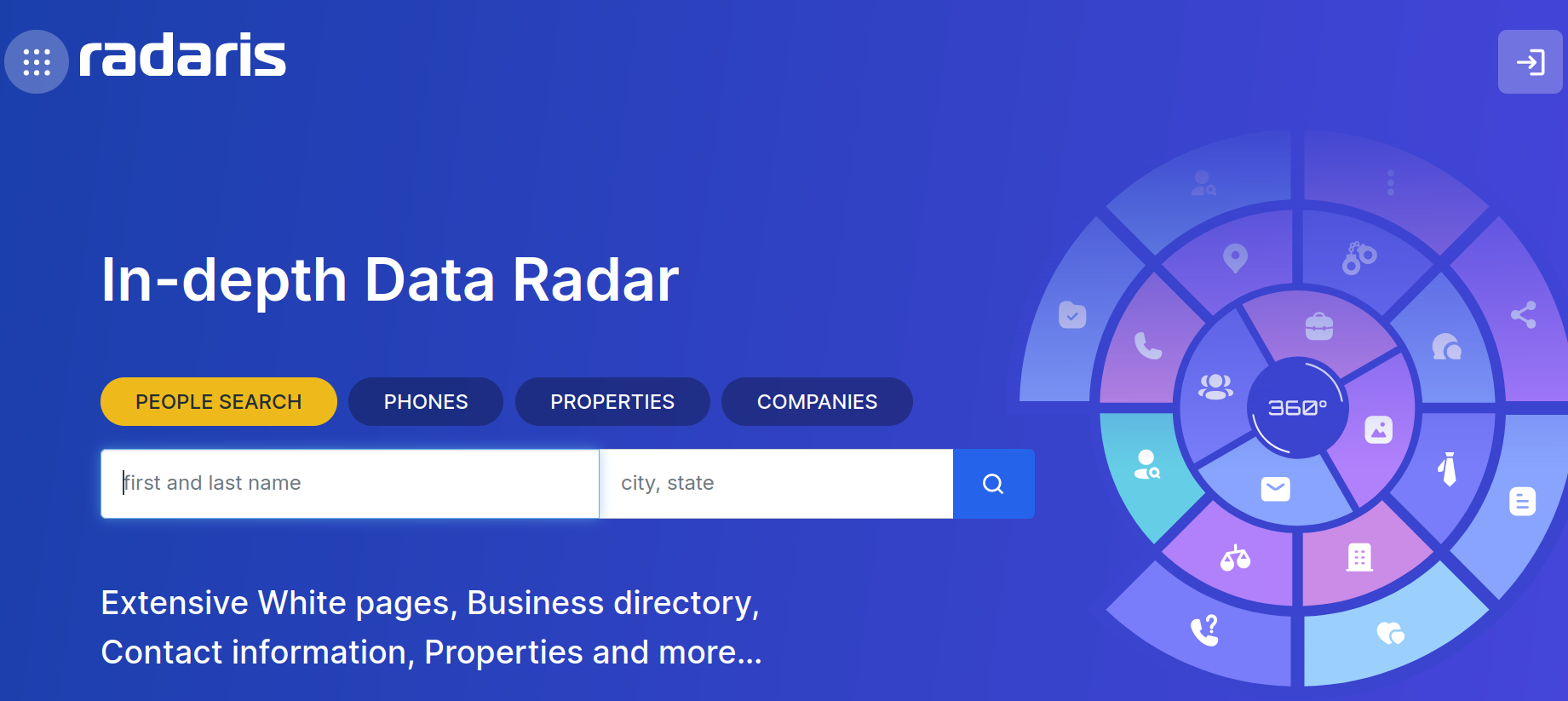
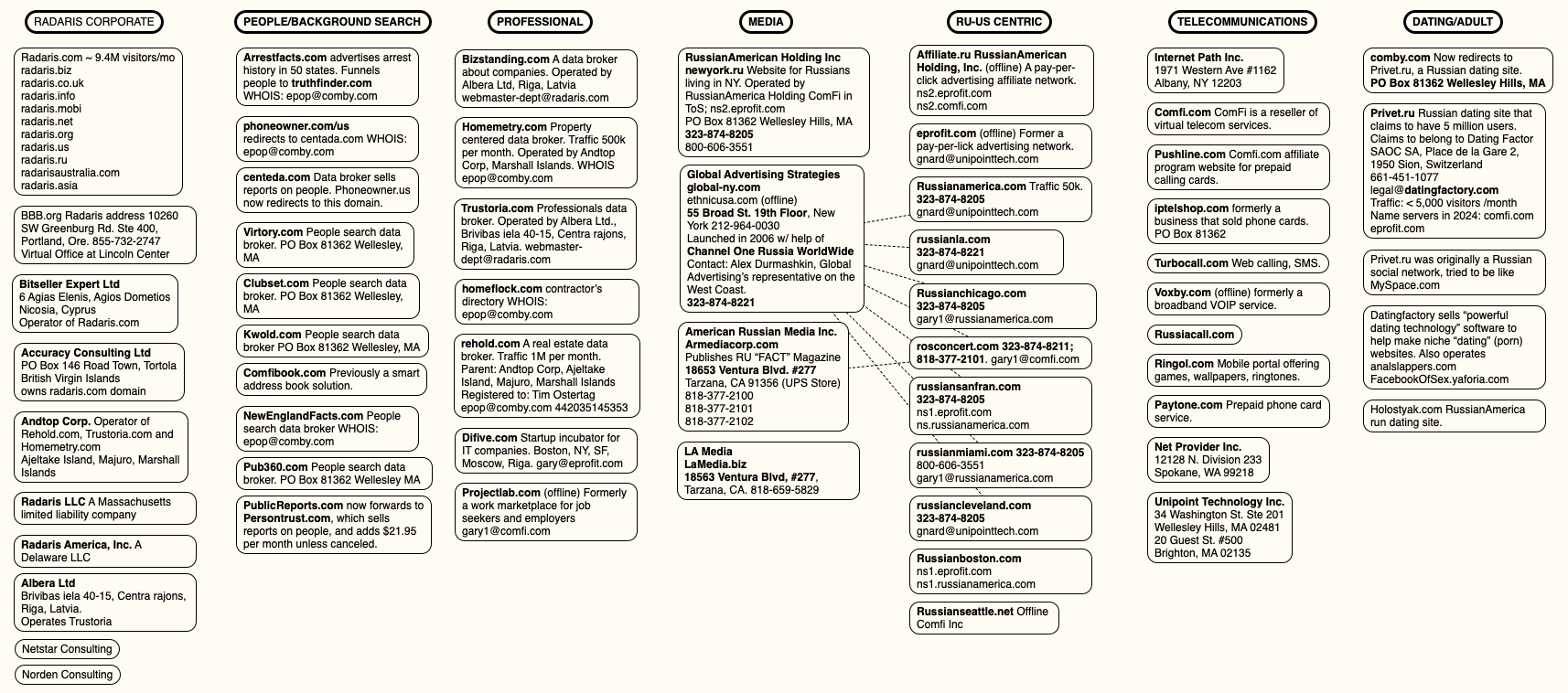
Throughout 2024 and 2025, the legal proceedings were marked by a pattern of behavior that presiding judges eventually deemed obstructionist. When confronted with allegations, Radaris’s legal representatives—led by attorney Val Gurvits of the Boston Law Group—often resorted to challenging the jurisdiction, denying ownership of the domains, or asserting that the actual operators were foreign entities beyond the court’s reach. This "island-hopping" strategy involved the constant shuffling of management between entities in the Marshall Islands, the British Virgin Islands, and the Seychelles.
By June 2025, Atlas had refiled an expanded version of the complaint, naming a wider array of sister entities. Matt Adkisson, the CEO of Atlas, noted that these companies frequently updated their terms of service to reflect ownership by shell companies that, upon closer investigation, often lacked any physical or operational substance. This tactical maneuvering was intended to exhaust the resources of plaintiffs, a strategy that had successfully protected the Lubarsky brothers’ empire for nearly a decade.
The Myth of the CEO: Fictitious Leadership and Financial Realities
Central to the controversy was the Radaris practice of using a fictitious CEO, "Gary Norden," to provide a veneer of legitimacy when soliciting investors or issuing press releases. Investigative reporting by KrebsOnSecurity forced this revelation into the public record, with the company’s legal counsel eventually admitting that the CEO was a fabrication.
The depth of this deception is underscored by internal documents uncovered during discovery. Atlas obtained over 10,000 emails and financial records, which revealed that despite the appearance of a decentralized and international corporate structure, the entire Radaris family of companies—including brands like Veripages and others—is operated by a small, Boston-area group. These entities share common bank accounts, payment processors, and administrative mail servers, contradicting the defense’s claim that they are separate, unrelated foreign corporations.
Financial disclosures within these documents suggest the scale of the operation. Radaris.com and its sister site, Veripages, are estimated to generate upwards of $80,000 to $90,000 per month in revenue, largely fueled by partnerships with marketing firms and data-removal services. Ironically, the documents show that Radaris derived significant monthly income from partnerships with firms like Onerep, a company that purportedly sells the "cure" for the very privacy exposure that Radaris and its counterparts profit from creating.

Legal Defenses and the Constitutional Challenge
Following the August 2026 ruling, legal representatives for Radaris have sought to vacate the default judgment. Victor Worms, the current attorney for the entities, argues that the transfer is void because "Radaris.com" is not a legal entity capable of being sued. Furthermore, the defense has signaled an intent to appeal, asserting that the domain seizure violates constitutional protections against forfeiture without due process.
This defense strategy aligns with a broader industry-wide pushback against Daniel’s Law. Currently, approximately 150 data brokers are involved in similar litigation, with many attempting to elevate the dispute to federal court. These firms contend that Daniel’s Law is overly broad and constitutes an unconstitutional restraint on commercial speech under the First Amendment.
The outcome of these cases is widely expected to reach the U.S. Supreme Court, as the conflict pits state-level privacy protections against the broad, largely unregulated business model of the data brokerage industry. While New Jersey’s law has served as a blueprint for at least 14 other states, the constitutional landscape remains precarious; for instance, a federal district court in West Virginia recently ruled their version of Daniel’s Law facially unconstitutional.
The Broader Implications for Digital Privacy
The seizure of Radaris.com serves as a significant case study in the limitations of current U.S. privacy law. Experts such as Justin Sherman, a fellow and author specializing in the surveillance economy, suggest that without comprehensive federal legislation, the "whack-a-mole" approach to privacy enforcement is unsustainable.
The core of the problem lies in the legal classification of "public records." Most state privacy laws, including those modeled after Daniel’s Law, contain broad exemptions for data considered public, such as voter registries, motor vehicle records, and court filings. These loopholes allow data brokers to argue that they are merely aggregating information that is already legally available to the public. Consequently, even when specific domains are shuttered, the underlying data remains accessible through an infinite number of secondary sources.
The recent breach at IDScan.net, which exposed the driver’s license information of over 153 million Americans, highlights the vulnerability of the current ecosystem. Without federal standards regarding how companies collect, store, and share sensitive identification data, the information aggregated by companies like Radaris remains at constant risk of being repurposed by identity thieves or exploited by malicious actors.
Looking Ahead
For the time being, the Radaris.com homepage displays a notice of the domain transfer, serving as a symbolic victory for Atlas and the privacy advocates who have pursued the case. However, the legal war is far from over. The ongoing constitutional challenges will determine whether state-level efforts to restrict data brokers can withstand the First Amendment arguments currently being mounted by the technology and data sectors.
As the industry faces increased scrutiny, the Radaris case underscores a growing public and judicial impatience with the opaque business practices of people-search firms. While the transfer of a domain name is a powerful tactical strike, the long-term solution—a cohesive federal privacy framework—remains elusive, hampered by intense lobbying and conflicting legal precedents. For millions of Americans, the Radaris case is a reminder that in the absence of robust legislative action, their personal history remains a profitable commodity for those willing to exploit the digital cracks in the system.