Samsung Galaxy SmartTag 3 Leaks Reveal a Controversial Redesign and Dropped Keyring Hole


Samsung is reportedly gearing up to launch the Galaxy SmartTag 3, bringing the tech giant’s tracking ecosystem back into the spotlight after a significant hiatus. Three years have passed since the South Korean conglomerate introduced the Galaxy SmartTag 2 in October 2023. Recent leaks, stemming from retailer listings and industry insiders, suggest that the upcoming iteration will feature a heavily reworked aesthetic, improved connectivity protocols, and a controversial design choice that mimics one of Apple’s most criticized hardware traits.
The alleged renderings, first brought to light by tech publication SammyGuru and further analyzed by outlets like 9to5Google, indicate that the Galaxy SmartTag 3 will ditch the elongated pill-shaped cutout that defined its predecessor. Instead, the device adopts a rounded rectangular—often called a "squircle"—geometry. This shape mirrors the design language seen across Samsung’s contemporary wearable portfolio, notably the Galaxy Watch 8 and Galaxy Watch 9 series.
According to leaked details, the new tracker is expected to debut in classic black and white colorways. The black variant leans into a sleek, brushed-metal aesthetic, doing away with the contrasting silver metallic core found on earlier models. However, the most striking aspect of the redesign is the apparent omission of a built-in lanyard hole or keyring loop.
Evolution of Samsung’s Tracking Lineup: A Chronology
To understand the weight of these design changes, it helps to examine the evolution of Samsung’s item-finder hardware over the years:
- January 2021: Samsung introduces its first-generation Galaxy SmartTag alongside the Galaxy S21 series. The device features a square, chunky shape with a built-in physical hole, allowing users to easily attach it to keychains, pet collars, or luggage without requiring additional accessories.
- April 2021: Samsung expands the ecosystem by launching the Galaxy SmartTag+, which incorporates Ultra-Wideband (UWB) technology for precision finding, though it retains the general form factor of the original model.
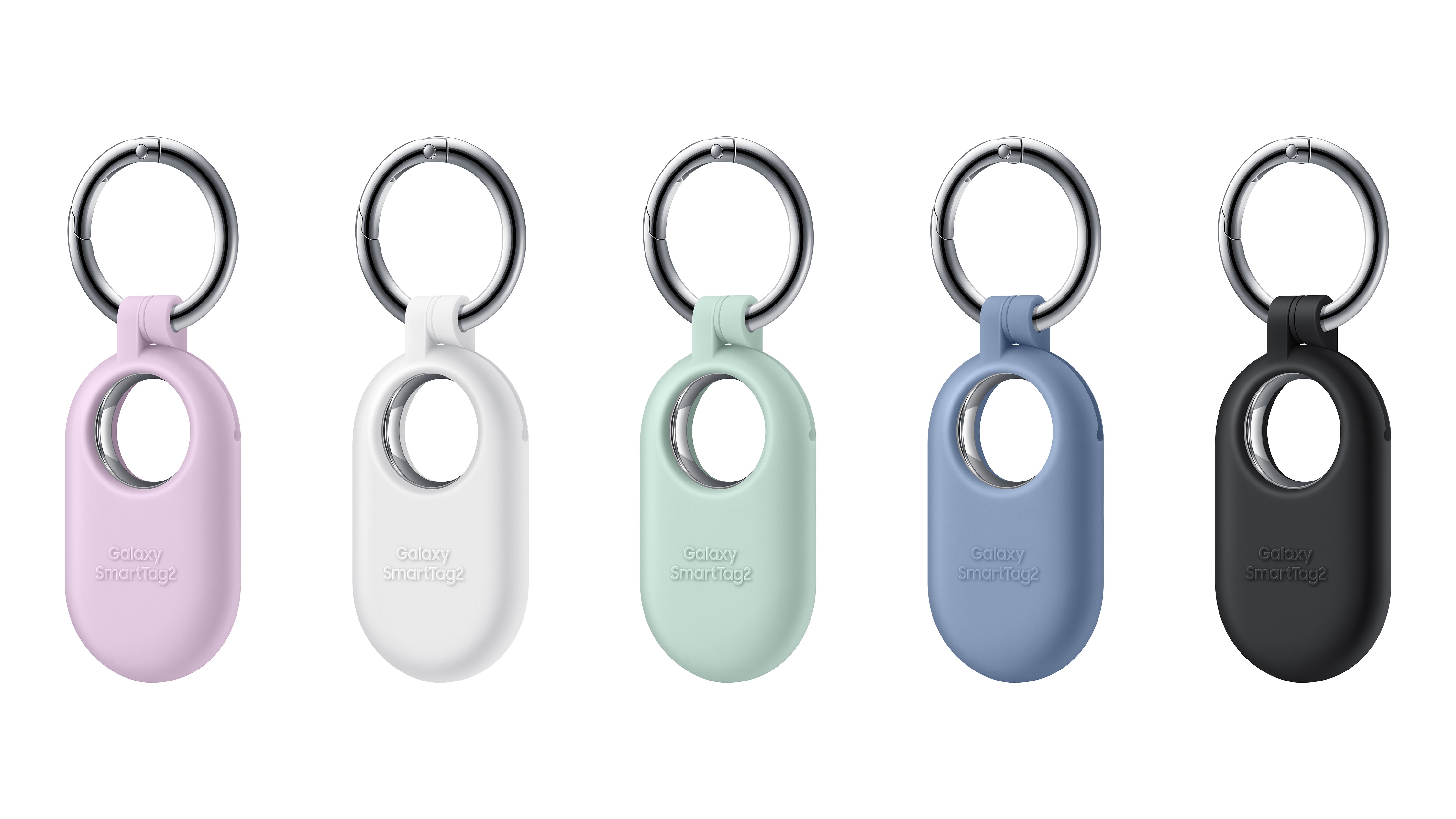
- October 2023: Following a two-year gap, Samsung releases the Galaxy SmartTag 2. This generation brings a sweeping redesign, trading the square look for a slim, pill-shaped body wrapped in a durable metal ring. Crucially, the SmartTag 2 enlarges the inner cutout loop, making it much easier to clip directly onto straps, clips, and standard key rings without specialized holders.
- Late 2025 to Mid-2026: Industry rumors begin swirling regarding a third-generation device. Initial whispers hint at a September release window alongside the anticipated Galaxy S26 FE. Although the FE smartphone surfaces slightly ahead of schedule in late August, rumors for the SmartTag 3 persist, pointing toward an independent rollout or a joint appearance with upcoming hardware like the Galaxy Tab S12.
Technical Expectations and Hardware Specifications
While physical design choices are dominating early discussions, the technological foundation of the Galaxy SmartTag 3 is expected to deliver incremental yet reliable upgrades. Industry analysts anticipate that Samsung will retain and refine the core connectivity features that made the SmartTag 2 popular among Android users.

Chief among these is the dual-support for Bluetooth Low Energy (BLE) and Ultra-Wideband (UWB). While standard Bluetooth offers broad network-based tracking via the global network of Galaxy devices, UWB allows for centimeter-level directional precision when users are within close range of the misplaced item. This is particularly useful for locating items inside a cluttered home or a dense office environment.
Furthermore, the NFC-based "Lost Mode" is slated to return. This feature allows anyone who finds a lost SmartTag to tap it with an NFC-enabled smartphone, pulling up pre-programmed contact information or a recovery message provided by the owner.
Battery life specifications remain under wraps. The SmartTag 2 boasted an impressive lifespan—lasting up to 500 days in normal mode or up to 700 days in power-saving mode using a standard CR2032 coin cell battery. Consumers and reviewers alike are watching closely to see whether the squircle chassis forces any compromises on battery capacity or energy efficiency.
The Controversial Design Choice: Mirroring the AirTag
The most polarizing aspect of the leaked SmartTag 3 renderings is the absence of a dedicated mounting hole. The original SmartTag and the SmartTag 2 both prioritized user convenience by integrating a physical loop directly into the hardware casing.
By removing this built-in anchor point, Samsung appears to be following in the footsteps of Apple’s AirTag. Apple’s tracker relies on a smooth, circular disc shape that requires users to purchase external loops, key rings, or adhesive mounts separately to attach the device to backpacks, keys, or pet collars.
Tech analysts and consumer advocacy circles have pointed out the financial and practical implications of this shift. If the leaked renders prove accurate, buyers of the Galaxy SmartTag 3 will likely have to shell out extra cash for proprietary or third-party cases with attachment loops. For budget-conscious consumers who valued Samsung’s previous all-in-one approach, this represents an added hidden cost of ownership.
Pricing and Market Availability
Retailer leaks suggest that Samsung intends to hold the line on base pricing in North America. The Galaxy SmartTag 3 is projected to retail for approximately $30 USD in the United States, keeping it competitive with rivals like the Apple AirTag and Tile Pro.
However, consumers in European markets may face inflationary adjustments. Early database entries indicate a slight price uptick of a few Euros, though regional taxes and distribution variances typically account for these minor discrepancies.
Broader Industry Impact and Strategic Implications
The launch of the Galaxy SmartTag 3 arrives at a time when the item-tracking ecosystem is undergoing intense regulatory and technological standardization. Major tech players, including Google and Apple, have collaborated on industry specifications to detect unauthorized tracking and enhance user privacy against stalking—a challenge that plagued early smart tracker rollouts.
For Samsung, maintaining a robust accessory ecosystem is vital for retaining users within the broader Galaxy smartphone and tablet environment. The SmartTag line serves as a low-cost entry point and a sticky retention tool for consumers embedded in the Android ecosystem.
Whether the controversial removal of the built-in keyring hole will alienate loyalists or if consumers will readily accept the aesthetic trade-off for a sleeker, watch-inspired design remains to be seen. As official announcements draw nearer, market observers will be watching to see how Samsung positions its next-generation tracker against an increasingly crowded field of location-aware consumer electronics.