San Francisco Police Arrest Tech Entrepreneur Nima Momeni in Connection to the Stabbing Death of Cash App Creator Bob Lee

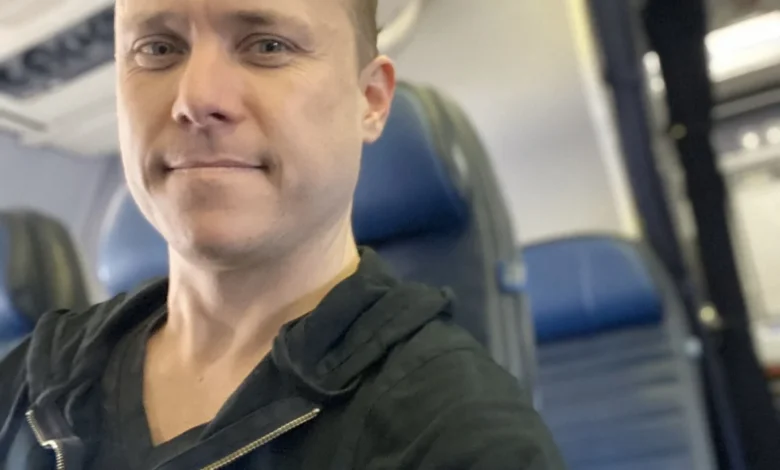
The investigation into the tragic death of fintech visionary Bob Lee reached a significant turning point on Thursday morning as San Francisco law enforcement officials confirmed the arrest of a suspect linked to the high-profile homicide. Nima Momeni, a 38-year-old technology entrepreneur and founder of the IT consulting firm Expand IT, was taken into custody at his residence in Emeryville, a city situated in the East Bay region between Oakland and Berkeley. The arrest marks a pivotal development in a case that has captivated the public imagination and reignited intense national debates regarding urban safety, criminal justice policy, and the vulnerability of the technology sector’s elite.
San Francisco Police Chief Bill Scott, speaking at a scheduled afternoon news conference, confirmed that the suspect and the victim were acquainted, though he stopped short of detailing the precise nature of their relationship. The arrest follows an intensive, week-long investigation that saw detectives canvassing downtown San Francisco for digital evidence, witness statements, and surveillance footage. According to District Attorney Brooke Jenkins, Momeni has been formally charged with murder, accompanied by a special sentencing enhancement for the use of a knife during the commission of the crime.
A Chronology of the Tragedy
The events leading to the arrest began in the early hours of Tuesday, April 4. At approximately 2:35 a.m., San Francisco Police Department officers were dispatched to the 300 block of Main Street in the city’s Rincon Hill neighborhood. Upon arrival, they discovered 43-year-old Bob Lee suffering from multiple stab wounds. Despite the swift arrival of emergency responders and his subsequent transport to a local hospital, Lee succumbed to his injuries.
Lee was a titan in the payment technology industry, best known for his pivotal role in creating Cash App while serving as the first chief technology officer at Square—now rebranded as Block. At the time of his death, he held the position of chief product officer at the cryptocurrency-focused firm MobileCoin. His passing triggered an outpouring of grief from industry leaders, colleagues, and friends who remembered him as a brilliant architect of modern mobile finance.
Following the initial discovery of the crime, the investigation proceeded with urgency. Detectives leveraged advanced surveillance technology and forensic evidence to trace the movements of the suspect. While Momeni was not initially identified as a primary suspect in the immediate aftermath of the killing, persistent investigative work allowed authorities to build a case that culminated in the issuance of an arrest warrant and the subsequent raid on his Emeryville home. Momeni is scheduled to be arraigned on Friday, where prosecutors intend to argue for his detention without bail.
Contextualizing the Public Outcry
The murder of Bob Lee occurred against a backdrop of increasing anxiety regarding crime in San Francisco. Because of Lee’s high-profile status in the Silicon Valley ecosystem, his death became a focal point for broader political discourse. Shortly after the news broke, several prominent figures, most notably Twitter owner and Tesla CEO Elon Musk, utilized the incident to highlight perceived failures in the city’s public safety infrastructure.
In a series of posts on social media, Musk characterized the state of violence in San Francisco as "horrific," explicitly questioning the efficacy of District Attorney Brooke Jenkins’ policies. Musk’s commentary, which was echoed by various other tech executives, alleged that the city had become a dangerous environment where repeat violent offenders were frequently released without adequate consequence. This sentiment resonated with a segment of the public that has grown increasingly vocal about street-level crime, retail theft, and the perceived breakdown of social order in major metropolitan hubs.
Official Responses and the Mitigation of Misinformation
The reaction from San Francisco’s leadership was swift and defensive. During the Thursday news conference, District Attorney Jenkins addressed the criticism directly, explicitly naming Musk and others who had used the tragedy to make what she described as "reckless and irresponsible statements."
"These statements serve to mislead the world in their perceptions of San Francisco," Jenkins stated, emphasizing that such rhetoric often ignores the nuances of the legal system and the complexity of homicide investigations. She argued that the premature politicization of the murder not only tarnished the reputation of the city but also complicated the pursuit of justice for the victim and his family by spreading misinformation.
Chief Bill Scott supported this stance, characterizing the act of violence as a universal human tragedy rather than a specific indictment of San Francisco’s urban policies. "This is more about human nature and human behavior than it is about our city," Scott noted, reinforcing the message that violent crime can and does occur in any major metropolitan area, regardless of local government mandates. The police department maintained that the investigators worked with the same level of diligence that they apply to every homicide case, regardless of the victim’s social or economic status.
Implications for the Tech Sector and Urban Safety
The case of Bob Lee serves as a microcosm of the friction between the technology community and the municipal governments that host their headquarters. For years, the rapid growth of the tech industry in the Bay Area has outpaced the development of social infrastructure, leading to a stark divide between the wealth of the tech elite and the challenges faced by local residents.
The arrest of Nima Momeni, a peer within the IT sector, has complicated the narrative that the violence was a symptom of random street crime or homelessness. With the revelation that the suspect and the victim were known to one another, the focus has shifted from the broad theme of "lawless streets" to the specific circumstances of interpersonal conflict. This transition is critical, as it challenges the assumption that the city’s crime issues are exclusively driven by systemic policy failures, highlighting instead the unpredictable nature of personal violence.
Economists and public safety analysts suggest that the incident may have a lingering impact on the return-to-office culture in downtown San Francisco. For several months, the city has struggled to revitalize its business district as remote work remains the standard for many tech employees. High-profile incidents of violence, regardless of the specific relationship between the parties involved, can exacerbate fears among workers, making it more difficult for local businesses to regain their footing in the post-pandemic economy.
Looking Toward Justice
As the legal proceedings against Momeni move forward, the Lee family has expressed a desire for privacy and a focus on the judicial process. In a statement posted to social media, Tim Oliver Lee, the victim’s brother, expressed gratitude to the San Francisco Police Department for their swift work in identifying and apprehending the suspect. "We look forward to working with the District Attorney’s office to prosecute the case," he wrote. "Hopefully now our family can begin the healing process."
The trial will likely be a closely watched affair, not only for the resolution it brings to the Lee family but also for what it reveals about the circumstances of the encounter. As the prosecution prepares to present its case—including the request for bail denial—the city of San Francisco will be watching to see how the justice system navigates a case that has become a lightning rod for national political debate.
Ultimately, while the arrest of Nima Momeni provides a sense of closure for the immediate investigation, the broader questions raised by the death of Bob Lee remain unresolved. The city continues to grapple with the dual challenges of ensuring public safety for all residents and maintaining its status as a global hub for innovation. As the legal system begins its work, the legacy of Bob Lee remains fixed on his contributions to the digital landscape, while the community he lived and worked in continues to reflect on the fragility of life in an increasingly polarized urban environment. The case will undoubtedly remain a focal point for researchers, policymakers, and the public as they attempt to reconcile the promises of the digital age with the enduring realities of urban life.