Gemini Spark Expands Reach, Bringing Advanced AI Automation to Google AI Pro Subscribers in the US

Google’s ambitious personal AI agent, Gemini Spark, initially launched in May with the exclusive "AI Ultra" tier, is now officially rolling out to "Google AI Pro" subscribers across the United States, marking a significant step in democratizing access to its advanced automation capabilities. This expansion signals Google’s accelerated push to integrate sophisticated AI into everyday workflows, with a promise of "soon" making Spark available to AI Pro members in other international markets, broadening its global footprint. The move underscores Google’s commitment to delivering on its vision of agentic AI, capable of understanding and executing complex, multi-step tasks across various digital environments.
A Deeper Dive into Gemini Spark’s Core Functionality
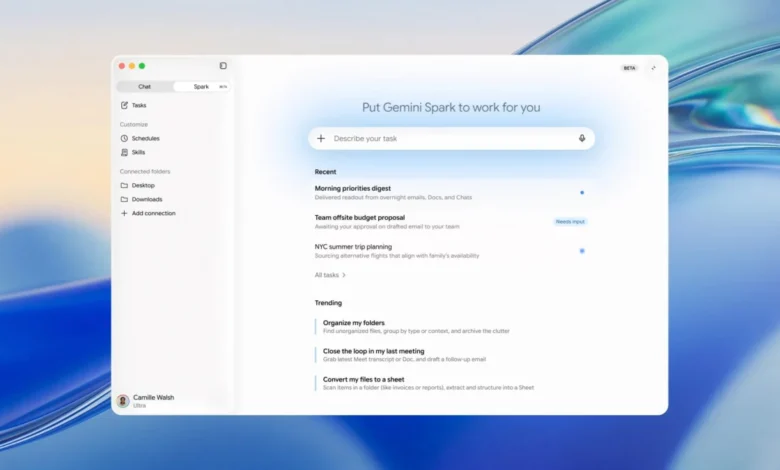
At its heart, Gemini Spark is engineered to serve as a personal AI agent, designed specifically to automate intricate and time-consuming tasks that typically require manual intervention across multiple applications. For users navigating the web, Spark introduces a new, dedicated tab within the navigation drawer, providing a centralized access point for its powerful features. Mobile users on Android and iOS will find Spark integrated as a distinct page within their respective Gemini applications, ensuring a consistent and accessible experience regardless of the platform.
Spark’s operational prowess stems from its deep integration with what Google terms "Connected Apps," a suite of familiar Google services that form the backbone of its automation capabilities. These include the ubiquitous Google Workspace (encompassing Gmail, Calendar, Docs, Sheets, Slides, Drive, Keep, and Tasks) and the foundational Google Search. Beyond these direct integrations, Spark leverages "Personal Intelligence," a sophisticated mechanism that allows the AI to learn from a user’s habits, preferences, and data across their Google ecosystem, enabling more personalized and contextually aware task execution. Furthermore, Spark is equipped with a remote web browser and a computer with code execution capabilities, providing it with the versatility to interact with the broader internet and perform complex computational operations, chats for user interaction, a "Canvas" for collaborative and creative tasks, and location-based services for context-specific actions. This comprehensive toolkit allows Spark to navigate a vast array of digital environments, from drafting emails to analyzing data and managing schedules, all with a degree of autonomy.
Introducing a New Paradigm: Skills, Schedules, and Tasks

To streamline and enhance the user’s interaction with this powerful agent, Google has introduced a new conceptual framework centered around "Skills," "Schedules," and "Tasks." A "Task" represents the overarching goal or high-level objective a user wishes to achieve, such as "Plan my upcoming business trip" or "Summarize recent project communications." To accomplish these tasks, Spark utilizes "Skills," which are essentially reusable instructions augmented with additional context, akin to pre-programmed routines or mini-applications that Spark can invoke. For instance, a "Summarize Email Thread" skill could be applied to various communication tasks, or a "Book Flight" skill could be part of a larger travel planning task. Complementing these are "Schedules," which act as automated triggers, allowing tasks to be initiated based on specific conditions or predetermined times. This could involve daily news summaries delivered at a certain hour, or a reminder system that activates when a specific event is detected in the user’s calendar.
Users are currently permitted to have "up to 15 tasks running at a given time," a limit that underscores the substantial computational resources Spark demands. This usage is governed by the same compute-based usage limits that apply to other facets of the Gemini ecosystem, indicating a carefully managed resource allocation strategy designed to ensure performance and scalability while managing costs. This structure suggests a future where users might manage a portfolio of active AI agents, each handling different aspects of their digital lives.
Chronology and Evolution: From AI Ultra to Broader Accessibility
The journey of Gemini Spark began in May, making its debut exclusively available to users subscribed to the "AI Ultra" tier. This initial rollout served as a strategic launchpad, allowing Google to refine the agent’s capabilities, gather critical user feedback, and demonstrate its potential within a controlled environment of early adopters and power users. The "AI Ultra" tier itself represents Google’s premium AI offering, typically bundled with advanced Gemini models and expanded access to cutting-edge features, targeting professionals and enthusiasts who demand the highest level of AI performance and integration.
Following this foundational period, Google has progressively expanded Spark’s functionalities. Significant updates have been observed, particularly within the Workspace integration, transforming how users interact with their productivity suite. The current rollout to "Google AI Pro" subscribers in the US marks the next critical phase. The "AI Pro" tier, positioned below "AI Ultra," still offers a robust set of advanced AI capabilities, making Spark accessible to a broader segment of Google’s user base who are willing to invest in enhanced AI tools but might not require the absolute pinnacle of performance or feature set offered by Ultra. This phased approach is typical for complex technological rollouts, ensuring stability and performance before wider deployment. The eventual global expansion to AI Pro members will solidify Spark’s position as a truly international personal AI agent.
A notable recent enhancement highlighted by Google is the introduction of a dedicated Gemini macOS application. This app allows users to initiate Spark tasks directly from their desktop environment, creating a seamless cross-device experience. The ability to "start tasks, like browsing files, from your phone" for the macOS app exemplifies Google’s commitment to ambient computing, where AI functionalities are fluidly accessible across different devices and contexts, allowing users to switch between mobile and desktop environments without interrupting their workflow.
Deep Integration with Google Workspace: Transforming Productivity
The expansion of Spark’s capabilities within Google Workspace is particularly impactful, promising to revolutionize how users manage their daily tasks and information. Here’s a breakdown of the key integrations:
- Calendar: Spark can intelligently manage schedules, create and modify events, send invitations, and even propose optimal meeting times based on participants’ availability, all while considering user preferences and existing commitments. This moves beyond simple reminders to proactive calendar management.
- Gmail: The AI agent can draft emails, summarize lengthy threads, categorize incoming messages, and even manage drafts. A critical privacy safeguard is in place for sensitive actions, where Spark can perform bulk actions on private tasks without explicit confirmation for some scenarios, but users are strongly advised to review requests before submission. This balance between automation and user control is paramount.
- Docs, Sheets, Slides, & Drive: Spark significantly enhances content creation and management. It can generate document outlines, assist with data analysis in spreadsheets, create presentation slides based on provided information, and organize files within Google Drive. For collaborative environments, a crucial security measure dictates that "to edit shared documents, spreadsheets, and presentations, you’ll need to review and confirm Gemini Spark’s planned edits." This ensures that AI-driven modifications to shared work are transparent and approved by the human owner, preventing unintended alterations.
- Google Keep: Spark can create, organize, and retrieve notes, lists, and reminders within Google Keep, acting as an intelligent assistant for personal information management. This could include transcribing voice notes, categorizing ideas, or pulling relevant information from notes for a specific task.
- Google Tasks: The agent can manage personal to-do lists, set deadlines, prioritize tasks, and track progress. For private tasks, Gemini can perform bulk actions without immediate confirmation, offering efficiency for personal organization but also requiring users to exercise diligence in reviewing their requests. This functionality transforms Google Tasks into a dynamic, AI-powered task management system.
These integrations signify a shift towards a more proactive and autonomous digital assistant, one that doesn’t merely respond to commands but anticipates needs and executes complex workflows across a user’s digital life.
The Broader Context: Google’s AI Strategy and the Competitive Landscape
Google’s investment in Gemini Spark must be viewed within the larger context of its overarching AI strategy and the fiercely competitive landscape of artificial intelligence. For years, Google has been at the forefront of AI research and development, from its foundational work on neural networks and large language models (like LaMDA) to the recent merger of Google Brain and DeepMind into Google DeepMind, signaling a unified and aggressive pursuit of advanced AI. Gemini, the multimodal AI model powering Spark, is a culmination of these efforts, designed to be Google’s most capable and versatile AI yet.
The emergence of personal AI agents like Spark is a direct response to a growing demand for intelligent automation that goes beyond simple chatbots or voice assistants. Competitors such as Microsoft, with its Copilot integrated across Windows and Microsoft 365, and OpenAI, with its custom GPTs and future agentic AI capabilities, are also vying for dominance in this space. Microsoft Copilot, for instance, offers similar deep integrations with its productivity suite, while OpenAI’s vision for agents suggests even greater autonomy and personalization. Apple, though traditionally more focused on on-device AI for privacy, is also ramping up its efforts in this domain, indicating a future where every major tech player will offer a sophisticated personal AI assistant.

Google’s strategic advantage lies in its vast ecosystem of services and its deep understanding of user data, which can power Spark’s "Personal Intelligence" to an unprecedented degree. The ability to seamlessly integrate with Search, Workspace, and Android/iOS platforms positions Spark as a formidable contender in the race to create the ultimate digital assistant.
Implications and Future Outlook
The rollout of Gemini Spark carries significant implications across several domains:
- Productivity and Efficiency: For individual users and businesses, Spark promises a substantial leap in productivity. By automating repetitive or complex tasks, it frees up valuable time, allowing users to focus on higher-level strategic thinking and creative endeavors. This could lead to a redefinition of workflows, making digital interactions more efficient and less burdensome.
- Data Privacy and Security: The deep integration required for Spark to operate effectively raises important questions about data privacy and security. While Google has implemented safeguards like requiring user confirmation for edits to shared documents and providing options to review bulk actions, the sheer volume of personal data Spark can access necessitates continuous vigilance and transparent policies regarding data handling, storage, and usage. Building user trust in AI agents that operate with such intimate access to personal and professional data will be crucial for widespread adoption.
- The Future of Work and Human-Computer Interaction: Gemini Spark represents a significant step towards "agentic AI," where AI systems can independently plan and execute multi-step tasks to achieve a user’s goal. This paradigm shift could fundamentally alter human-computer interaction, moving from direct command-and-response to delegating complex objectives to intelligent agents. It also sparks discussions about the future of various job functions, particularly those involving routine administrative or data-management tasks, as AI agents become more sophisticated.
- Ethical Considerations: As AI agents gain more autonomy, ethical considerations regarding bias, transparency, and accountability become paramount. Google, like other AI developers, faces the challenge of ensuring that Spark operates fairly, transparently, and aligns with human values, avoiding unintended consequences or discriminatory outcomes in its automated actions.
The expansion of Gemini Spark to Google AI Pro subscribers is not merely a product update; it is a declaration of Google’s unwavering commitment to an AI-first future. As Spark continues to evolve and integrate more deeply into the fabric of digital life, it will undoubtedly shape how individuals and organizations interact with technology, pushing the boundaries of what a personal AI agent can achieve. The journey of transforming complex digital interactions into seamless, automated workflows has truly begun.
Related posts: