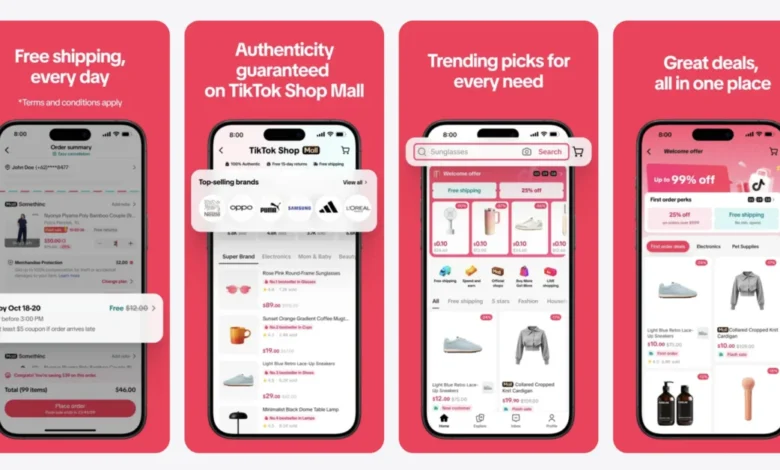
TikTok has officially pivoted its aggressive e-commerce strategy by launching a standalone TikTok Shop application in Singapore, Malaysia, Thailand, and the Philippines. This strategic move, which marks a significant departure from the company’s previous reliance on integrating commerce features directly into its primary social media feed, represents an attempt to capture market share from established e-commerce giants like Amazon, Shopee, and Temu. By decoupling the shopping experience from the core entertainment feed, TikTok is signaling a long-term commitment to becoming a destination for intent-based purchasing rather than just impulse buys driven by viral algorithms.
The Evolution of Social Commerce
For years, TikTok’s primary strategy revolved around "discovery-based shopping." The platform leveraged its sophisticated recommendation algorithm to surface products within makeup tutorials, kitchen hacks, and fashion hauls, allowing users to make purchases without ever leaving the app. While this model successfully turned TikTok into a digital storefront, it also presented a challenge: the shopping experience was often secondary to the entertainment experience.
The release of the standalone TikTok Shop app, first identified by industry analysts via activity on the Apple App Store and Google Play Store, aims to solve this by creating a dedicated environment for transactions. The app offers a suite of features tailored to the consumer journey: personalized product discovery, livestream shopping sessions, integrated order tracking, secure checkout protocols, and 24/7 customer support. By isolating these features, TikTok is effectively competing for the "intent-to-buy" segment of the market, where users open an app specifically to browse for goods, compare prices, and finalize purchases.

A Strategic Rollout in Southeast Asia
The choice of Singapore, Malaysia, Thailand, and the Philippines as the initial launch markets is deliberate. Southeast Asia is currently one of the fastest-growing digital economies in the world. According to data from the e-Conomy SEA report, the region’s e-commerce market has seen consistent double-digit growth, driven by a young, tech-savvy demographic that is highly comfortable with mobile-first shopping experiences.
By testing the waters in these specific markets, TikTok is gathering critical data on user behavior outside of the primary app environment. Preliminary data indicates that the app is gaining traction quickly; the Google Play listing has already surpassed 50,000 downloads, and the app has begun climbing the charts in the regional shopping categories. This early adoption suggests that there is a significant appetite among the user base for a more focused, shopping-centric interface that avoids the clutter of short-form video feeds.
Contextualizing the Infrastructure
The logistical backbone of this new app is managed by TikTok Pte. Ltd., a distinct entity from the TikTok USDS Joint Venture that oversees operations in the United States. This structural separation is vital for understanding the company’s global strategy. While the U.S. branch focuses heavily on navigating complex data security and regulatory landscapes, the global entity—which manages commercial activities—has the agility to experiment with new revenue streams and consumer-facing products.
The current version of the app, documented as version 45.5.5, highlights a robust feature set including "brand authenticity guarantees" and "first-order perks." These are classic customer acquisition tactics designed to bridge the trust gap that often exists when consumers try a new e-commerce platform. By offering free shipping and exclusive discounts, the company is subsidizing user acquisition costs to ensure the standalone app reaches a critical mass of active shoppers.

Broader Implications for the Retail Landscape
The introduction of a dedicated shopping app is not an isolated experiment but part of a wider trend of "service-stacking" within the TikTok ecosystem. Over the past 18 months, the company has aggressively expanded its utility beyond entertainment:
- TikTok GO: Launched in May 2026, this feature enabled users to book hotels, tours, and travel experiences directly through integrations with Booking.com and Expedia. It effectively turned the platform into a travel agency.
- Must Eat: This local-focused restaurant guide, active in major U.S. metropolitan hubs like New York and San Francisco, aggregates user reviews and video content to facilitate OpenTable reservations.
- PineDrama: By launching a separate app for serialized short-form dramas, TikTok demonstrated its willingness to experiment with standalone verticals that require a more structured, library-style interface rather than an endless, non-linear feed.
These initiatives indicate that TikTok is attempting to build a "super-app" architecture in pieces. By separating these functions—shopping, travel, dining, and drama—into standalone applications, the company mitigates the risk of overwhelming the main app while creating multiple touchpoints for user interaction.
Competitive Analysis and Future Outlook
The retail sector is currently witnessing a fierce battle for the consumer’s wallet. Amazon remains the incumbent leader in terms of logistics and trust, while players like Temu and Shein have revolutionized the market through ultra-low prices and rapid supply chain turnover. TikTok’s entry into this space as a standalone app positions it somewhere in the middle: it offers the viral, trend-driven inventory of a social platform but with the functional utility of a traditional marketplace.
Analysts suggest that if the standalone app proves successful in its initial four markets, it will likely be rolled out to larger markets, including the United Kingdom and potentially the United States. However, this expansion will face significant hurdles, including regulatory scrutiny regarding data privacy and the intense competition from established retailers who are also increasing their investment in live-shopping capabilities.

Moreover, the success of the app will depend heavily on the quality of the post-purchase experience. While the app makes discovery easy, the logistics of shipping, returns, and customer service will ultimately determine if the platform can achieve long-term retention. By offering 24/7 support and explicitly highlighting authenticity, TikTok is acknowledging that it must evolve from a "cool place to find things" to a "reliable place to buy things."
Official Stance and Market Reaction
As of November 2026, TikTok has not provided a comprehensive statement regarding a global rollout strategy for the standalone app. The silence from the company suggests a "test-and-learn" approach, where they are closely monitoring metrics like conversion rates, average order value, and user churn in the Southeast Asian test markets before committing to further expansion.
For the retail industry, this move serves as a wake-up call. Retailers who have relied on TikTok for organic marketing may soon find themselves navigating a dual-environment landscape: one where they must maintain their brand presence on the social feed to drive awareness, and another where they must optimize their storefronts on the standalone app to convert that awareness into actual sales.
Ultimately, the launch of the TikTok Shop app represents the next stage of maturity for the platform. It is a transition from being a content-delivery engine to a multifaceted digital utility. Whether users are willing to download an entirely separate app to engage with a brand’s products remains the primary question. However, if the current trajectory holds, TikTok is positioning itself to be not just the place where trends are born, but the place where they are finally monetized. As the company continues to refine its ecosystem, the boundary between social interaction and commercial transaction will continue to blur, setting the stage for a new era of digital retail.