Modern political campaigns operate as high-velocity organizations that must manage millions of data points, ranging from individual donor histories to precinct-level voting trends. As digital transformation reshapes the landscape of electoral politics, the integration of Customer Relationship Management (CRM) systems has transitioned from a competitive advantage to a baseline necessity. While campaigns often rely on a patchwork of specialized software—such as voter-file databases and FEC-compliant fundraising portals—the political campaign CRM serves as the connective tissue that bridges the gap between disparate data streams, enabling teams to coordinate supporter interactions, volunteer assignments, and outreach efforts with surgical precision.
A political campaign CRM is distinct from its corporate counterpart in its primary objective: rather than converting leads into sales, the system aims to convert voters into participants and donors into sustaining contributors. Unlike general-purpose platforms, a specialized political CRM must account for the highly fluid nature of election cycles, where the relevance of a contact’s data can shift dramatically within a 24-hour news cycle.
The Evolution of Campaign Data Architecture
The history of political data management has evolved from decentralized spreadsheet-based recordkeeping in the late 20th century to the sophisticated, cloud-based ecosystems utilized today. In the early 2000s, campaigns began adopting centralized databases to manage voter files. However, the rise of omnichannel communication—combining email, SMS, social media, and peer-to-peer texting—necessitated a move toward integrated systems.

The current industry standard follows a modular architecture. At the center lies the voter file, which remains the authoritative source for electoral data, including registration status and partisan lean. Surrounding this are specialized modules: one for financial compliance (such as WinRed or ActBlue), another for field operations, and a central CRM that tracks the campaign’s direct relationship with the individual. This "hub-and-spoke" model ensures that while a campaign may utilize five or six different software solutions, the "source of truth" regarding a supporter’s recent interaction with the candidate remains unified within the CRM.
Defining the Boundaries: CRM vs. Specialized Political Systems
A common pitfall for campaign managers is the assumption that a single, all-encompassing platform can manage every facet of an election. This is rarely the case. Dedicated voter-file systems, such as those provided by NGP VAN or L2, contain sensitive, jurisdiction-specific data that is governed by strict usage agreements. A general-purpose CRM is typically not designed to host, store, or process these files in compliance with the varying election laws of different states.
Furthermore, compliance with the Federal Election Commission (FEC) in the United States imposes rigid recordkeeping requirements. The FEC mandates that campaigns maintain detailed logs of donor identity, employer information, and contribution dates. Most commercial CRMs lack the native regulatory "guardrails" required to prevent over-contribution or to generate the specific electronic filings required by law. Consequently, the industry has settled on a hybrid approach: the CRM handles engagement, while a secondary, compliance-hardened system handles the actual transaction and reporting.
Core Capabilities and Features for Campaign Success
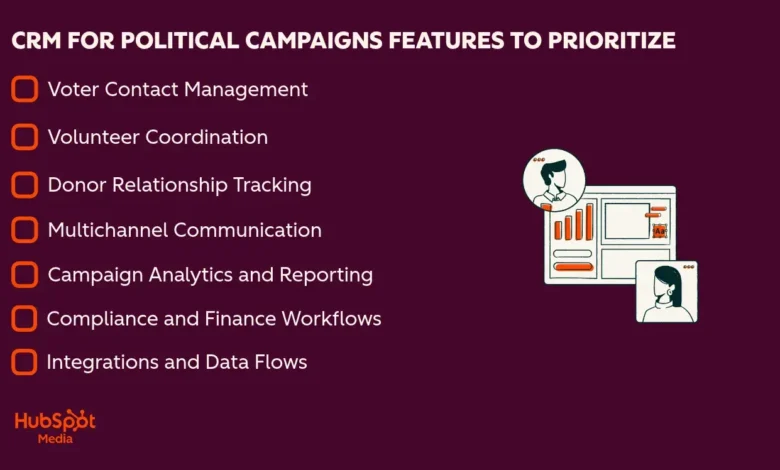
When evaluating a CRM for a political campaign, organizations should prioritize capabilities that facilitate seamless integration and data agility. The most critical features include:

- Audience Segmentation and Targeting: The ability to dynamically categorize supporters based on their engagement level, geographic precinct, and donation history is paramount. Effective segmentation allows a campaign to send a personalized appeal to a high-dollar donor while simultaneously triggering a volunteer sign-up request to a local student.
- Volunteer Coordination Pipelines: A robust CRM should act as a lifecycle management tool for volunteers. From the moment a prospective volunteer submits a web-form, the CRM should automate the onboarding process, track their shift history, and log their performance. This eliminates the "spreadsheet sprawl" that often plagues local campaigns.
- Multichannel Communication Synchronization: Modern campaigns cannot rely on email alone. A CRM that can log an SMS interaction—and account for the strict opt-in/opt-out requirements mandated by the Telephone Consumer Protection Act (TCPA)—is essential.
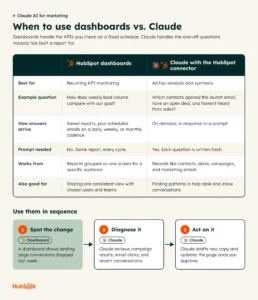
- AI-Enhanced Data Synthesis: The integration of AI tools, such as the Breeze Assistant within the HubSpot ecosystem, represents the next frontier. By summarizing years of communication history or identifying sentiment in a supporter’s email, AI allows campaign staff to tailor their approach, ensuring that even in a large-scale campaign, the personal touch remains intact.
Data Maintenance and Ethical Considerations
The integrity of campaign data is subject to rapid decay. Voters move, phone numbers change, and donor interests shift. A rigorous data maintenance strategy is necessary to prevent "database drift." Professional campaign operations employ regular hygiene protocols: removing duplicate records, updating contact information from official records, and managing consent for digital outreach.
Consent management is particularly vital. In the age of GDPR and localized privacy legislation, failing to document how and when a supporter opted into a communication channel can lead to legal complications. A professional CRM must provide a timestamped audit trail of consent, ensuring that the campaign operates within both the letter and the spirit of the law.
The Strategic Impact of Integration
The true power of a political CRM is realized through its ability to connect to other tools via robust APIs. For instance, a campaign might integrate its CRM with a canvassing app used by volunteers in the field. As a canvasser walks through a neighborhood, their input—"supporter," "undecided," or "hostile"—is updated in real-time in the central CRM. This data, in turn, updates the automated email marketing workflow that night, ensuring that the message the voter receives the following morning is relevant to the conversation they had on their doorstep.
This level of integration requires careful planning. Campaign directors must define the "source of truth" for every data point. If the fundraising platform and the CRM both hold donation records, which one takes precedence in a conflict? Establishing these protocols during the "pre-campaign" setup phase is a critical step in avoiding data corruption.

Future Implications and Technological Trends
Looking forward, the use of CRMs in politics is expected to become increasingly predictive. While current systems are largely descriptive—telling campaigns what has happened—the next generation of software will utilize predictive analytics to suggest what should happen. By analyzing trends in donation velocity or social media engagement, CRMs will be able to offer "next-best-action" recommendations to campaign managers, suggesting when to contact a donor or which precinct requires additional field resources.
However, as these tools become more powerful, they also attract increased scrutiny regarding data privacy and the role of "big tech" in democratic processes. Campaigns are increasingly held accountable for the security of their data, and the professionalization of campaign management has led to the adoption of enterprise-grade security standards.
Conclusion: Choosing the Right Framework
The selection of a CRM platform is a foundational decision that can determine the operational efficiency of a campaign. Whether a campaign chooses a dedicated political suite or leverages the flexibility of a platform like HubSpot, the decision must be guided by a clear-eyed assessment of internal capacity and technical requirements.
A CRM is not a magic solution; it is an infrastructure project. It requires consistent input, rigorous data governance, and a deep understanding of the regulatory landscape. When properly implemented, however, it transforms a disjointed collection of supporters into a mobilized movement, providing the backbone necessary to compete in the high-stakes environment of modern elections. By focusing on centralized data, integrated workflows, and ethical engagement, campaigns can leverage technology to amplify their message, secure their resources, and ultimately, engage the electorate more effectively than ever before.
Related posts: