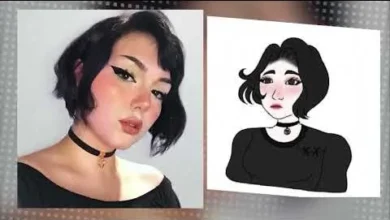
The Digital Watchdog: How Katherine Abughazaleh Became the Unofficial Chronicler of Fox News


The sudden departure of Tucker Carlson from Fox News on April 24, 2023, sent shockwaves through the American media landscape, but for Katherine Abughazaleh, a senior video producer at the non-profit watchdog group Media Matters for America, the announcement marked the culmination of years of meticulous surveillance. Known to her 130,000 TikTok followers as "Kat Abu," Abughazaleh has carved out a unique niche as an internet personality who synthesizes the dense, often inflammatory content of cable news into digestible social media commentary. Her work represents a new frontier in media monitoring, where the traditional, dry practices of watchdog organizations are being supplemented by rapid-response, personality-driven digital advocacy.
A Career Built on Monitoring the Primetime Hours
Abughazaleh’s professional life is defined by the rhythm of the television news cycle. As a senior video producer for Media Matters, her primary responsibility involves the systematic recording, archiving, and analyzing of primetime broadcasts. For two years, this meant a deep immersion into the world of Tucker Carlson Tonight. While her professional output is strictly tethered to the mission of Media Matters—a progressive organization dedicated to correcting conservative misinformation—her personal social media presence has evolved into a viral sensation that functions as a parallel project.
Her approach to the subject matter is intentionally detached yet biting. She does not merely summarize clips; she deconstructs the rhetorical strategies and ideological inconsistencies of right-wing media figures. By utilizing her own editing skills, which she began developing as a youth creating anime music videos, she produces content that appeals to a younger, digital-native demographic that is increasingly disconnected from traditional cable news providers.
Chronology of an Influencer’s Rise
Abughazaleh’s ascent began in earnest in January 2023, when she launched her TikTok account. Her first viral video targeted Carlson’s commentary on Kevin McCarthy’s bid for the Speakership of the House. Since then, her content has covered a wide spectrum of controversial segments, including the host’s reaction to the Dominion Voting Systems lawsuit and his interview with former President Donald Trump.
The timing of her social media growth coincides with a turbulent period for Fox News. The network faced intense scrutiny following the release of internal communications during the Dominion lawsuit, which revealed that high-level figures at the network were privately skeptical of claims regarding the 2020 election while publicly entertaining them on air. Abughazaleh’s ability to highlight these contradictions—often by juxtaposing clips of hosts with their own past statements—has resonated with audiences looking for accountability in a fragmented information ecosystem.
The Dynamics of Online Harassment and Resilience
The visibility afforded by her viral content has made Abughazaleh a frequent target of vitriolic online harassment. The abuse she receives is rarely limited to political disagreement; it is frequently gendered, sexually explicit, and rooted in racialized tropes. She has reported receiving numerous threats, including graphic content and targeted harassment regarding her Palestinian heritage.
From a sociological perspective, the harassment Abughazaleh faces is illustrative of the toxic intersection between digital culture and political polarization. Her experience mirrors that of many women in public-facing roles who challenge the status quo, where the response from adversarial groups is to attempt to silence the individual through intimidation rather than engaging with the substance of their critique. Despite this, Abughazaleh maintains a strategic response: she often amplifies the harassment she receives to serve as a "visual aid," demonstrating the reality of the threats that marginalized groups face online. She also uses her platform to lean into her identity, deliberately maintaining her appearance and tone to provoke further engagement from detractors, viewing their frustration as a metric of her success.
Media Matters and the Mission of Accountability
Media Matters for America, founded in 2004, plays a central role in the modern media ecosystem by acting as a check on corporate-owned news. Critics occasionally argue that such organizations provide "oxygen" to controversial figures by highlighting their rhetoric. However, Abughazaleh and her colleagues argue that ignoring these figures is a disservice to the public, as Fox News remains the most-watched cable news channel in the United States.
The operational strategy at Media Matters is data-heavy. Producers like Abughazaleh work to ensure that when a false narrative is broadcast, the record is corrected immediately. Her role involves distilling hours of footage into seconds of actionable content. By doing so, she ensures that the reach of conservative misinformation is met with an equal or greater volume of factual, critical analysis.
Generational Shifts in Media Consumption
The success of Abughazaleh’s content points to a broader trend: the generational disconnect between traditional cable media and Generation Z. While Fox News continues to command high viewership among older demographics, it has struggled to maintain relevance with younger viewers who primarily consume news via algorithmic feeds on platforms like TikTok and YouTube.
Abughazaleh’s work bridges this gap. By "translating" the happenings of cable news for a younger audience, she is effectively stripping away the authority that traditional news anchors once held. Her long-form deep dives—such as her series on Christian nationalist homeschooling programs—demonstrate an appetite for investigative rigor in an online environment often dominated by superficiality.
Implications of the Post-Carlson Era
The firing of Tucker Carlson, while a significant milestone in media history, does not fundamentally alter the landscape for media watchdogs. As Abughazaleh noted, the power of the 8 p.m. timeslot often resides in the platform itself rather than the individual anchor. History, including the departure of Bill O’Reilly in 2017, suggests that networks often successfully pivot to new talent while maintaining their core audience.
The challenge for the future, according to media analysts, lies in whether Fox News can adapt to a changing demographic that is increasingly skeptical of the "culture war" rhetoric that defined the Carlson era. Abughazaleh’s analysis remains focused on this transition, as she continues to track potential replacements and evaluate the network’s strategy.
Conclusion
Katherine Abughazaleh’s career represents a unique synthesis of traditional investigative media work and modern digital influence. By leveraging social media to hold one of the world’s most powerful media corporations accountable, she has demonstrated that the tools of the digital age—when wielded with precision and persistence—can effectively challenge even the most entrenched media giants. While the harassment she faces is a sobering reminder of the hostility within the current political climate, her ability to mobilize a large, engaged audience suggests that the demand for critical, independent media analysis is higher than ever.
As she moves forward in her career, the core of her mission remains unchanged: to demystify the mechanisms of right-wing propaganda and empower viewers to critically assess the information they consume. Whether or not Fox News changes its editorial direction, the "watchdog of the watchdogs" model that Abughazaleh has helped to pioneer appears to be a permanent and increasingly vital component of the modern news landscape. The work of monitoring and analyzing media is no longer confined to boardrooms or academic journals; it is now an active, real-time conversation happening on the screens of millions, and Abughazaleh is at the forefront of that movement.