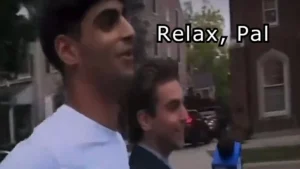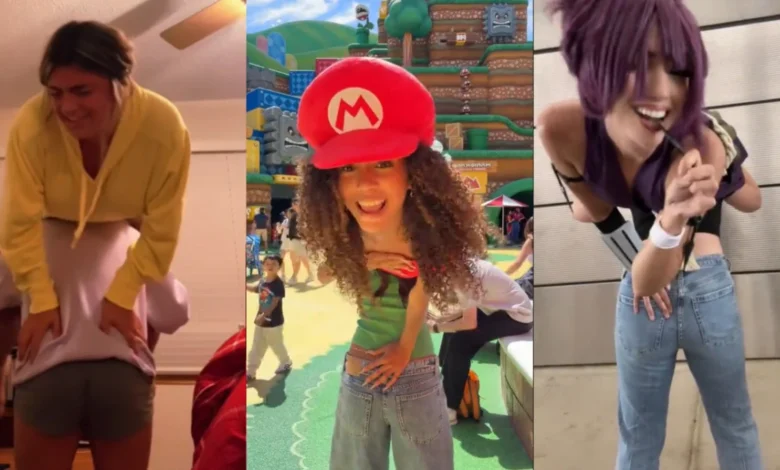
The landscape of social media trends is defined by its volatile nature, where fleeting moments of digital choreography can vanish into obscurity or experience unexpected, multi-year revivals. Among the most enduring physical comedy and lip-dub trends to capture the attention of global audiences is the "No Type" Challenge. Set to Rae Sremmurd’s 2014 hit hip-hop track "No Type," this internet phenomenon requires a unique blend of physical coordination, trust, and comedic timing. Participants execute a distinct physical maneuver: one person lifts another upside down over their back, lip-syncs to the lyrics, and then physically turns around to allow the suspended participant to seamlessly finish the performance.
Originally emerging on the short-form video platform TikTok in the summer of 2021, the challenge has evolved from a localized dance fad into a recurring fixture of internet culture. Following a quiet period, the trend experienced a massive, unanticipated resurgence between May and September 2026. This trajectory highlights the cyclical nature of digital media, demonstrating how nostalgic audio tracks and physical comedy routines can be reinvented by successive waves of content creators across different demographics.
Origins and Early Adoption (July 2021)
The genesis of the "No Type" Challenge dates back to early July 2021, a period characterized by rapid growth in collaborative physical stunts on TikTok. On July 5th, 2021, prominent digital creator @iamkelianne published a video featuring a synchronized lip-dub alongside collaborator Chase Mattson. In the footage, one participant hoists the other upside down over their back. The upright individual begins lip-syncing the lyrics to Rae Sremmurd’s song before executing a rotational pivot, handing off the visual focus to the upside-down participant to complete the verse.
This foundational video resonated immediately with the platform’s algorithm and user base, accumulating over 627,000 likes over the course of five years. The combination of an iconic hip-hop backing track, high-energy physical performance, and the inherent vulnerability of the physical lift provided a blueprint that other creators could easily replicate. Throughout the remainder of 2021, variations of the stunt proliferated across TikTok, adopted by couples, fitness enthusiasts, and collaborative creator houses seeking to showcase their physical balance and comedic timing.

The 2026 Resurgence: Adaptation and Evolution
While many viral dance trends experience a brief surge in popularity before fading permanently, the "No Type" Challenge defied expectations by returning to mainstream prominence in mid-2026. This second wave was marked not merely by literal replications of the original stunt, but by creative variations, surreal adaptations, and cross-media crossovers that reflected the maturation of platform humor.
On May 1st, 2026, TikTok creator @sarkoco introduced a novel spin on the challenge by incorporating pop culture elements, posting a video that humorously simulated the routine alongside an image of the animated character Judy Hopps from Disney’s Zootopia. The creative subversion of the physical requirement—replacing a human partner with a fictional character—struck a chord with internet audiences, generating over 434,000 likes within four months.
By late summer, the trend had regained its traditional group-format roots. On August 30th, 2026, user @tjtdanii shared a compilation video featuring multiple participants attempting the acrobatic lift in rapid succession. The video garnered upwards of 380,000 likes in two weeks, signaling a broad geographic and demographic spread that extended into Eastern Europe and beyond. Concurrently, high-profile creators, athletes, and digital personalities—including previous iterations involving public figures like gymnast Olivia Dunne and influencer Danya Milokhin—contributed to the sustained visibility of the hashtag.
Cultural Mechanics and Appeal
The enduring success of the "No Type" Challenge can be attributed to several core psychological and sociological mechanics inherent to short-form video platforms. First, the physical demands of the stunt introduce an element of genuine risk and playfulness. Unlike static choreography or standard lip-syncs, the challenge requires physical trust between participants, introducing an unscripted, human element that viewers find engaging.
Second, the choice of audio plays a critical role. Rae Sremmurd’s "No Type" possesses a recognized, high-energy tempo that translates well to short-form editing. The track’s familiarity creates an immediate bridge of nostalgia for users who remember its initial release in the mid-2010s, while introducing the song to newer generations of digital natives.

Furthermore, the structural format of the challenge allows for infinite customization. Whether executed as a display of athletic prowess between romantic partners, parodied with inanimate objects, or integrated into comedic sketches, the rigid template of the lift-and-turn maneuver provides a stable canvas for creators to showcase their individuality.
Broader Implications and Digital Media Trends
The trajectory of the "No Type" Challenge offers valuable insight into the broader mechanics of internet culture in the mid-2020s. Media analysts note that digital platforms are increasingly characterized by cyclical revivals rather than linear progression. Trends that originated during the COVID-19 pandemic era are frequently being rediscovered, recontextualized, and modernized by new cohorts of users.
This phenomenon underscores the shift in how internet memes achieve longevity. Rather than relying on a single viral spike, cultural artifacts on platforms like TikTok survive through "mutation"—the organic evolution of a format’s rules to fit contemporary comedic sensibilities. As digital creators continue to mine the platform’s history for nostalgic touchstones, physical challenges that emphasize collaboration, humor, and accessible execution remain uniquely insulated against obsolescence.