The music industry is grappling with a profound technological shift as powerful new generative artificial intelligence tools make it increasingly difficult to discern the authenticity of vocal performances on popular streaming platforms and social media. What was once the exclusive domain of human artists is now being replicated, and in some cases, convincingly mimicked, by algorithms, sparking a wave of both fascination and concern across the creative landscape. From viral sensations to potential existential threats for major labels, AI in music is no longer a distant concept but a present reality.
The Dawn of AI Vocal Mimicry
The phenomenon gained significant public attention in February when superstar DJ David Guetta shared a concert clip featuring a track that utilized AI-generated vocals of Eminem. The performance, clearly conducted without the rapper’s explicit consent, highlighted the growing ease with which AI can replicate distinctive vocal styles. This was not an isolated incident. French hip-hop act AllttA released a track titled "Savages," which incorporated AI-generated vocals of Jay-Z. As New Yorker writer Kyle Chayka noted, Jay-Z’s "familiar voice adds something ineffably compelling to the track," underscoring the uncanny realism these AI models can achieve. More recently, "Heart on My Sleeve," an AI-created collaboration purportedly featuring Drake and The Weeknd, went viral across social media platforms, with some industry observers speculating it could be a sophisticated marketing ploy by an emerging startup.
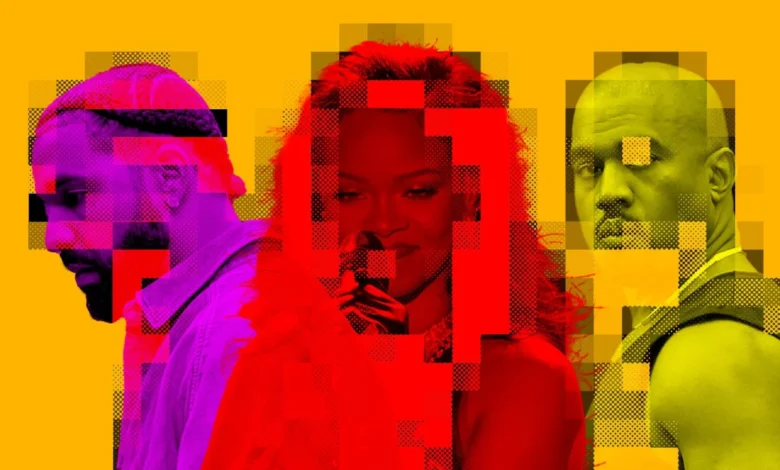
These instances represent the tip of the iceberg, with an ever-increasing volume of AI-generated music appearing daily. Many of these creations are effectively "faux cover songs" produced by individuals with little to no established public profile. The rapid proliferation of such content has not been met with universal acclaim. Drake himself publicly expressed his frustration on Instagram, labeling an AI-generated version of him rapping Ice Spice’s "Munch (Feelin’ U)" as "the final straw." While Rihanna has yet to officially comment on AI-generated renditions of her voice performing songs by artists like Beyoncé, Katy Perry, and Maroon 5, the silence from such prominent figures speaks volumes about the underlying unease.
Industry Giants Take Notice
The implications of this AI-driven musical revolution have not escaped the notice of major record labels. Universal Music Group, representing a roster of artists including Drake and Rihanna, has reportedly contacted major music streaming services such as Spotify and Apple Music. The company is seeking their collaboration to combat the unauthorized scraping of content that fuels the development and operation of music generative AI tools. This proactive measure suggests a growing recognition within the industry that the current legal and ethical frameworks are insufficient to address the challenges posed by AI-generated music.
This industry-wide concern is further amplified by the pronouncements of influential financial analysts. A recent report from an analyst at BNP Paribas Exane described AI-generated music as a "new disruptive threat" to the established music industry model, emphasizing the potential for significant upheaval. The technology has unfurled a complex tapestry of legal questions, many of which remain unanswered, leaving artists, labels, and legal experts in a state of unprecedented uncertainty.
The Hobbyist Creator and the AI Toolkit
Despite the concerns voiced by industry giants, a segment of the online community is actively engaging with and even celebrating the creative possibilities of AI music generation. For many, the ambiguity surrounding AI-generated tracks adds an element of intrigue. Take, for instance, YeezyBeaver, a 22-year-old from Oklahoma whose YouTube channel showcases Kanye West performing a variety of songs. His most popular creation is a surprisingly engaging rendition of Plain White T’s "Hey There Delilah." YeezyBeaver, who requested anonymity, explained that his foray into AI music began after encountering a post on a Kanye West fan server. This post provided access to a voice model of the rapper and instructions on how to integrate it with generative AI tools to produce new music.
A popular tool facilitating these creations is So-Vits-SVC, an open-source software that has garnered substantial traction, evidenced by its dedicated hashtag on TikTok boasting over 2 million views. YeezyBeaver’s initial experiment involved overlaying Kanye West’s voice onto Drake’s track "Jungle," a piece that achieved modest virality on TikTok. "I just started looking for other artists, songs that I think Kanye would sound good on," YeezyBeaver shared, "And then that’s pretty much how we got to here."
Another prominent user, pieawsome, an American college student who also requested anonymity, is actively experimenting with Kanye West’s vocal likeness. As a member of the internet’s "Kanye unreleased community," dedicated to the rapper’s unfinished works, pieawsome recognized the potential to leverage existing Kanye material to complete unfinished songs. By feeding acapella sections from unreleased Kanye audio into So-Vits-SVC, he was able to train a voice model. The results were impressive, leading him to share the model on Discord, where it was widely disseminated. This led to notable engagement, including an Instagram post featuring a Kanye West rendition of Ice Spice’s "Munch" being liked by Travis Scott himself, underscoring the growing influence of these AI creations.
The Creative Canvas and Ethical Crossroads
The creative impulses extend beyond mere vocal replication. Jered Chavez, a 19-year-old student at the University of South Florida, has been producing AI music videos that push the boundaries of imagination. His work includes a captivating video of Drake, Kanye West, and Kendrick Lamar performing "Fukashigi no Karte," the theme song from the popular anime series Rascal Does Not Dream of Bunny Girl Senpai. Chavez views his creations as a "cool concept" and differentiates his content by adding a comedic twist, aiming to stand out in a rapidly expanding field.
Chavez acknowledges the controversial nature of AI-generated art, stating, "With this area of AI, there’s a lot of controversy and ethical concerns." He recognizes that these creators are "taking someone’s likeness and, most of the time without permission, creating something that’s essentially putting words in people’s mouths." This concern is particularly acute when considering the replication of deceased artists’ voices. "They’re not around to give their approval, and we don’t truly know what they would want," Chavez points out. This ethical quandary does not deter platforms like BohemianRhapsod.ai, which allows users to create a virtual choir of 16 AI-generated Freddie Mercury voices performing Queen’s iconic hits.
Legal Ambiguity and the Future of Music Rights
The legal standing of hobbyist AI music creators remains a significant gray area. Pieawsome likens his work to video game modding or fanfiction, arguing, "It’s our version of that. That may be a good thing. It may be a bad thing. I don’t know. But it’s kind of an inevitable thing that was going to happen."
However, others view the practice in a more critical light. Jonathan Bailey, former chief technology officer of music technology company Soundwide, posits that using AI to reanimate an artist’s voice for content they never created could be construed as "a form of identity theft." The legal complexities are so profound that even seasoned legal professionals are hesitant to offer definitive opinions. Donald Passman, a renowned music lawyer who has represented artists like Adele and Taylor Swift, declined to comment on the use of AI to imitate artists for this story, citing the nascent stage of the technology and the potential for his remarks to conflict with future legal positions. "It’s way too new," Passman stated.
Copyright Battles and the Unstoppable Tide of Innovation
Despite the legal ambiguity, some music labels appear to be taking decisive action. Reports from Discord servers dedicated to AI music indicate that numerous YouTube channels featuring AI-generated content have faced copyright takedowns. Chavez views this as "one way of tackling it," but remains skeptical about its long-term effectiveness. "But honestly, now this technology is out there, I don’t think people are ever going to stop using it," he remarked.
Ultimately, the responsibility for navigating this new frontier seems to rest on the shoulders of the creators themselves. "The responsibility lies in the judgment of the people that are making [AI-generated music]," Chavez concluded. "I try to use my best judgment. This is kind of new territory for everyone." As AI technology continues its relentless advance, the music industry faces an unprecedented challenge in balancing innovation with the fundamental rights and legacies of its artists. The dialogue surrounding copyright, consent, and the very definition of authorship in the age of artificial intelligence has only just begun.