US Space Force Escalates National Security Space Launch Contract to $17 Billion Amid Soaring Demand

The United States Space Force announced on Friday a monumental expansion of its National Security Space Launch (NSSL) Phase 3 contract, tripling the maximum value of one of its critical launch procurement agreements from an initial $5.6 billion to an unprecedented $17 billion. This significant increase underscores the Pentagon’s growing demand for military satellite launches and signals a strategic imperative to bolster America’s capabilities in the increasingly contested domain of space. The move reflects a broader re-evaluation of national security needs, recognizing space as a crucial theater for intelligence, communication, navigation, and defense.
The Strategic Imperative: Why the Surge in Demand?
The decision to dramatically escalate the NSSL Phase 3 Lane 1 contract value is rooted in a confluence of geopolitical shifts, technological advancements, and an evolving threat landscape. Military officials and defense strategists have consistently highlighted the accelerating pace of space development by peer competitors, notably China and Russia. Both nations are rapidly advancing their anti-satellite (ASAT) capabilities, developing sophisticated jamming technologies, and deploying new generations of surveillance and communication satellites that challenge the United States’ long-held dominance in orbit.
This competitive environment necessitates a robust and resilient space architecture for the U.S. The "rising demand" for military satellite launches translates into a need for more satellites, faster deployment cycles, and greater diversification of launch options. The Pentagon aims to build out resilient constellations that can withstand potential attacks, provide continuous global coverage, and support a wide array of military operations, from precision navigation and timing (PNT) to global communications and missile warning. The Space Development Agency (SDA), for instance, is rapidly deploying its Proliferated Warfighter Space Architecture (PWSA), a layered network of hundreds of small, interconnected satellites designed for surveillance and data relay, which falls squarely into the missions typically handled by Lane 1. Such constellations require frequent and reliable launch access to maintain and expand their capabilities.
Understanding the National Security Space Launch (NSSL) Program
The National Security Space Launch (NSSL) program is the cornerstone of the U.S. government’s efforts to ensure assured access to space for its most critical payloads. Overseen by Space Systems Command (SSC), the Space Force’s acquisition arm, the NSSL program is designed to procure launch services from a diverse pool of providers, fostering competition while guaranteeing reliability and mission success. The program evolved from earlier initiatives like the Evolved Expendable Launch Vehicle (EELV) program, which primarily relied on a limited number of providers. The NSSL program, particularly in its latest phases, represents a strategic shift towards greater commercial integration and innovation.
The NSSL program is structured into two distinct parts: Lane 1 and Lane 2, each catering to different types of missions based on their criticality, risk tolerance, and payload characteristics. This dual-lane approach allows the Space Force to leverage the agility and cost-effectiveness of the commercial sector for certain missions while maintaining stringent oversight for the most sensitive national security assets.
Lane 1: Fostering Innovation and Commercial Participation
Lane 1 of the NSSL program is specifically designed for what the Space Force terms "risk-tolerant missions." These include a variety of objectives such as medium-lift launches carrying experimental payloads, technology demonstration missions, and rideshare opportunities for deploying elements of rapidly proliferating constellations like those managed by the Space Development Agency (SDA) for surveillance, data relay, and missile tracking. The defining characteristic of Lane 1 is its openness to commercial launch providers without requiring the extensive, multi-year certification and oversight typically demanded for strategic national security missions. This streamlined process allows newer, agile companies to compete for contracts, driving innovation and potentially reducing costs.
The recent tripling of the Lane 1 contract value to $17 billion underscores the increasing importance of these types of missions. It signals a robust commitment to rapidly deploying and replenishing satellite constellations that provide critical, yet often less classified or strategically sensitive, capabilities. The increased funding will enable Space Systems Command to issue a greater number of "task orders" – individual, fixed-price contracts for specific launch missions – thereby accelerating the deployment of next-generation space assets. This expansion is not merely about increasing the number of launches; it’s about building a more resilient and distributed space architecture, where the loss of any single satellite or constellation does not cripple national security capabilities.
The Competitive Landscape of Lane 1 Providers
The competitive environment within NSSL Lane 1 is robust and growing, a direct result of the Space Force’s strategy to diversify its launch options and foster a healthy commercial space industry. In the Phase 3 round of the NSSL program, initiated in 2024, Space Systems Command initially selected a formidable trio for Lane 1: SpaceX, United Launch Alliance (ULA), and Blue Origin. These companies represent a mix of established and emerging powerhouses in the launch sector, each bringing unique capabilities and rocket architectures.
Since then, the roster of qualified providers has expanded, reflecting the dynamic nature of the commercial space market and the Space Force’s ongoing evaluation of new capabilities. Rocket Lab, known for its Electron small-lift launch vehicle and developing the larger Neutron rocket, joined the competition. Stoke Space, an innovative startup focusing on fully reusable launch systems, and more recently, Relativity Space (with its 3D-printed Terran 1 and upcoming Terran R) and Impulse Space (a company specializing in orbital transfer vehicles that can also offer launch services through partnerships) have also been added to the pool. This growing list of contenders ensures a vibrant marketplace where the Space Force can select the most suitable and cost-effective provider for each specific mission.
The mechanism for awarding Lane 1 missions involves the Space Force issuing a request for bids on a number of missions each year. Qualified companies then submit their proposals, and individual task orders are awarded to the winners. This competitive process aims to drive down costs while maintaining high reliability standards. To date, SpaceX has secured the lion’s share of Lane 1 task orders, leveraging its Falcon 9’s proven reliability, high flight rate, and cost-effectiveness, particularly its reusable booster technology. However, Blue Origin marked a significant milestone earlier this year by winning its first Lane 1 task order, signaling increased competition and the potential for other providers to gain market share as their launch systems mature and prove their capabilities.
Lane 2: The Backbone of Strategic Space Capabilities
In stark contrast to Lane 1, Lane 2 of the NSSL program is reserved for the most critical and strategically vital national security missions. These include the deployment of the government’s largest and most expensive spy satellites, advanced early warning systems, and radiation-hardened communications satellites designed to maintain functionality even in extreme environments, such as those resulting from a nuclear conflict. The payloads in Lane 2 are often multi-billion-dollar assets, irreplaceable in their strategic value, and their successful deployment is paramount to national security.
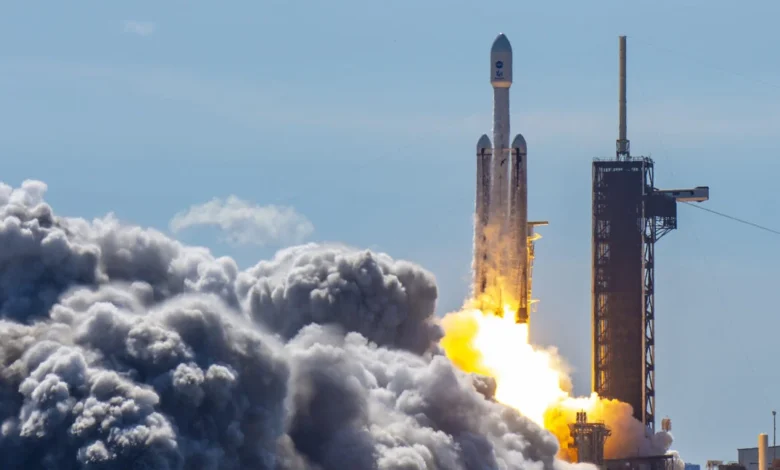
Due to the extreme criticality of these missions, rockets selected for Lane 2 must undergo an exceptionally lengthy and rigorous certification process by the military. This process involves extensive design reviews, testing, flight performance analysis, and detailed evaluations of manufacturing processes and quality control. The goal is to mitigate every conceivable risk to ensure an almost perfect probability of mission success. Currently, only two families of launch vehicles have achieved this stringent certification: SpaceX’s Falcon 9 and Falcon Heavy, and United Launch Alliance’s Vulcan Centaur rocket. The Falcon Heavy, with its immense payload capacity, is particularly crucial for launching the heaviest government satellites to high-energy orbits. ULA’s Vulcan Centaur, having recently completed its certification flights, now offers a crucial alternative, ensuring redundancy and competition for these vital launches, a principle known as "assured access to space."
Historical Context and Evolution of Space Launch Procurement
The U.S. military’s approach to space launch procurement has undergone a significant evolution over decades. From the early days of the Cold War, when military rockets like Atlas and Titan were repurposed for satellite launches, to the establishment of the Evolved Expendable Launch Vehicle (EELV) program in the 1990s, the focus has consistently been on ensuring reliable access to space. The EELV program, which initially aimed to introduce competition, eventually consolidated largely under United Launch Alliance (ULA), a joint venture between Boeing and Lockheed Martin, becoming the sole provider for many years.
However, the emergence of new commercial space companies, particularly SpaceX with its reusable Falcon 9, dramatically altered the landscape. SpaceX challenged the traditional cost structures and operational paradigms of the launch industry. This new competitive environment, coupled with the increasing demand for space-based capabilities and concerns about reliance on a single foreign-made engine (the Russian RD-180 used on ULA’s Atlas V), prompted the Pentagon to rethink its procurement strategy.
The NSSL program, particularly Phase 3, represents the culmination of this strategic shift. It aims to diversify providers, foster domestic competition, and leverage commercial innovation while maintaining stringent national security requirements. The initial $5.6 billion for Lane 1 reflected an ambitious plan to integrate more commercial players. The recent increase to $17 billion signifies an even greater commitment, acknowledging the rapid growth in mission requirements and the capacity of the commercial sector to meet them. This expansion not only provides more funding but also offers a longer planning horizon for companies, allowing them to invest further in infrastructure and R&D.
Official Commentary and Strategic Rationale
While specific direct quotes were not provided in the source material, the decision to dramatically increase the NSSL contract value aligns with consistent statements from senior Space Force and Pentagon officials. The overarching strategic rationale centers on "assured access to space," "space resiliency," and maintaining the U.S. military’s technological edge.
Space Force leaders have frequently emphasized the need for a "proliferated" and "disaggregated" space architecture. This means moving away from a few large, expensive satellites to many smaller, interconnected ones, making the overall system more resilient to attack and easier to replenish. The surge in Lane 1 funding directly supports this vision, as these missions are ideal for deploying such distributed constellations.
Furthermore, officials have often articulated the importance of fostering a robust domestic launch industrial base. By providing substantial, long-term contracts, the Space Force not only secures its own launch needs but also provides critical revenue and stability to American launch companies, enabling them to innovate, expand, and compete globally. This strategy helps ensure that the U.S. remains at the forefront of space technology and manufacturing. The increased competition for task orders is also intended to drive down per-launch costs over time, maximizing taxpayer value while maintaining high reliability standards.
Economic and Industrial Implications
The $17 billion NSSL Lane 1 contract expansion carries profound economic and industrial implications for the U.S. space sector. For the selected launch providers, it represents a substantial influx of potential revenue, offering long-term stability that can be reinvested into research and development, manufacturing capabilities, and job creation. Companies like Blue Origin, Rocket Lab, Stoke Space, Relativity Space, and Impulse Space, while varying in their maturity, stand to gain significantly from this increased opportunity, potentially accelerating their growth and technological advancements.
SpaceX, already a dominant player, is likely to continue securing a significant portion of these task orders, further solidifying its market leadership. For ULA, while traditionally focused on Lane 2, participation in Lane 1 offers additional revenue streams and diversification. The competitive environment spurred by this funding ensures that companies are continuously striving to improve efficiency, reduce costs, and enhance their launch capabilities, benefiting both government and commercial customers.
Beyond the prime contractors, the expansion will have a ripple effect across the entire space supply chain. Companies involved in satellite manufacturing, propulsion systems, avionics, ground support equipment, and launch infrastructure will see increased demand for their products and services. This stimulates job growth in high-tech sectors, supports a skilled workforce, and reinforces the U.S. as a leader in the global space economy. Analysts project that such government contracts play a crucial role in de-risking new space technologies, enabling companies to mature their systems and eventually offer them to the broader commercial market.
Geopolitical Ramifications
The tripling of the NSSL Lane 1 contract is not merely an internal procurement decision; it carries significant geopolitical ramifications. It sends a clear signal to both allies and adversaries about the United States’ unwavering commitment to maintaining its leadership in space. For allies, it reinforces confidence in America’s ability to protect shared interests in orbit and provide critical space-based support for joint operations. For adversaries, it demonstrates the U.S.’s determination to counter threats in space through a strategy of rapid deployment, redundancy, and technological superiority.
The increasing militarization of space is an undeniable reality, with nations investing heavily in capabilities that can disrupt, degrade, or destroy satellites. By accelerating the deployment of resilient and proliferated constellations, the U.S. aims to deter potential aggression by making it exponentially harder for an adversary to achieve a decisive advantage through an attack on space assets. This investment in launch capabilities is a direct component of a broader national security strategy to ensure space remains a domain where the U.S. can operate freely and effectively. It reinforces the concept of "space as a warfighting domain," requiring strategic investment in both offensive and defensive capabilities.
Looking Ahead: The Future of National Security Space Launches
The expansion of the NSSL Lane 1 contract marks a pivotal moment in the evolution of U.S. national security space strategy. Looking ahead, several trends are likely to shape the future of military space launches. The emphasis on reusability, pioneered by SpaceX, is expected to become an increasingly important factor, driving down per-launch costs and enabling faster turnaround times. Companies like Blue Origin and Stoke Space are heavily investing in reusable systems, and their success will further intensify competition.
Furthermore, the continuous advancement of satellite technology, with smaller, more capable satellites becoming the norm, will likely lead to even greater demand for responsive and flexible launch services. The NSSL program will need to remain adaptable, incorporating new launch vehicles, novel orbital insertion capabilities (e.g., in-space tugs), and evolving operational concepts to meet future threats and opportunities. The Space Force’s strategy is not static; it is a dynamic response to a rapidly changing global landscape, ensuring that the U.S. maintains its critical advantage in the ultimate high ground. This long-term vision for US space dominance and security relies heavily on continued investment in innovative launch solutions and a robust, competitive industrial base.
In conclusion, the U.S. Space Force’s decision to nearly quadruple the value of its NSSL Phase 3 Lane 1 contract to $17 billion is a strategic move of immense significance. It reflects the urgent and growing demand for military satellite launches, driven by an increasingly contested space environment. This investment not only ensures assured access to space for critical national security missions but also galvanizes the burgeoning commercial space industry, fostering innovation, competition, and economic growth, all while solidifying America’s leadership in the crucial domain of space.