Tesla’s Massive Semi Truck Order Signals a Shift Toward Electrified Logistics Despite Regulatory Headwinds

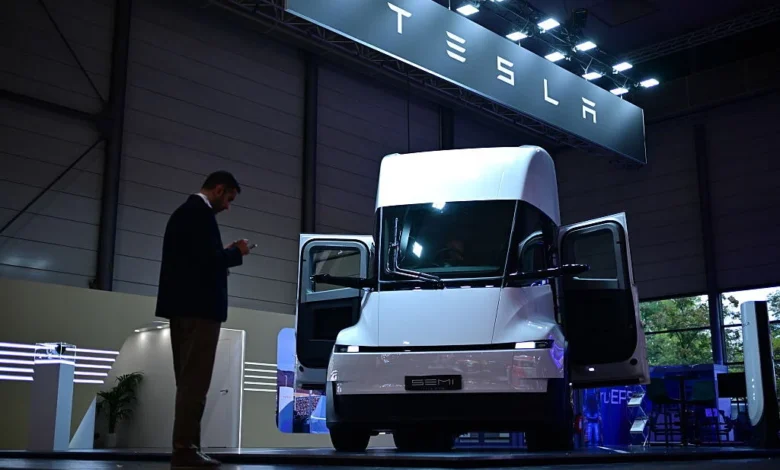
The transportation sector is currently undergoing a structural transformation as the freight industry faces a volatile convergence of record-high fuel costs, shifting federal regulatory priorities, and a newfound appetite for large-scale electrification. This week, a powerful consortium of corporate shippers—led by industry giants including Microsoft and PepsiCo—announced a landmark agreement to procure 2,500 Tesla Semi trucks. This order, scheduled for delivery over the next 18 months, represents one of the most significant commitments to heavy-duty battery-electric vehicles (BEVs) in history, effectively doubling the current population of such vehicles operating on American roads.
The deal arrives at a paradoxical moment for Tesla CEO Elon Musk. While Musk was a primary financial benefactor of the current Trump administration, the White House has moved aggressively to dismantle federal support for the electric vehicle industry. Last year, the administration oversaw the revocation of billions of dollars in federal subsidies previously earmarked for EV infrastructure and consumer incentives. Simultaneously, the administration has signaled a pivot toward rolling back fuel economy standards for heavy-duty truck engines, a move climate advocates argue undermines the nation’s stated goal of reducing the 7 percent of U.S. greenhouse gas emissions currently generated by the long-haul trucking sector.
The Economic Imperative Amidst Energy Volatility
Despite the cooling of federal enthusiasm for decarbonization, the fundamental economics of the trucking industry are being dictated by global energy instability rather than policy shifts in Washington. The ongoing conflict in the Middle East, specifically the war involving Iran, has significantly disrupted global oil production and maritime shipping lanes. As a result, domestic U.S. diesel prices have soared to record highs, with costs nearly doubling compared to the same period last year.
In a pre-taped address delivered during the announcement of the 2,500-truck deal, Musk highlighted this disparity, noting that the economic viability of the Tesla Semi has been bolstered by the sheer cost-efficiency of electricity compared to the volatile pricing of diesel. For logistics companies operating thin-margin supply chains, the ability to insulate operations from the fluctuating prices of fossil fuels is no longer merely an environmental aspiration; it is a vital strategy for long-term fiscal solvency.
Chronology of the Tesla Semi Program
The journey of the Tesla Semi has been marked by long delays and high anticipation, dating back to its initial unveiling.
- November 2017: Tesla officially debuts the Semi prototype, promising 500 miles of range and an acceleration of 0 to 60 mph in five seconds when empty. At this event, Musk promises the integration of "Enhanced Autopilot."
- 2018–2021: The program experiences significant production delays as Tesla prioritizes the ramp-up of the Model 3 and Model Y, alongside the development of the Cybertruck.
- December 2022: Tesla delivers the first production units to PepsiCo, initiating real-world testing of the platform.
- 2023: The Trump administration moves to cut federal EV incentives, creating uncertainty in the market for heavy-duty electrification.
- Early 2025: A consortium of shippers, including Microsoft and PepsiCo, finalizes the order for 2,500 units, marking the transition from experimental pilot programs to mass-market commercial adoption.
Industry Collaboration and Competitive Landscape
The procurement strategy utilized by the coalition of shippers offers a blueprint for how heavy-duty electrification may scale in the future. By pooling demand, the alliance was able to achieve favorable pricing and production priority, a tactic that Meena Bibra, a spokesperson for the nonprofit Smart Freight Centre, noted was crucial to the deal’s success. "The group selected Tesla trucks after rigorously assessing price, performance, production capability, and service support," Bibra stated.
However, Tesla does not operate in a vacuum. The logistics sector is increasingly exploring a diverse ecosystem of manufacturers to meet their varied operational needs. While Tesla’s Semi currently commands significant attention due to its range and vertical integration, carriers are also actively evaluating alternatives from established industrial titans. Kenworth, Volvo, and startup manufacturer Ride are all positioning their own electric heavy-duty offerings to cater to carriers who may have legacy service agreements or specific operational requirements that the Tesla ecosystem does not yet address. This competitive environment is forcing automakers to optimize their charging infrastructure and maintenance support, which are often the primary bottlenecks for fleet operators transitioning away from diesel.
The Missing Link: Full Self-Driving and Automation
One of the most debated aspects of Tesla’s long-term strategy for the Semi is the integration of its proprietary "Full Self-Driving" (FSD) software. While FSD has been a core component of Tesla’s passenger vehicle marketing, its application in the heavy-duty sector remains nascent. During the recent announcement, Musk clarified that the current iteration of the Semi will not feature FSD, though he suggested its introduction is planned for the "very near future."
Industry analysts remain cautious regarding this timeline. The technical challenges of applying autonomous driving software to a Class 8 vehicle weighing up to 80,000 pounds are exponentially higher than those encountered in passenger cars. Liability concerns, the need for specialized sensors capable of navigating inclement weather at high speeds, and the regulatory scrutiny surrounding Tesla’s current driver-assistance technology suggest that widespread adoption of autonomous trucking remains several years away.
Broader Implications for the Logistics Sector
The decision by companies like Microsoft and PepsiCo to invest heavily in the Tesla Semi serves as a bellwether for the wider freight industry. It suggests that even in a political climate where federal support is being withdrawn, the private sector is increasingly finding that electric trucks are the more rational choice for long-term fleet management.
The implications for the U.S. power grid and infrastructure are substantial. To support a fleet of 2,500 Semis—and the thousands more that would be required to meaningfully decarbonize the sector—utility providers will need to significantly accelerate the deployment of high-capacity charging infrastructure along major logistics corridors. The Smart Freight Centre and other industry observers have pointed out that the lack of public charging stations remains the largest single impediment to rapid adoption.
Furthermore, the reduction of reliance on heavy-duty diesel engines would have immediate public health benefits, particularly in high-traffic urban corridors where particulate matter and nitrogen oxide emissions have historically been highest.
Conclusion: A Market-Driven Transition
The Tesla Semi’s recent commercial milestone underscores a significant shift in how the logistics industry views the future of transportation. While the political landscape has turned toward deregulation and reduced subsidies for electric mobility, the market reality of extreme fuel volatility and the demonstrated performance of electric powertrains are proving to be powerful motivators.
As this consortium of shippers begins to integrate these 2,500 vehicles into their fleets over the next 18 months, the data gathered regarding performance, maintenance costs, and total cost of ownership will likely dictate the pace of electrification for the rest of the industry. If Tesla and its competitors can prove that these trucks can reliably handle the rigorous demands of long-haul logistics without significant downtime, the move toward an electrified freight future may become irreversible, regardless of the policies emanating from the White House. The era of the electric long-haul truck has arrived, driven not by government mandates, but by the cold, hard math of the modern global energy economy.