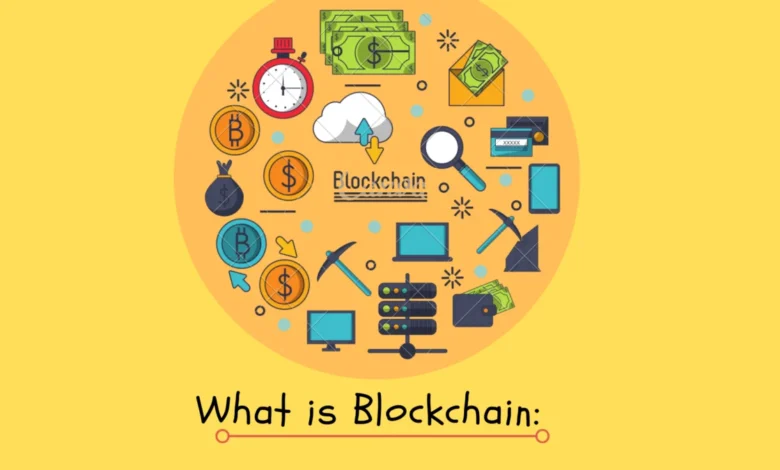
What is Blockchain: A Comprehensive Analysis of the Distributed Ledger Revolution

Modern digital commerce currently relies on a centralized trust model. Whether executing an online retail purchase, transferring funds between banking institutions, or verifying professional credentials, users are typically required to provide sensitive personal information to a central intermediary—a bank, a credit card processor, or a government agency. These entities act as the gatekeepers of truth, maintaining the ledgers that dictate who owns what. However, the emergence of blockchain technology represents a fundamental shift in this paradigm, proposing a decentralized architecture that allows for secure, immutable, and transparent data exchange without the necessity of a trusted third party.
At its core, blockchain is a distributed ledger technology (DLT) that records digital information across a network of computers, or "nodes." Rather than storing data in a single, vulnerable central repository, blockchain fragments and replicates the record across all participants in the network. Each "block" contains a cryptographic hash of the previous block, a timestamp, and transaction data, creating a sequential, unbreakable chain. Because every node holds a copy of the entire ledger, altering any single entry would require the unauthorized modification of a majority of the network simultaneously—a feat that is computationally and economically prohibitive.
The Historical Evolution of Distributed Ledger Technology
The conceptual origins of blockchain predate the popularization of cryptocurrency by nearly two decades. In 1991, researchers Stuart Haber and W. Scot Stornetta published a paper titled "How to Time-Stamp a Digital Document," which proposed a method for securing digital documents so they could not be backdated or tampered with. Their work introduced the concept of cryptographically linked blocks, providing the mathematical foundation for what would eventually become blockchain.
In 1998, computer scientist Nick Szabo advanced these concepts by proposing "Bit Gold," a decentralized digital currency protocol that required participants to solve complex cryptographic puzzles to validate transactions. While Bit Gold was never fully implemented, it established the theoretical framework for "proof-of-work," the consensus mechanism later utilized by Bitcoin. The technology remained largely academic until 2008, when an individual or group operating under the pseudonym Satoshi Nakamoto published the whitepaper "Bitcoin: A Peer-to-Peer Electronic Cash System." By successfully integrating these cryptographic primitives into a functional, incentivized network, Nakamoto launched the first operational blockchain, effectively solving the "double-spending" problem without a central clearinghouse.
Operational Mechanics and Consensus Models
To understand the functional utility of blockchain, one must differentiate between the data and the validation process. When a transaction occurs, it is broadcast to a network of peer-to-peer nodes. These nodes use specific algorithms—such as Proof-of-Work (PoW) or Proof-of-Stake (PoS)—to validate the transaction’s legitimacy. Once verified, the transaction is bundled with others into a block.
The "decentralization" aspect is critical to security. In a traditional database system, if the central server is compromised, the integrity of all stored data is at risk. In a blockchain, the ledger is distributed. If a single node is compromised or provides erroneous information, the other nodes in the network automatically cross-reference their own copies of the ledger to reject the fraudulent data. This creates a system of "trustless" verification; the security is derived from the protocol itself rather than the reputation of the participants.
Enterprise Adoption and Real-World Applications
While public discourse frequently conflates blockchain with volatile digital assets like Bitcoin or Ethereum, the technology is increasingly finding utility in corporate and industrial settings. Large-scale enterprises are currently leveraging DLT to improve transparency and operational efficiency.
Supply Chain Transparency: Companies such as Walmart, Pfizer, and Unilever have integrated blockchain solutions to enhance traceability. IBM’s Food Trust, for instance, allows retailers to trace the journey of a food product from the farm to the store shelf in seconds. In the event of a foodborne illness outbreak—such as those involving E. coli or Salmonella—this granularity allows for precision recalls, limiting public health risks and reducing the massive financial losses associated with broad, indiscriminate product withdrawals.
Healthcare and Data Integrity: The healthcare sector is exploring blockchain to manage patient records. By creating a unified, immutable record of medical history, hospitals can ensure that data remains accurate and accessible to authorized providers while maintaining patient privacy through cryptographic keys.
Legal and Administrative Applications: Beyond finance and supply chain, blockchain is being applied to "smart contracts." These are self-executing contracts where the terms of the agreement are directly written into code. Once the predefined conditions are met, the contract executes automatically. This has significant implications for real estate transactions, intellectual property licensing, and automated insurance claims, potentially eliminating the need for expensive legal intermediaries.
The Decentralization Advantage: Security and Resilience
The primary argument for blockchain adoption is the mitigation of "single-point-of-failure" risks. Centralized databases, regardless of how robust their firewalls may be, represent a singular target for cyberattacks. The distributed nature of blockchain ensures that even if portions of the network are disrupted, the system remains operational. Furthermore, because records are immutable—meaning they cannot be erased or modified once appended—blockchain provides a permanent audit trail, which is particularly valuable for regulatory compliance and financial reporting.
Challenges and Limitations
Despite the transformative potential, the technology faces significant hurdles. Scalability remains a primary concern; as the number of transactions increases, the energy requirements for some consensus mechanisms, particularly Proof-of-Work, can be substantial. Additionally, there is a lack of global regulatory standardization. Governments are currently navigating the complexities of how to tax, regulate, and integrate decentralized systems into existing legal frameworks without stifling innovation.
Furthermore, while the blockchain itself is highly secure, the "on-ramps"—the interfaces through which users interact with the blockchain—are susceptible to human error and cyberattacks. Cryptocurrency exchanges, for example, have historically been targets for hackers, even though the underlying blockchain protocols remain largely impenetrable.
Frequently Asked Questions
Is Blockchain synonymous with Cryptocurrency?
No. Blockchain is the underlying technology, or the "infrastructure," while cryptocurrency is a specific application built upon that infrastructure. One can compare blockchain to the internet, and cryptocurrency to email; one is the network, the other is a service provided by that network.
Can a blockchain be hacked?
Theoretically, yes, but practically, no. A "51% attack," where a malicious actor gains control of the majority of the network’s computing power, is the primary threat. However, as networks grow in size and complexity, the cost to mount such an attack becomes astronomical, rendering it economically irrational for most established blockchains.
Who governs or owns the blockchain?
Public blockchains are decentralized by design. They are governed by the consensus of the network participants and the underlying software code. There is no central authority, CEO, or board of directors. Ownership is distributed among all nodes that maintain the ledger.
What distinguishes a blockchain from a traditional database?
The core difference lies in control and mutability. A traditional database is centrally controlled by an administrator who can edit, delete, or hide data. A blockchain is a distributed list of records where the design explicitly prohibits the modification or deletion of data, ensuring a transparent, permanent history.
Future Outlook (2025–2030)
The next decade will likely be defined by the transition from experimental pilot programs to full-scale enterprise integration. As the technology matures, the friction surrounding user interfaces will decrease, and the energy efficiency of consensus mechanisms will improve. Industry analysts anticipate that blockchain will become a foundational layer of the digital economy, silently operating in the background of global finance, logistics, and governance.
For businesses, the choice will eventually become binary: adapt to the efficiency and transparency of distributed ledger systems or risk obsolescence. As society continues to demand higher levels of data privacy and security, the decentralized model of blockchain offers a viable path forward, moving away from the precarious reliance on centralized authorities toward a system of mathematical, verifiable truth. The shift is not merely technological but structural, promising a future where information is not owned by the few, but validated by the many.