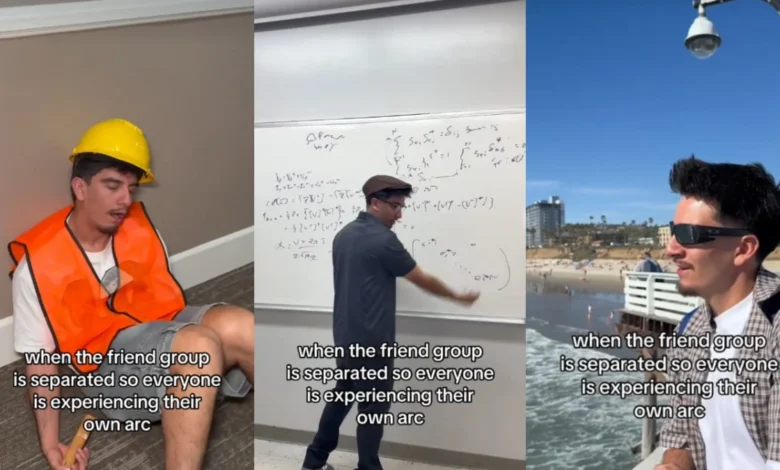
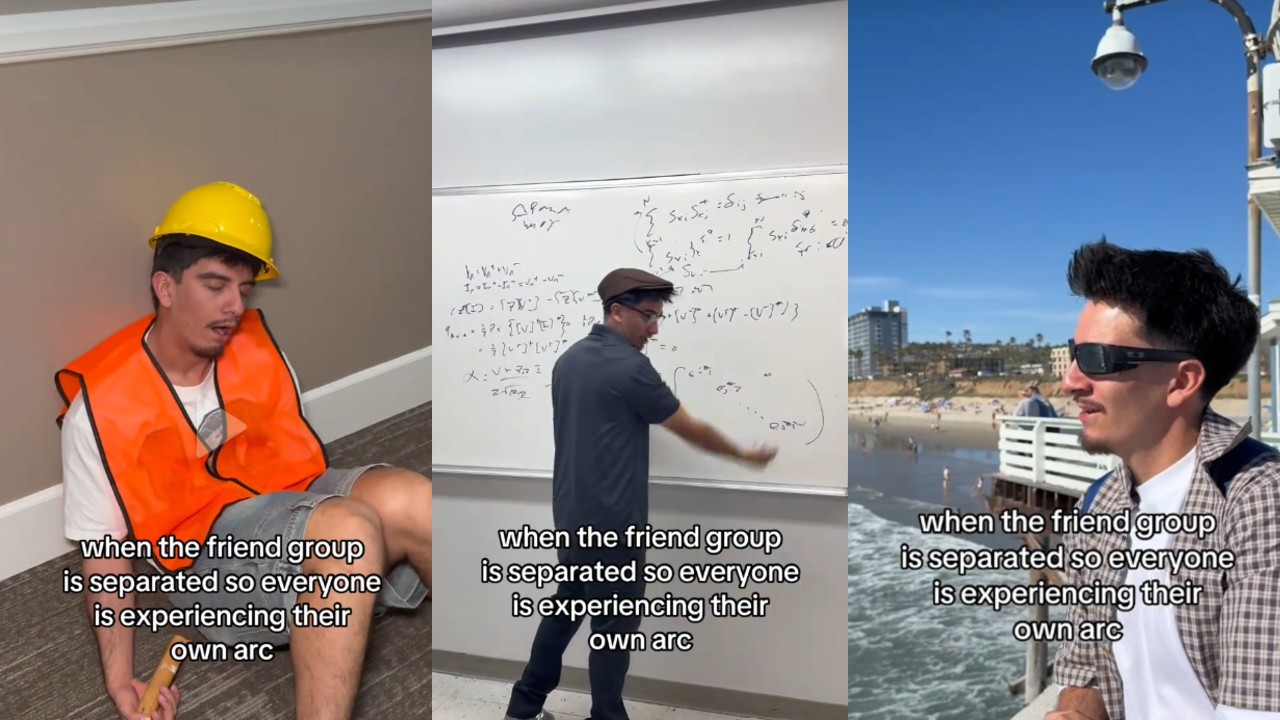
The format relies heavily on a recognizable caption template, usually variations of the phrase, "When the friend group is separated so everyone is experiencing their own arc." Creators and everyday users alike pair this text with video clips, original comedy skits, or curated montages showing people pursuing wildly different paths, dramatic lifestyle changes, specialized training regimens, or eccentric new hobbies. As digital culture continues to embrace cinematic self-awareness, this particular trend captures the humorous reality of growing up, drifting apart, and watching friends undergo radical personal transformations in real-time.
The Anatomy of the Trend: Parodying Cinematic Tropes
To fully understand the appeal of the "separate friend group arc" meme, one must examine the cinematic and literary roots it seeks to satirize. In traditional media—ranging from young adult fantasy epics to teen dramas—the fracturing of a central group is a classic catalyst for character development. When the core team splits up, the narrative must pivot to showcase how each member handles isolation, adversity, or specialized training on their own. One character might venture into the wilderness to master a skill, another might fall into a dark corporate or academic rabbit hole, and a third might undergo a drastic physical transformation at the gym.
In the context of the real-world internet, users have mapped this dramatic storytelling device onto the mundane or surreal realities of post-adolescent life. As high school friend groups transition into college, enter the workforce, or move to different cities, their trajectories naturally diverge. The meme exaggerates this phenomenon to comedic effect, framing everyday life choices—such as picking up engineering, getting deeply into physical fitness, or adopting eccentric new aesthetics—as "canon events" in an ongoing narrative arc.
The format functions not only as a joke about the unpredictable nature of personal growth but also as an affectionate nod to the shared history of close-knit peers who suddenly find themselves living entirely separate lives. By applying dramatic, cinematic musical scores and moody visual filters to ordinary footage, creators heighten the comedic contrast between high-stakes fictional tropes and the often mundane reality of modern youth culture.
Chronology and Evolution of the Viral Phenomenon
The trajectory of the meme spans a multi-year evolution, cementing its staying power across the digital ecosystem. While early iterations began bubbling up in late 2024, the trend gained sustained momentum and achieved widespread cultural saturation by 2026.
Late 2024: The Genesis on TikTok
The foundational blueprint for the trend emerged on December 18, 2024, when TikTok creator @solosin published a multi-character comedy sketch. The video was explicitly captioned, "POV: everyone in the friend group is now doing their own thing (timeskip arc)." In this pioneering clip, the creator physically portrayed several different archetypes within a fictional friend group that had drifted apart, highlighting their contrasting new lifestyles and mental states.
The video struck an immediate chord with audiences, rapidly accumulating millions of views. Within two years of its initial posting, the video surpassed 12 million views, demonstrating the universal relatability of friendship transitions. This early sketch established the core parameters of the format: multiple distinct paths, a humorous framing of real-world separation, and the application of narrative terminology like "timeskip" or "arc."
2025 to Early 2026: Expansion and Format Diversification
Throughout 2025, the concept matured from isolated comedy sketches into a versatile content template. Users across TikTok and Instagram Reels began applying the concept to real-life friend groups rather than purely fictional or multi-character skits. Friend groups would compile footage of their various members—one studying grueling engineering coursework, another posting gym progression videos, a third traveling abroad, and another seemingly vanishing from social media entirely—to illustrate the divergent paths everyone had taken.
During this period, the audio choices accompanying the videos evolved significantly. Creators began utilizing atmospheric, suspenseful, or overtly dramatic soundtracks, such as theme songs from prestige crime dramas or sweeping orchestral movements, to heighten the ironic gravity of ordinary life updates.
The 2026 Resurgence and Peak Cultural Saturation
By the spring and summer of 2026, the meme experienced a major resurgence, marked by high-profile contributions from prominent content creators and internet personalities.
- April 10, 2026: TikToker @juiceditup published a heavily engaged variation of the meme focusing on contrasting academic and professional trajectories, particularly highlighting the demanding nature of specialized degrees like engineering. The video gained over 2 million views within five months, sparking discussions in the comments section about the inevitable divergence of college friend groups.
- June 5, 2026: YouTuber Linquito released a dedicated video exploring the meme format, pulling in over 1.1 million views in three months and introducing the trend to broader, long-form video consumers outside of short-form vertical feeds.
- September 19, 2026: In a notable pivot toward absurdist humor, TikToker @lazycps uploaded a viral video applying the caption to clips from the Minions franchise, imagining the chaotic animated characters as members of a friend group undergoing absurd, independent storylines. The post amassed over 4.5 million views in a single week, proving the format’s adaptability across different genres of internet humor.
Cultural Impact and Psychological Resonance
The widespread adoption of the "separate friend group arc" trend points to a deeper psychological and sociological phenomenon among digital natives. As younger generations navigate the economic, educational, and geographical disruptions of early adulthood, maintaining cohesive peer networks has become increasingly difficult. Friendships that were once sustained by daily, in-school interactions are abruptly tested by university relocation, career demands, and shifting personal priorities.
Rather than treating this natural drifting apart as purely melancholic or tragic, the meme reframes it through a lens of collective narrative agency. By viewing personal separation as an "arc," individuals are encouraged to embrace their unique paths, no matter how unconventional or isolated they might feel. The humor acts as a coping mechanism for the bittersweet nature of growing up, allowing peers to joke about their separation while maintaining a digital bond through shared acknowledgment of the trend.
Furthermore, the phenomenon reflects the broader gamification and narrativization of daily life on social media. In an era where individuals are encouraged to curate their personal brands and view their lives through the lens of continuous self-improvement—whether through fitness, career milestones, or creative output—the concept of the "character arc" provides a comforting framework for personal evolution. It suggests that even when a group is fractured, every individual is working toward their own form of self-actualization, preparing for an eventual, highly anticipated "crossover" reunion in the future.
Broader Implications for Digital Media and Content Creation
From an industry perspective, the longevity of the "friend group arc" meme highlights several key shifts in how internet culture consumes and repurposes narrative structures. Traditional media companies and television networks have long understood the commercial value of ensemble casts and character separation—commonly utilized in season finales or mid-series time skips to generate narrative tension.
However, the organic translation of these tropes into user-generated short-form video demonstrates how adept modern audiences are at deconstructing and reassembling professional storytelling techniques for comedic and social purposes. Creators who master the art of visual pacing, ironic musical scoring, and relatable character archetypes can leverage these shared cultural touchstones to drive high engagement without the need for high-budget production infrastructure.
As digital platforms continue to evolve, memes like this serve as vital social glue for decentralized communities. They provide a standardized linguistic and visual shorthand through which millions of users can express complex, universal emotions regarding change, growth, and the passage of time. Whether the trend will continue to mutate into new subgenres or eventually fade as a distinct linguistic marker remains to be seen, but its imprint on the mid-2020s digital landscape is firmly secured by millions of views, parodies, and shared cultural moments.