Is Apple Vision Pro Going Mainstream Two Key Camera Makers Unveil Spatial Content Hardware
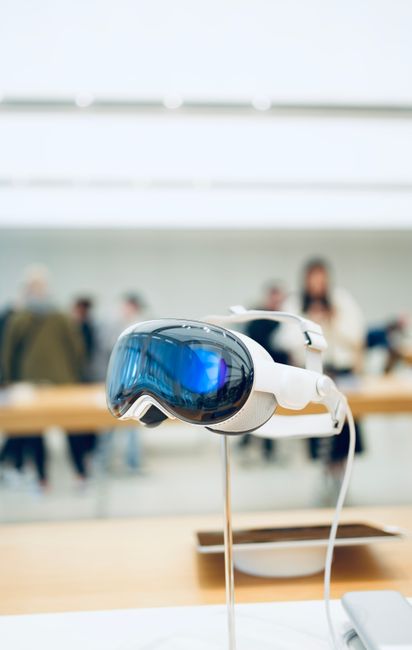
Apple Vision Pro: Is It Going Mainstream as Two Key Camera Makers Unveil Spatial Content Hardware?
The question of whether Apple’s Vision Pro is poised for mainstream adoption is intrinsically linked to the broader ecosystem of spatial computing hardware, particularly as major camera manufacturers begin to enter the field. The Vision Pro, launched with significant fanfare and a hefty price tag, represents Apple’s ambitious foray into a new computing paradigm. Its success, and by extension, its potential to become a mainstream device, hinges on several factors: user experience, application development, content availability, and crucially, the emergence of complementary hardware that solidifies the spatial computing landscape. The recent unveiling of spatial content hardware by two key camera makers – Sony and Fujifilm – signals a growing industry commitment to this nascent technology, potentially accelerating the very adoption Apple is striving for. These announcements, while not direct competitors to the Vision Pro’s integrated display and processing capabilities, provide crucial pieces of the puzzle: high-quality input for creating spatial experiences.
Sony, a long-standing innovator in camera technology, has introduced new professional-grade camera systems designed to capture 3D video and images with unprecedented fidelity. These advancements are critical for the creation of immersive content that can be experienced on devices like the Vision Pro. The ability to capture realistic depth, texture, and motion is paramount for making spatial content compelling and indistinguishable from reality. Sony’s focus on high-resolution sensors, advanced image processing, and robust lens options directly addresses the content creation bottleneck that has historically hampered the widespread adoption of immersive technologies. For spatial computing to move beyond niche applications, the tools for creating its foundational content must be accessible, powerful, and capable of producing results that justify the viewing experience.
Similarly, Fujifilm has also revealed its intentions and early-stage developments in the realm of spatial imaging. While details may still be emerging, their involvement indicates a strategic understanding of the market’s direction. Fujifilm’s heritage in optical technology and imaging innovation positions them to contribute significantly to the development of hardware that can capture the nuances of the real world in a way that translates effectively into virtual or augmented environments. The convergence of traditional photography and videography expertise with the demands of spatial computing is a powerful trend. It suggests that the creation of 3D content will become increasingly integrated into existing professional workflows, lowering the barrier to entry for content creators and potentially leading to a rapid increase in the volume and quality of spatial media available.
The implications of these camera manufacturer announcements for the Vision Pro’s mainstream trajectory are multifaceted. Firstly, they directly address the content creation challenge. Without a rich and diverse library of spatial content, even the most advanced hardware will struggle to find a broad audience. By investing in hardware that facilitates the creation of this content, Sony and Fujifilm are essentially building the necessary infrastructure for spatial computing to flourish. This, in turn, will provide more compelling reasons for consumers and professionals to invest in devices like the Vision Pro. Imagine a future where creating a 3D vacation video or a spatial architectural walkthrough is as straightforward as taking a photograph or shooting a standard video today. This is the promise that these new camera systems, in conjunction with platforms like Apple’s, aim to fulfill.
Secondly, the involvement of established players like Sony and Fujifilm lends credibility and momentum to the spatial computing market. These are companies with decades of experience, established distribution channels, and a deep understanding of what it takes to bring sophisticated imaging technology to market. Their commitment signals that spatial computing is not a fleeting trend but a significant technological shift that they are actively preparing for. This can attract further investment, encourage software developers to prioritize spatial applications, and ultimately, foster a more robust and competitive ecosystem. The more hardware options that emerge for capturing and interacting with spatial data, the more likely it is that the Vision Pro will find its place within a broader ecosystem of spatial devices.
The Vision Pro itself is a remarkable piece of engineering, combining high-resolution micro-OLED displays, advanced eye-tracking and hand-gesture recognition, and a powerful M2 chip with a new R1 chip for sensor processing. Its ability to seamlessly blend digital content with the physical world through its “passthrough” technology is a key differentiator. However, its initial high price point positions it firmly in the premium segment, making it a device for early adopters and professionals rather than the mass market. For the Vision Pro to truly go mainstream, its price will undoubtedly need to decrease, and its utility needs to extend beyond specialized use cases.
This is where the new camera hardware plays a critical role. If Sony and Fujifilm can enable the effortless creation of high-quality 3D content, this content can then be consumed on a variety of platforms, including, but not limited to, the Vision Pro. This creates a virtuous cycle: more accessible content creation tools lead to more engaging content, which in turn drives demand for playback devices. The Vision Pro, with its sophisticated display and immersive capabilities, is exceptionally well-suited to showcase this rich spatial content. The availability of these creation tools could also spur the development of applications that leverage this content in innovative ways, from collaborative design reviews to immersive storytelling and education.
Furthermore, the emergence of dedicated spatial content hardware from camera makers suggests a diversification of the spatial computing landscape. While the Vision Pro is an all-in-one solution, other approaches may involve combining existing high-quality cameras with specialized processing units or software. This competition and diversification can drive down costs and accelerate innovation across the board. As different hardware solutions emerge for both capturing and experiencing spatial content, the overall market for spatial computing will mature, creating more opportunities for devices like the Vision Pro to find their niche and, eventually, expand their reach.
The integration of spatial content creation into familiar workflows is another crucial aspect. If professional photographers and videographers can leverage their existing skills and equipment, augmented by new spatial capabilities, the learning curve for adopting spatial technologies will be significantly reduced. This could lead to a rapid influx of high-quality spatial content that feels natural and intuitive to consume. For example, a filmmaker could capture a scene in 3D using a Sony or Fujifilm spatial camera and then seamlessly import it into a Vision Pro for review or editing. This kind of integration is essential for moving spatial computing beyond the realm of dedicated VR/AR developers and into the hands of a wider creative community.
The success of the Vision Pro, therefore, is not solely dependent on its own technological prowess but on its ability to integrate into a burgeoning spatial computing ecosystem. The announcements from Sony and Fujifilm are powerful indicators that this ecosystem is actively being built. They are providing the raw materials – the high-fidelity spatial data – that will fuel the experiences enabled by devices like the Vision Pro. As these creation tools become more sophisticated and accessible, the demand for powerful playback devices will grow.
However, challenges remain. The cost of entry for these professional-grade spatial content creation tools is likely to be significant, at least initially. Furthermore, the software required to edit and manage this spatial content will need to evolve. Apple’s own efforts with its Spatial Video capture on the iPhone 15 Pro, while a step towards consumer accessibility, is still limited in its fidelity compared to what dedicated professional cameras can achieve. The true mainstream adoption of spatial computing will likely require a tiered approach, with high-end professional tools paving the way for more accessible consumer-grade options.
The question of whether the Apple Vision Pro is going mainstream is thus becoming less about whether the device itself will become ubiquitous and more about whether the paradigm of spatial computing it represents will become mainstream. The unveiling of spatial content hardware by Sony and Fujifilm is a significant development that strengthens the argument for this broader trend. By providing the means to create rich, immersive content, these companies are laying the groundwork for a future where spatial experiences are commonplace. The Vision Pro, as a leading platform for consuming and interacting with this content, stands to benefit immensely from this burgeoning ecosystem. Its journey to mainstream acceptance will be intertwined with the ongoing innovation and accessibility of spatial content creation tools. The presence of established camera giants actively participating in this space is a strong signal that the era of spatial computing is accelerating, and devices like the Vision Pro are poised to be central players in its unfolding narrative.


