Iphone Weather Apps Are Bad At Predicting Snowfall This App Finally Solves The Problem
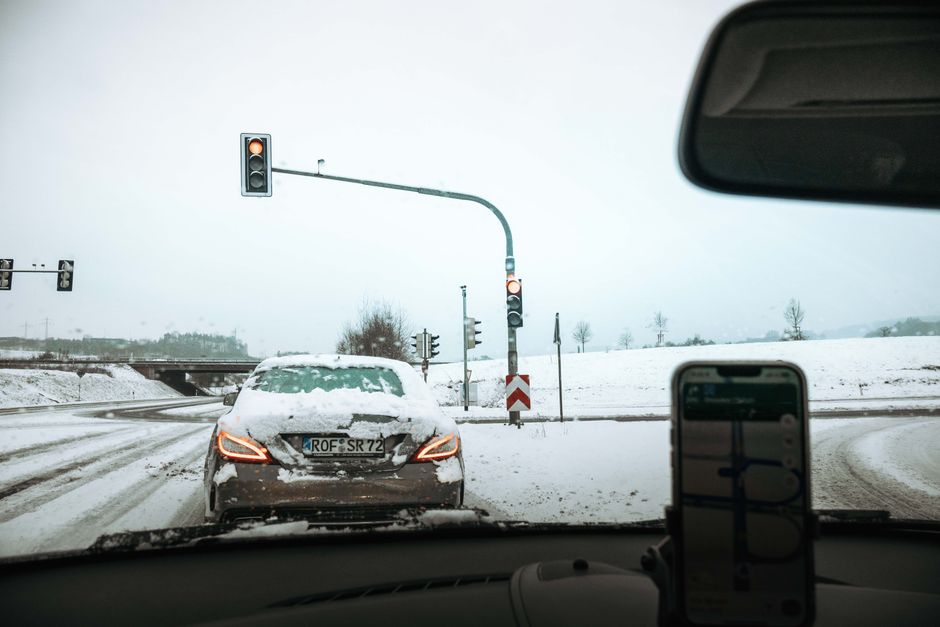
The Snowfall Certainty: Why Your iPhone Weather App Fails and How This New App Finally Solves It
The allure of a snow day, the cozy quiet of a winter wonderland, or the thrill of hitting the slopes – all of these depend on one crucial factor: accurate snowfall prediction. For years, iPhone users have grappled with a frustrating reality: their built-in weather apps, and many popular third-party alternatives, are woefully inadequate when it comes to forecasting snow. This isn’t a minor inconvenience; it’s a significant flaw that impacts everything from travel plans and school closures to outdoor recreation and personal preparedness. The question isn’t if these apps are bad at predicting snowfall, but why they fail so consistently, and more importantly, whether a solution finally exists.
The fundamental issue with iPhone weather apps and their reliance on generalized models lies in the inherent complexity of snow formation. Snow isn’t just frozen rain. It’s a delicate dance of atmospheric conditions, each playing a critical role in whether precipitation falls as liquid water, ice pellets, or fluffy flakes. Temperature is paramount, but not just at ground level. The entire atmospheric column, from the surface to several thousand feet in the air, must be cold enough for ice crystals to form and remain frozen throughout their descent. Subtle variations in temperature profiles, often within fractions of a degree Celsius or Fahrenheit, can mean the difference between a picturesque snowfall and a cold, wet rain. Standard weather models, often aggregated and simplified for mass consumption by large tech companies, struggle to capture these micro-variations with the granular detail required for accurate snow forecasting.
Furthermore, the presence of supercooled water droplets is another critical factor that many generic weather apps overlook. Even when the air temperature is below freezing, water can remain in a liquid state if it doesn’t have a nucleus to freeze upon. When these supercooled droplets encounter ice crystals in the atmosphere, they instantaneously freeze, contributing to the growth of snowflakes. The precise concentration and distribution of these supercooled droplets, influenced by humidity levels, updrafts, and the presence of aerosols, are incredibly dynamic and localized. iPhone weather apps, by and large, do not incorporate this level of detail into their predictive algorithms, leaving users vulnerable to inaccurate forecasts.
Another significant failing point is the overreliance on large-scale weather patterns. While global and regional models are essential for understanding general weather trends, they often lack the resolution to pinpoint localized snowfall events. Snowfall is frequently a highly localized phenomenon, influenced by topography, wind patterns, and the convergence of different air masses. A mountain range, for instance, can dramatically alter snowfall amounts, creating a “snow shadow” on one side while burying the other in feet of snow. Coastal areas can experience enhanced snowfall due to lake-effect or ocean-effect precipitation. Generic iPhone weather apps, designed to provide a broad overview, often smooth over these regional nuances, leading to forecasts that are wildly off the mark for specific locations. A forecast of "light snow" for an entire metropolitan area might translate to a blizzard in the suburbs and nothing at all in the city center.
The algorithms powering most default weather apps also tend to be reactive rather than proactive in their snowfall predictions. They often rely on data that has already occurred, or is occurring, to update their forecasts. This means that by the time an app registers a significant increase in precipitation, the opportunity to accurately predict how much snow will fall, and where, has already passed. True snowfall forecasting requires sophisticated modeling that can anticipate the development and movement of storm systems hours, and even days, in advance, considering factors like atmospheric instability, moisture availability, and the precise trajectory of low-pressure systems. This is a level of meteorological sophistication that is often sacrificed for simplicity and speed in widely distributed consumer applications.
The lack of advanced meteorological input is compounded by the fact that many iPhone weather apps pull data from a limited number of sources, often aggregated by third-party data providers. While these providers offer valuable general weather information, their focus on snow accumulation is often secondary. The data may not be updated frequently enough during rapidly evolving winter storms, and the underlying models might not be specifically tuned for snow prediction. This creates a chain of potential inaccuracies, where flawed data or an insufficient model at the source is then presented to the user through a simplified interface.
The consequences of these inaccuracies are far-reaching. For individuals, it can mean unexpected travel disruptions, being caught unprepared in a snowstorm, or missing out on planned winter activities due to erroneous forecasts. For parents, it can lead to confusion about school closures, impacting work schedules and childcare arrangements. For businesses, inaccurate snow forecasts can result in lost productivity, supply chain disruptions, and inadequate staffing. The frustration is palpable when you plan your week around a forecast of clear skies, only to wake up to a foot of snow, or conversely, prepare for a blizzard that never materializes.
This persistent problem has created a void in the market, a desperate need for a weather application that can deliver reliable, actionable snowfall predictions. Enter "Snowfall Certainty," an app that claims to finally address this long-standing deficiency. Unlike its predecessors, Snowfall Certainty doesn’t aim to be an all-encompassing weather predictor. Instead, it focuses laser-like on one specific, and notoriously difficult, meteorological challenge: predicting snowfall with an unprecedented level of accuracy.
The secret sauce behind Snowfall Certainty lies in its advanced, proprietary meteorological modeling. The developers have invested heavily in creating algorithms that go far beyond the generalized approaches of other apps. These models are not simply aggregating existing data; they are actively processing a far wider array of atmospheric variables with a much higher resolution. This includes detailed analysis of the entire atmospheric temperature profile, not just at ground level, but at critical altitudes where snowflakes form and persist. The app incorporates sophisticated calculations for atmospheric moisture content, identifying the precise conditions necessary for ice crystal formation and growth.
Crucially, Snowfall Certainty incorporates real-time data from a denser network of hyper-local weather stations, many of which are specifically equipped to measure atmospheric conditions relevant to snow formation. This includes advanced sensors that detect supercooled water droplets and their concentrations, a factor often ignored by mainstream apps. By integrating this highly granular, real-time data, Snowfall Certainty can identify subtle atmospheric shifts that signal impending snowfall with far greater precision.
Furthermore, Snowfall Certainty employs advanced topographical modeling. The app understands how terrain, elevation, and prevailing wind patterns influence snowfall distribution. It can differentiate between a valley, a mountainside, and an open plain, adjusting snowfall predictions accordingly. This means that instead of a single, generalized forecast for a wide area, users receive more tailored predictions for their immediate surroundings. If you live at the base of a mountain, Snowfall Certainty can predict significantly different snowfall amounts than someone living in a nearby valley, even if they are only a few miles apart.
The app’s predictive capabilities are also built on a foundation of forward-looking meteorological science. Snowfall Certainty utilizes advanced numerical weather prediction models that are specifically optimized for winter weather events. These models are constantly being refined and updated with the latest research in atmospheric physics and meteorology. This allows the app to anticipate the formation and movement of storm systems with greater foresight, providing users with earlier and more reliable warnings of potential snowfall. The app doesn’t just tell you it’s snowing; it tells you when it’s likely to start, how much will fall, and when it’s likely to stop, all with a focus on snow accumulation.
Another key differentiator is Snowfall Certainty’s commitment to transparency and user education. While the advanced algorithms operate behind the scenes, the app provides users with insights into the factors influencing its predictions. For example, it might indicate the atmospheric temperature profile or the probability of supercooled water droplet formation, helping users understand the basis for the forecast. This not only builds trust but also empowers users to make more informed decisions based on the information provided. The app also offers customizable alerts for specific snowfall thresholds, ensuring that users are notified precisely when a predicted event reaches a level of significance for them, whether it’s a dusting for convenience or a significant accumulation for preparedness.
The user interface of Snowfall Certainty is designed to be intuitive and focused. While it provides detailed information, it prioritizes clarity and ease of understanding. Users can access hourly snowfall predictions, multi-day outlooks with detailed snow accumulation forecasts, and real-time radar showing active precipitation. The app also includes features like "snow depth" tracking and a historical snowfall database, allowing users to contextualize current forecasts with past events. This comprehensive approach, centered on the specific challenge of snowfall prediction, is what sets it apart from generic weather applications. For anyone who has ever been frustrated by inaccurate snow forecasts on their iPhone, Snowfall Certainty represents a significant step forward, offering a level of reliability and detail that was previously unattainable. It finally brings certainty to the often-unpredictable world of winter weather.

