India’s Unprecedented Move Against Bitchat’s Open-Source Code Ignites Digital Rights Debate

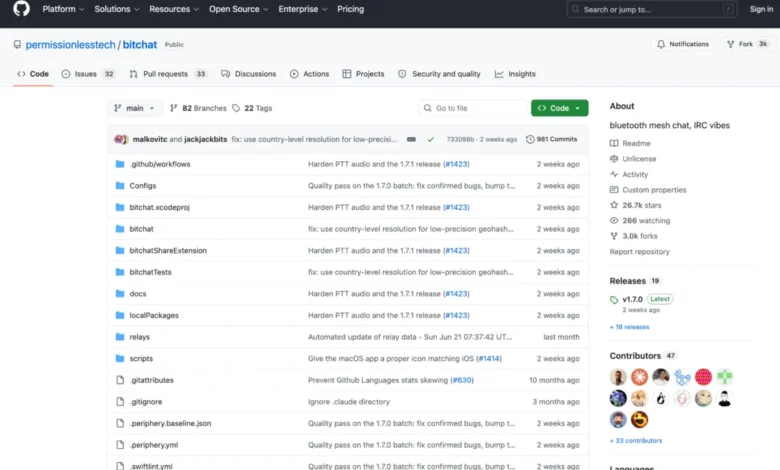
An extraordinary attempt by the Indian government to compel GitHub to remove repositories for Jack Dorsey’s offline, Bluetooth-powered messaging application, Bitchat, has triggered widespread alarm among digital rights advocates and raised profound questions regarding the legal grounds for targeting open-source software based solely on its operational mechanics. This move, which seeks to erase the very blueprint of the decentralized communication tool, marks a significant escalation in India’s efforts to control digital information flows, particularly in the context of recent widespread civil unrest.
The controversy erupted on a Friday when Jack Dorsey, co-founder of Twitter (now X) and a prominent advocate for decentralized technologies, publicly shared what he asserted was an official notice from India’s Ministry of Home Affairs. The directive, addressed to GitHub, demanded the swift restriction of access to three Bitchat repositories within a mere three-hour window. The core of the government’s contention lies in Bitchat’s inherently anonymous and decentralized architecture, which, according to the notice, possesses the potential to facilitate illicit activities and enable communication during government-imposed internet shutdowns, thereby impeding "lawful interception" by authorities.
Background to the Incident: Protests and Digital Crackdowns
This aggressive stance against Bitchat unfolds against a backdrop of escalating digital restrictions imposed by Indian authorities, following weeks of intense student-led protests that have gripped New Delhi. These demonstrations, widely dubbed the "cockroach movement" due to their resilient and pervasive nature, were ignited by widespread allegations of examination paper leaks, a scandal that has deeply frustrated and angered India’s vast youth population. Thousands of young people have taken to the streets, demanding accountability and the resignation of Indian Education Minister Dharmendra Pradhan. In response, authorities have not only imposed restrictions on protest marches toward the parliament but have also frequently resorted to internet shutdowns and disruptions to mobile data services in affected areas, a tactic increasingly deployed by the Indian government to quell dissent and control information.
Local media outlets have extensively reported on how some protesters, faced with these communication blackouts, ingeniously turned to offline messaging applications like Bitchat and Briar. These apps, designed to function without relying on traditional internet infrastructure or central servers, utilize mesh networking capabilities, often leveraging Bluetooth or Wi-Fi Direct to create localized communication networks among users in close proximity. This circumvention of conventional internet services proved highly effective in maintaining coordination and communication among protesters, much to the chagrin of authorities accustomed to silencing dissent through digital means.
A Novel and Contested Legal Approach
The governmental order against Bitchat represents a distinct departure from India’s previously established protocols for content removal. Historically, prior to 2021, the Indian government predominantly relied on Section 69A of the Information Technology (IT) Act and the associated 2009 Blocking Rules to enforce nationwide content takedowns. These provisions typically target specific pieces of content deemed unlawful, such as hate speech, misinformation, or material inciting violence.

However, as highlighted by Mishi Choudhary, the founder of SFLC.in, a prominent Indian digital rights legal advocacy group, the Bitchat notice employs a new legal framework. She observed that while the document’s format aligns with recent government takedown notices, the specific legal provisions cited within it do not, in her expert opinion, unequivocally empower authorities to demand the removal of an entire software project based on its functional design rather than the presence of specific illegal content it might host or transmit. This distinction is critical: Section 69A generally allows for blocking "information" from public access, not the underlying technology or code that facilitates communication itself.
Unlike the vast majority of government takedown requests, the document shared by Dorsey notably refrains from identifying any specific posts, messages, or repositories containing unlawful material. Instead, its argument rests entirely on the inherent capabilities of Bitchat – its ability to operate during internet shutdowns and its decentralized nature – which are construed as inherent facilitators of unlawful activity.
The notice, dated July 23 and ostensibly issued by the Indian Cybercrime Coordination Centre (I4C), which operates under the Ministry of Home Affairs, explicitly states that Bitchat enables users to communicate “even during network restrictions” and “internet shutdowns,” thereby making it possible to “circumvent lawful restrictions” and hampering “lawful interception, attribution, and traceability.” This framing suggests a fundamental distrust of technologies that grant users autonomy over their communication, particularly in contexts where the state seeks to maintain absolute control over information dissemination.
Explosive Growth Amidst Crackdowns
The timing of the government’s action closely follows a dramatic surge in Bitchat’s popularity within India. Market intelligence provider Sensor Tower furnished data to TechCrunch, illustrating an astonishing trend: between July 17 and July 23, India accounted for approximately 85% of Bitchat’s global downloads. This stands in stark contrast to the preceding 30 days, during which India represented a mere 1% of the app’s total downloads. The data reveals that Bitchat was downloaded over 91,000 times in India within a five-day period, with downloads skyrocketing thirty-two-fold on July 19 alone compared to the previous day. Concurrently, the app’s daily active users in India reached an unprecedented peak of over 330,000 on the Thursday prior to Dorsey’s post, underscoring its rapid adoption as a vital communication lifeline for those affected by internet restrictions. This exponential growth directly correlates with the timing and intensity of the "cockroach movement" protests and the associated government shutdowns, highlighting the app’s perceived utility by the protesting populace.
Digital Rights Groups Raise Alarms Over Open-Source Censorship
The implications of this request, particularly its targeting of open-source software, have drawn strong condemnation from digital rights organizations. The Internet Freedom Foundation (IFF), a New Delhi-based advocacy group, publicly questioned the efficacy and legality of the apparent takedown request.
In a statement posted on X, IFF elucidated the technical futility of such an order: "The order also fails on its own terms as deleting a repository does not delete the application from any phone that carries it, and the mesh keeps functioning without servers. What the takedown actually prevents is scrutiny of the underlying code." This observation underscores a critical point: once open-source code is publicly available, it can be mirrored, forked, and distributed widely. Removing a single repository from GitHub does not erase its existence from the internet or from devices where the app is already installed. Instead, it merely hinders future development, updates, and most importantly, public audit and scrutiny of the code, which is vital for security and transparency.

Raman Chima, global program director at the Association for Progressive Communications, a worldwide digital rights network, further emphasized the unprecedented nature of the notice. He told TechCrunch that the order transcends merely targeting a specific messaging service; it aims to suppress the very development of open-source code itself. "They’re [the Indian government] not just targeting the designated service provider, but they’re trying to say that open source development of this type of product… should not occur," Chima stated. This represents a significant conceptual leap, moving from censoring content to censoring the tools that enable certain types of communication, especially those designed to be resilient against state control.
GitHub, the world’s largest platform for open-source software development, has yet to officially confirm receipt of the specific document shared by Dorsey. Crucially, as of the Friday when Dorsey’s post went live, Bitchat’s primary GitHub repositories remained accessible from India. When queried about the apparent notice, GitHub directed inquiries to its public repository of government takedown requests, which, notably, did not contain any recent entries related to Bitchat. The company’s standard policy, as articulated by Rose Coogan, its principal online safety counsel, states: "When we receive a complete government takedown request, we notify the affected account owners and give them an opportunity to appeal. We share every government takedown request we take action on publicly." The absence of the Bitchat request from this public log suggests that GitHub may not have acted on it, or that the request itself is still under review or negotiation.
Namrata Maheshwari, senior policy counsel at the digital rights group Access Now, voiced profound concerns regarding the broader implications for fundamental rights. She argued that blocking an offline messaging platform during internet restrictions risks transforming localized shutdowns into a "communication blackout," thereby violating the fundamental rights of freedom of speech and expression. In a democratic society, she stressed, protesters inherently possess the right to communicate privately and coordinate peacefully. This principle is particularly pertinent in India, which has a dubious distinction of leading the world in internet shutdowns. Reports from organizations like Access Now and the Software Freedom Law Centre (SFLC.in) consistently show India imposing more internet shutdowns than any other country, often citing national security or public order concerns, but frequently deploying them during protests or periods of social unrest.
The Broader Context of Internet Shutdowns in India
India has a long and concerning history of implementing internet shutdowns, often with significant economic and social costs. These shutdowns, ranging from complete internet blackouts to targeted restrictions on mobile data services, have become a routine tool for authorities to manage public order, particularly during protests, communal tensions, or even examination periods. According to a report by Access Now, India accounted for 58% of all internet shutdowns globally in 2023, making it the world leader in this restrictive practice for the sixth consecutive year. Such shutdowns not only stifle freedom of expression and assembly but also cripple local economies, disrupt education, and severely impact emergency services. The Bitchat incident, therefore, is not an isolated event but a symptom of a broader, systemic approach to digital control that seeks to eliminate any means of communication that cannot be easily monitored or interrupted by the state.
Future Implications and Concluding Thoughts
The Indian Home Ministry did not respond to requests for comment regarding the Bitchat notice, leaving many questions unanswered about the government’s precise legal justification and its long-term strategy for digital governance. However, the attempt to remove Bitchat’s open-source code from GitHub signals a worrying trend: an expansion of state control beyond censoring specific content to potentially censoring the underlying technologies and tools that enable resilient, private communication.
This approach could have a chilling effect on open-source developers, raising concerns about legal liability for creating software that, while neutral in its design, could be used for purposes deemed undesirable by the state. It also highlights the ongoing tension between state demands for "lawful interception" and the privacy-enhancing features inherent in decentralized, encrypted communication tools. For India, a nation that prides itself on being the world’s largest democracy, such actions risk undermining its democratic credentials and further eroding the digital rights of its citizens. The Bitchat controversy thus stands as a critical test case, not only for the future of open-source software development in India but also for the broader global debate on internet freedom, digital sovereignty, and the delicate balance between national security and fundamental human rights in the digital age.